Program in Cancer Research, Institut Hospital del Mar d'Investigacions Mèdiques, Parc de Recerca Biomèdica de Barcelona, 08003 Barcelona, Spain.
J Exp Med. 2012 Jul 30;209(8):1457-68. doi: 10.1084/jem.20120225. Epub 2012 Jul 16.
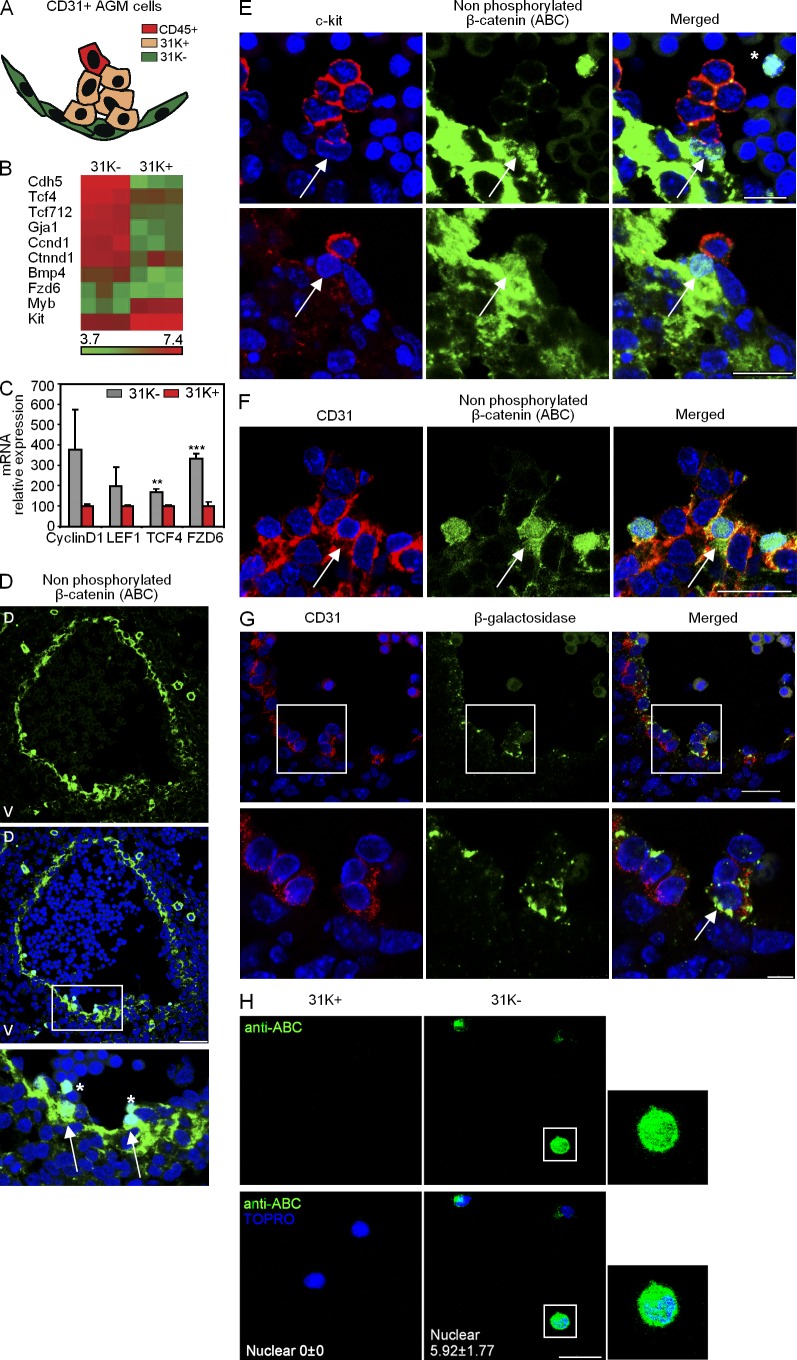
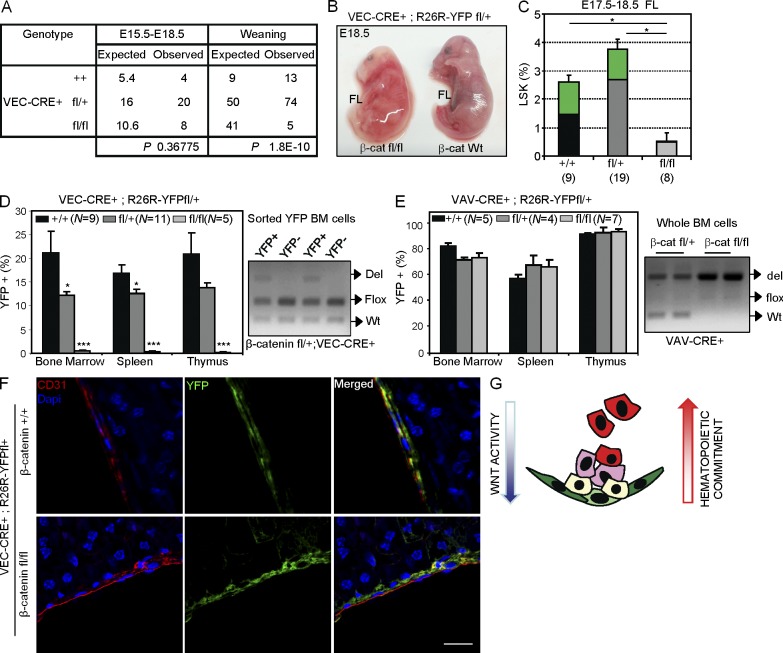
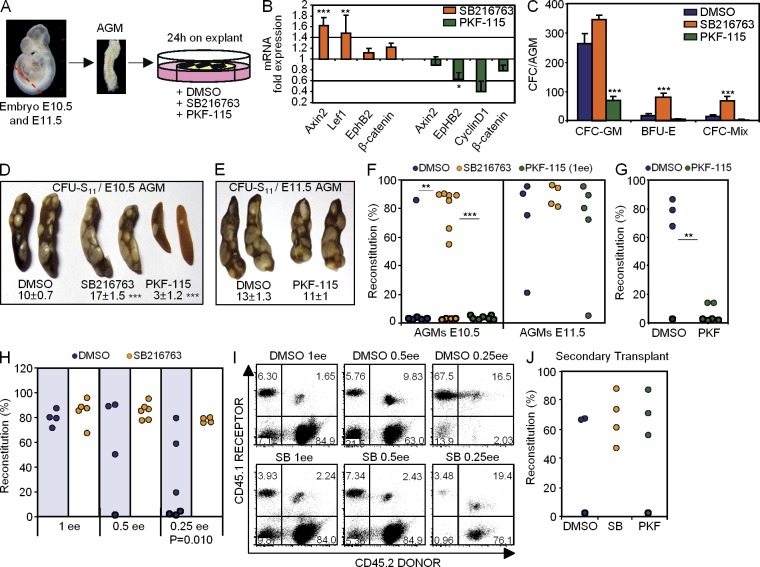
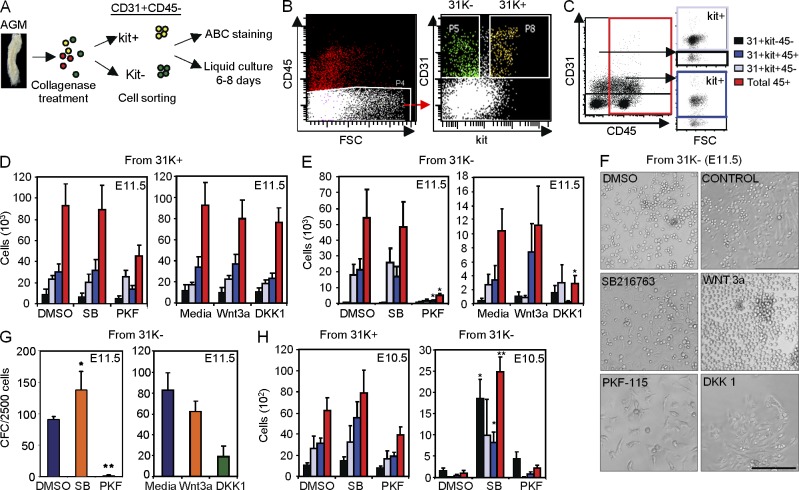
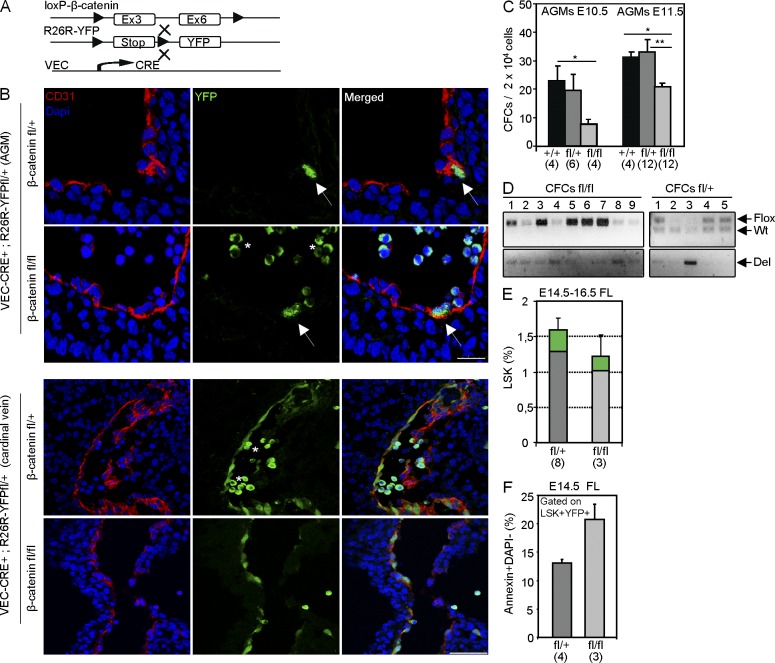
Understanding how hematopoietic stem cells (HSCs) are generated and the signals that control this process is a crucial issue for regenerative medicine applications that require in vitro production of HSC. HSCs emerge during embryonic life from an endothelial-like cell population that resides in the aorta-gonad-mesonephros (AGM) region. We show here that β-catenin is nuclear and active in few endothelial nonhematopoietic cells closely associated with the emerging hematopoietic clusters of the embryonic aorta during mouse development. Importantly, Wnt/β-catenin activity is transiently required in the AGM to generate long-term HSCs and to produce hematopoietic cells in vitro from AGM endothelial precursors. Genetic deletion of β-catenin from the embryonic endothelium stage (using VE-cadherin-Cre recombinase), but not from embryonic hematopoietic cells (using Vav1-Cre), precludes progression of mutant cells toward the hematopoietic lineage; however, these mutant cells still contribute to the adult endothelium. Together, those findings indicate that Wnt/β-catenin activity is needed for the emergence but not the maintenance of HSCs in mouse embryos.
了解造血干细胞(HSCs)的生成方式以及控制这一过程的信号对于再生医学应用至关重要,因为这些应用需要在体外生成 HSC。HSCs 是在胚胎生命过程中从位于主动脉-性腺-中肾(AGM)区域的内皮样细胞群中产生的。我们在这里表明,β-catenin 在与胚胎主动脉中正在出现的造血簇密切相关的少数内皮非造血细胞中是核内和活跃的。重要的是,Wnt/β-catenin 活性在 AGM 中是短暂需要的,以产生长期的 HSCs,并从 AGM 内皮前体体外产生造血细胞。从胚胎内皮阶段(使用 VE-cadherin-Cre 重组酶)而不是从胚胎造血细胞(使用 Vav1-Cre)中删除β-catenin,会阻止突变细胞向造血谱系的进展;然而,这些突变细胞仍然有助于成体内皮。这些发现表明,Wnt/β-catenin 活性对于 HSCs 在小鼠胚胎中的出现而非维持是必需的。