Musson Rachel, Romanowski Charles
Department of Radiology, Royal Hallamshire Hospital, Sheffield, U.K.
Pol J Radiol. 2010 Oct;75(4):38-43.
Acute Wallerian degeneration following infarction has been show to result in areas of restricted diffusion within the brain. Very few reports describe this appearance in middle cerebellar peduncles.
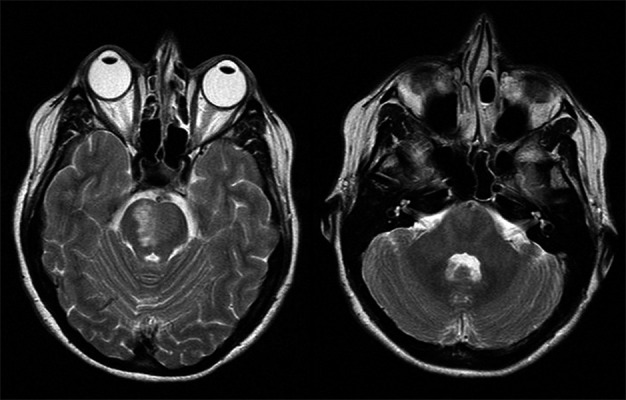
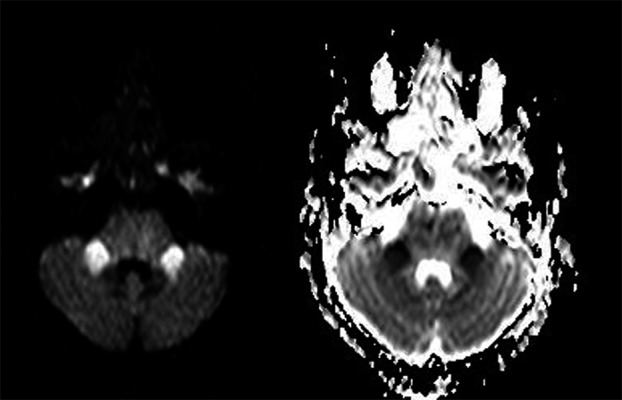
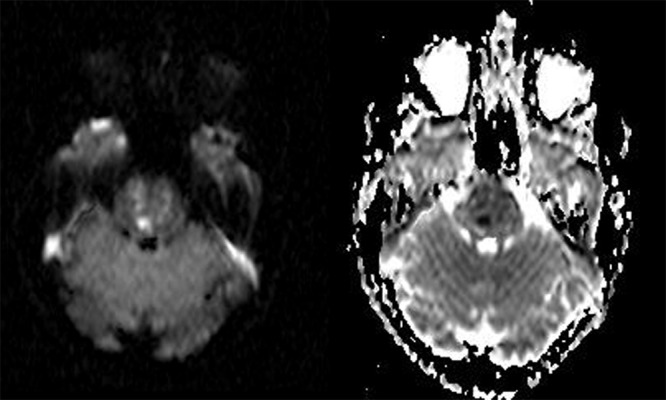
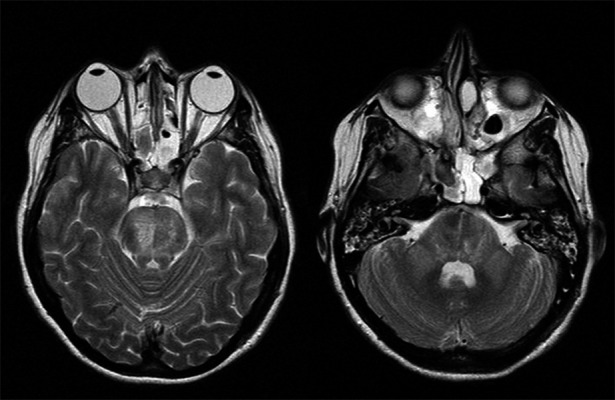
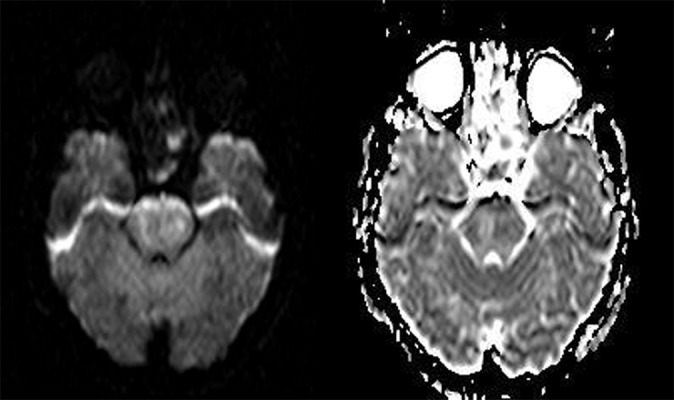
A 37 year old woman was admitted to hospital following sudden collapse and was subsequently found to have a pontine infarct. The complex clinical course resulted in MR imaging including DWI at day 4, 9 and 23 after the initial presentation. The cerebellar peduncles were normal when imaged on day 4 and 9. At day 23, symmetrical high T2 signal was seen in both cerebellar peduncles. The DWI illustrated high signal with corresponding low signal on the ADC map consistent with restricted diffusion. We discuss why this appearance is in keeping with Wallerian degeneration and also describe the fibre pathways involved.
Symmetrical high signal with restricted diffusion in the middle cerebellar peduncles following a pontine lesion is almost certainly attributable to Wallerian degeneration and should not be mistaken for a new ischaemia.
梗死继发的急性华勒氏变性已被证实可导致脑内出现扩散受限区域。很少有报道描述小脑中脚出现这种表现。
一名37岁女性在突然晕倒后入院,随后被发现患有脑桥梗死。复杂的临床病程导致在首次发病后的第4天、第9天和第23天进行了包括弥散加权成像(DWI)在内的磁共振成像检查。在第4天和第9天成像时,小脑脚正常。在第23天,双侧小脑脚均可见对称的高T2信号。DWI显示高信号,表观扩散系数(ADC)图上相应为低信号,符合扩散受限。我们讨论了为什么这种表现符合华勒氏变性,并描述了相关的纤维束。
脑桥病变后小脑中脚出现对称的高信号且伴有扩散受限,几乎肯定是由华勒氏变性引起的,不应误诊为新的缺血性病变。