Department of Parasitology, Faculty of Science, Charles University in Prague, Prague, Czech Republic.
PLoS Negl Trop Dis. 2012;6(7):e1719. doi: 10.1371/journal.pntd.0001719. Epub 2012 Jul 10.
Phlebotomine sand flies are blood-sucking insects transmitting Leishmania parasites. In bitten hosts, sand fly saliva elicits specific immune response and the humoral immunity was shown to reflect the intensity of sand fly exposure. Thus, anti-saliva antibodies were suggested as the potential risk marker of Leishmania transmission. In this study, we examined the long-term kinetics and persistence of anti-Phlebotomus papatasi saliva antibody response in BALB/c and C57BL/6 mice. We also tested the reactivity of mice sera with P. papatasi salivary antigens and with the recombinant proteins.
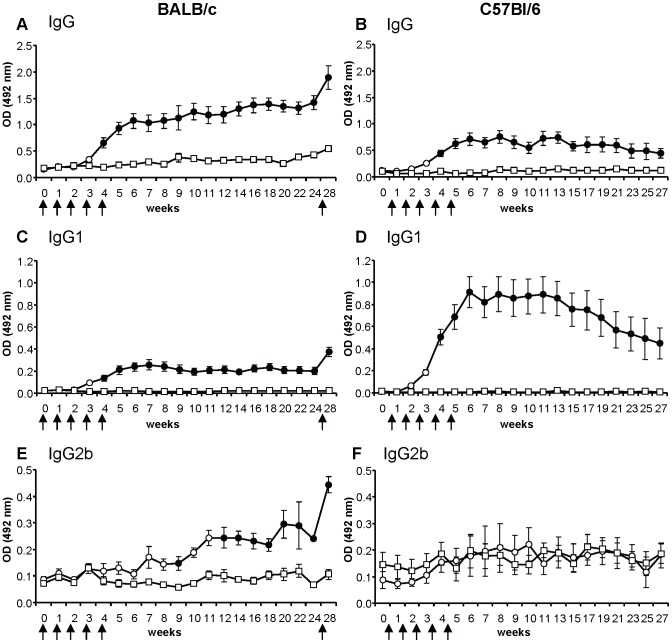
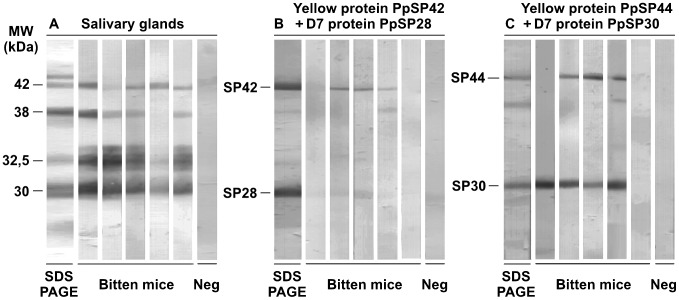
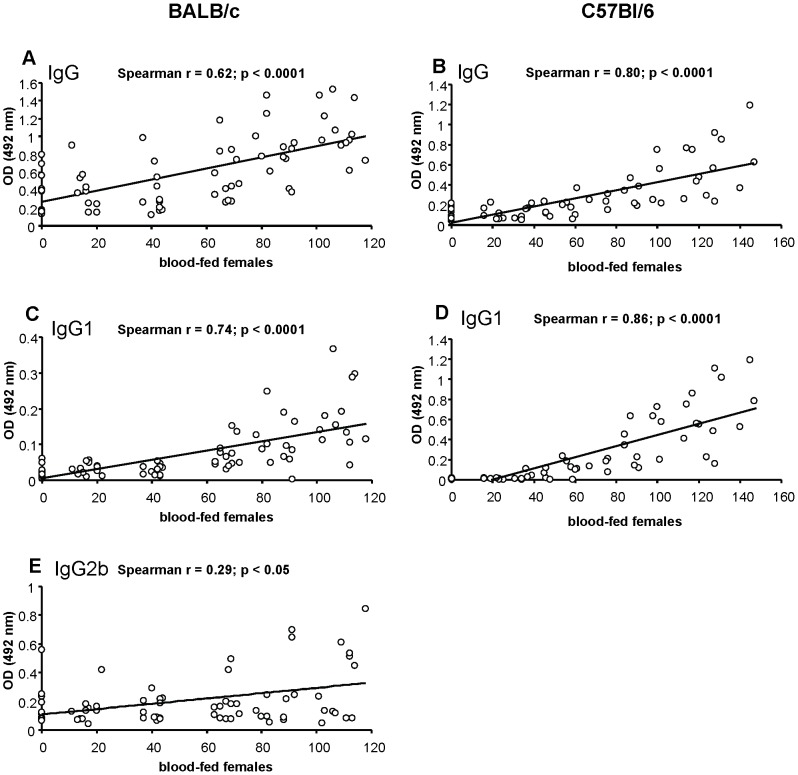
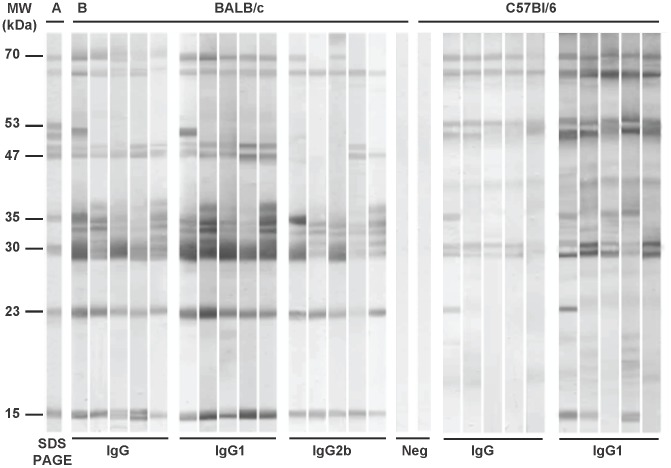
METHODOLOGY/PRINCIPAL FINDINGS: Sera of BALB/c and C57BL/6 mice experimentally bitten by Phlebotomus papatasi were tested by ELISA for the presence of anti-saliva IgE, IgG and its subclasses. We detected a significant increase of specific IgG and IgG1 in both mice strains and IgG2b in BALB/c mice that positively correlated with the number of blood-fed P. papatasi females. Using western blot and mass spectrometry we identified the major P. papatasi antigens as Yellow-related proteins, D7-related proteins, antigen 5-related proteins and SP-15-like proteins. We therefore tested the reactivity of mice sera with four P. papatasi recombinant proteins coding for most of these potential antigens (PpSP44, PpSP42, PpSP30, and PpSP28). Each mouse serum reacted with at least one of the recombinant protein tested, although none of the recombinant proteins were recognized by all sera.
Our data confirmed the concept of using anti-sand fly saliva antibodies as a marker of sand fly exposure in Phlebotomus papatasi-mice model. As screening of specific antibodies is limited by the availability of salivary gland homogenate, utilization of recombinant proteins in such studies would be beneficial. Our present work demonstrates the feasibility of this implementation. A combination of recombinant salivary proteins is recommended for evaluation of intensity of sand fly exposure in endemic areas and for estimation of risk of Leishmania transmission.
白蛉是吸血昆虫,可传播利什曼原虫寄生虫。在被叮咬的宿主中,白蛉唾液会引发特异性免疫反应,体液免疫被证明反映了白蛉暴露的强度。因此,抗唾液抗体被认为是利什曼传播的潜在风险标志物。在这项研究中,我们研究了 BALB/c 和 C57BL/6 小鼠中抗嗜人锥蝇唾液抗体反应的长期动力学和持久性。我们还测试了小鼠血清与嗜人锥蝇唾液抗原和重组蛋白的反应性。
方法/主要发现:用 ELISA 法检测实验性感染嗜人锥蝇的 BALB/c 和 C57BL/6 小鼠血清中抗唾液 IgE、IgG 及其亚类的存在。我们检测到两种小鼠品系的特异性 IgG 和 IgG1 显著增加,BALB/c 小鼠的 IgG2b 也显著增加,这与吸血嗜人锥蝇雌蝇的数量呈正相关。通过 Western blot 和质谱分析,我们确定了嗜人锥蝇的主要抗原为黄色相关蛋白、D7 相关蛋白、抗原 5 相关蛋白和 SP-15 样蛋白。因此,我们测试了小鼠血清与编码这些潜在抗原的四种嗜人锥蝇重组蛋白(PpSP44、PpSP42、PpSP30 和 PpSP28)的反应性。尽管没有一种重组蛋白被所有血清识别,但每种小鼠血清都与至少一种测试的重组蛋白反应。
我们的数据证实了使用抗白蛉唾液抗体作为嗜人锥蝇-小鼠模型中白蛉暴露的标志物的概念。由于唾液腺匀浆的可用性限制了特异性抗体的筛选,因此在这些研究中利用重组蛋白将是有益的。我们目前的工作证明了这种方法的可行性。建议联合使用重组唾液蛋白来评估流行地区白蛉暴露的强度,并估计利什曼传播的风险。