School of Nursing, College of Health and Human Services, University of North Carolina-Charlotte, Charlotte, NC 28223-0001, USA.
Clin Interv Aging. 2012;7:207-23. doi: 10.2147/CIA.S29656. Epub 2012 Jul 2.
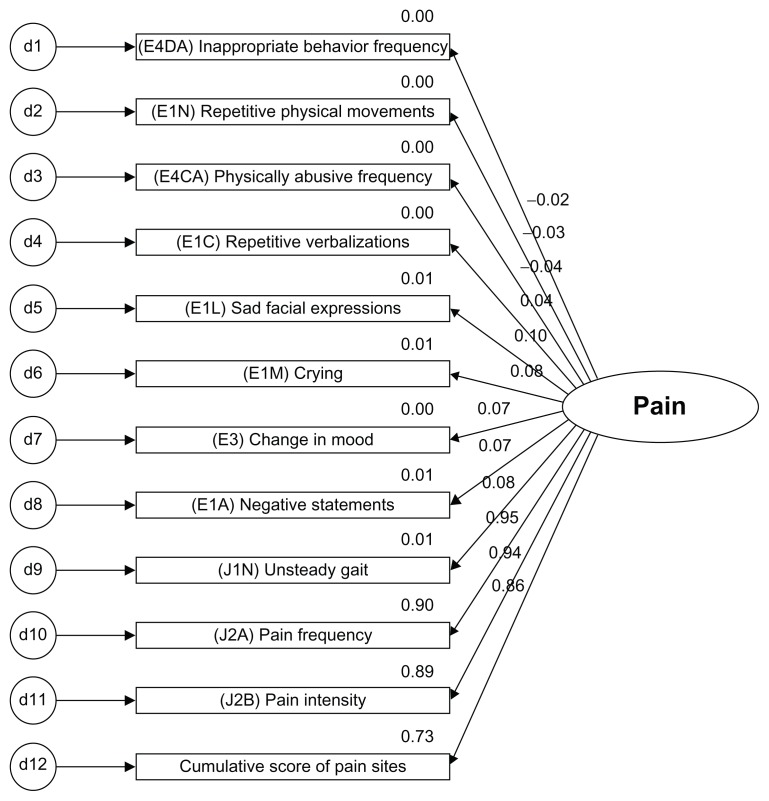
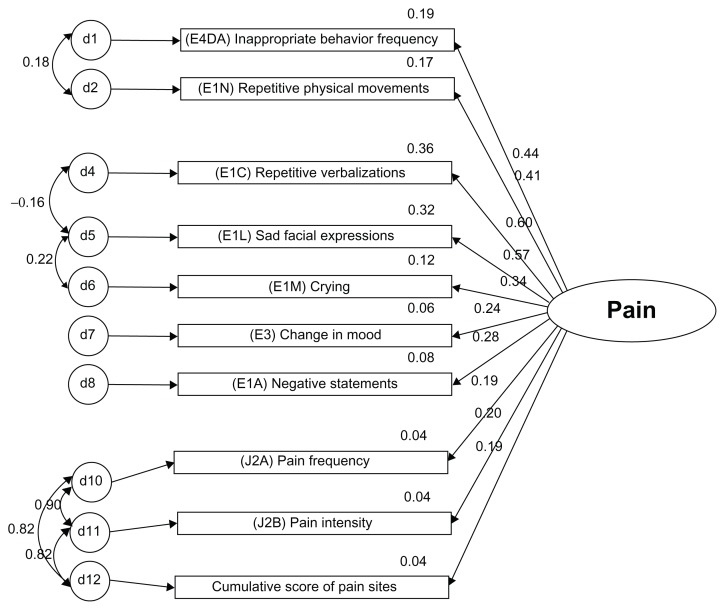
The purpose of this study was to determine the relationship between hypothesized pain behaviors in the elderly and a measurement model of pain derived from the Minimum Data Set-Resident Assessment Instrument (MDS-RAI) 2.0 items.
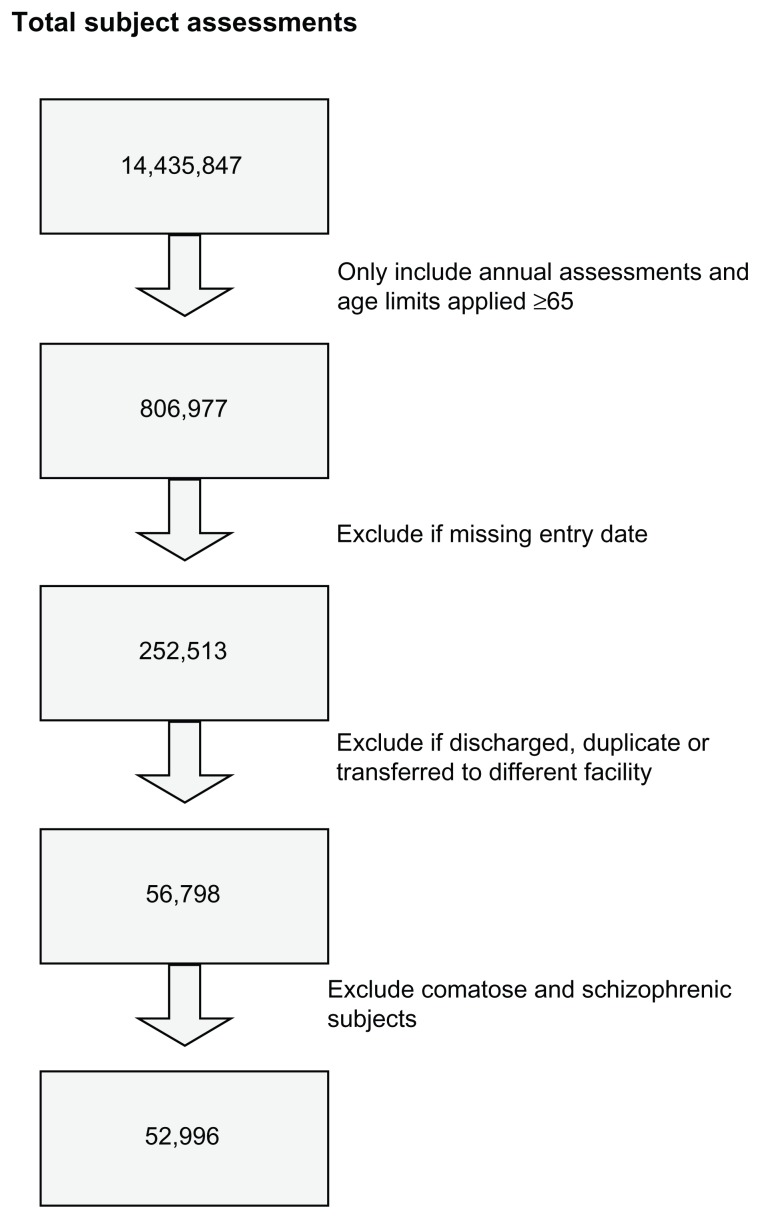
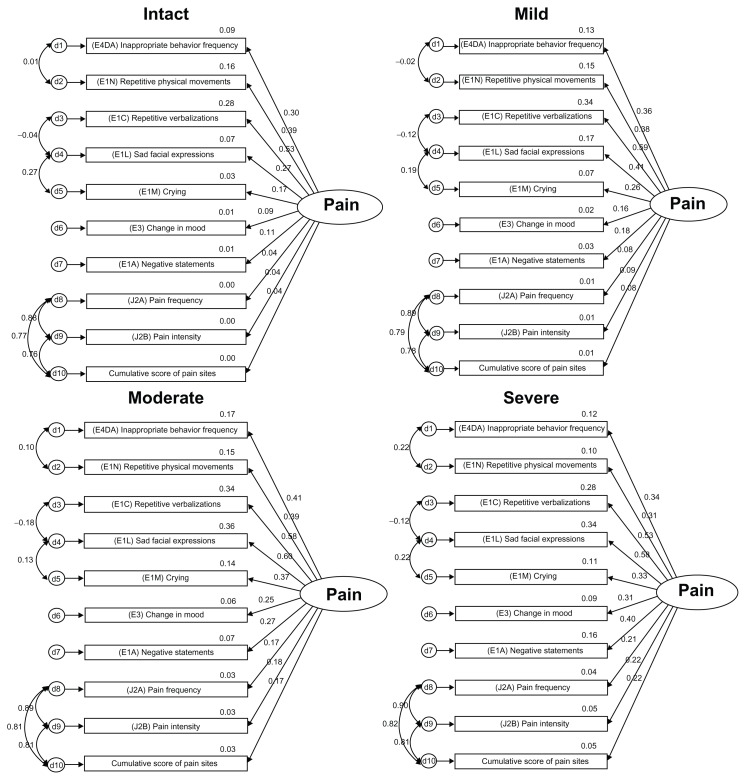
This work included a longitudinal cohort recruited from Medicare-certified longterm care facilities across the United States. MDS data were collected from 52,996 residents (mean age 83.7 years). Structural equation modeling was used to build a measurement model of pain to test correlations between indicators and the fit of the model by cognitive status. The model evaluates the theoretical constructs of pain to improve how pain is assessed and detected within cognitive levels.
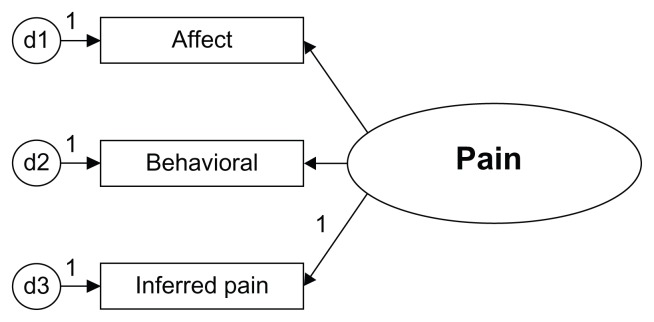
Using pain frequency and intensity as the only indicators of pain, the overall prevalence of pain was 31.2%; however, analysis by cognitive status showed that 47.7% of the intact group was in pain, while only 18.2% of the severely, 29.4% of the moderately, and 39.6% of the mildly cognitively impaired groups were experiencing pain. This finding supports previous research indicating that pain is potentially under-reported in severely cognitively impaired elderly nursing home residents. With adjustments to the measurement model, a revised format containing affective, behavioral, and inferred pain indicates a better fit of the data to include these domains, as a more complete measure of the pain construct.
Pain has a significant effect on quality of life and long-term health outcomes in nursing home residents. Patients most at risk are those with mild to severe cognitive decline, or those unable to report pain verbally. Nursing homes are under great scrutiny to maintain standards of care and provide uniform high-quality care outcomes. Existing data from federally required resident surveys can serve as a valuable tool to identify indicators of pain and trends in care. Great responsibility lies in ensuring pain is included and monitored as a quality measure in long-term care, especially for residents unable to communicate their pain verbally.
本研究旨在确定老年人假设性疼痛行为与最小数据集合-居民评估工具(MDS-RAI)2.0 项目中疼痛测量模型之间的关系。
本研究包括一项在美国各地获得医疗保险认证的长期护理机构的纵向队列研究。MDS 数据收集自 52996 名居民(平均年龄 83.7 岁)。结构方程模型用于构建疼痛测量模型,以测试认知状态下指标之间的相关性和模型的拟合度。该模型评估疼痛的理论结构,以提高在认知水平内评估和检测疼痛的能力。
仅使用疼痛频率和强度作为疼痛的唯一指标,疼痛的总体患病率为 31.2%;然而,按认知状态分析显示,完整组中有 47.7%的人处于疼痛状态,而严重组仅有 18.2%、中度组 29.4%、轻度认知障碍组 39.6%的人有疼痛。这一发现支持了先前的研究,表明严重认知障碍的老年疗养院居民的疼痛可能被低估。通过对测量模型的调整,包含情感、行为和推断性疼痛的修订格式表明,该模型更适合纳入这些领域,作为疼痛结构的更全面测量。
疼痛对疗养院居民的生活质量和长期健康结果有重大影响。最有风险的患者是那些有轻度至重度认知能力下降,或那些无法口头报告疼痛的患者。疗养院正面临着严格的监管,以维持护理标准并提供统一的高质量护理结果。现有的联邦要求的居民调查数据可以作为一种有价值的工具,用于识别疼痛指标和护理趋势。确保将疼痛作为长期护理的质量衡量标准,特别是对那些无法口头表达疼痛的居民,是一项重大责任。