Australian Centre for Plant Functional Genomics, University of Adelaide, Adelaide, South Australia, Australia.
PLoS One. 2012;7(7):e39865. doi: 10.1371/journal.pone.0039865. Epub 2012 Jul 11.
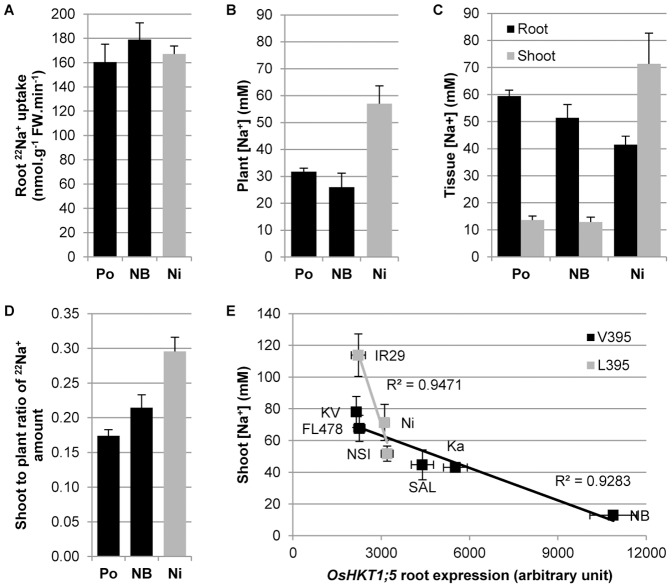
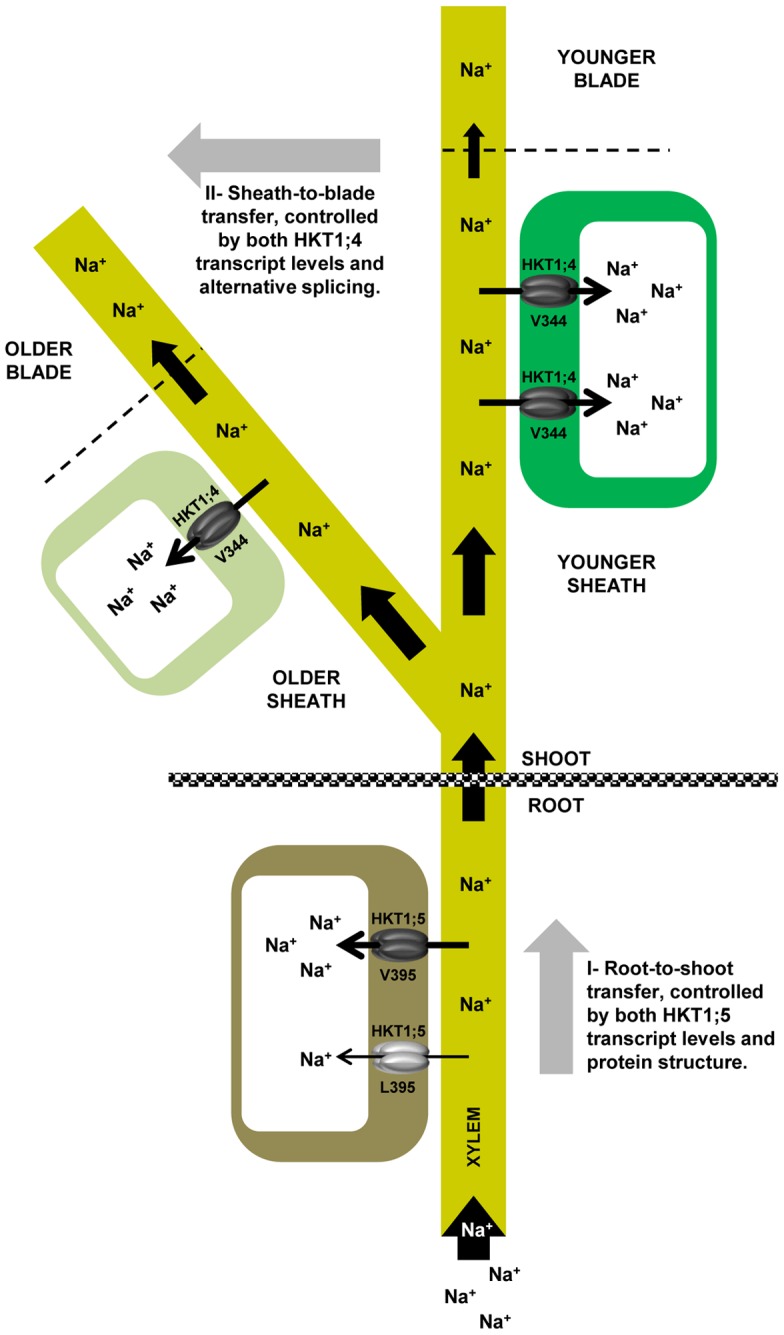
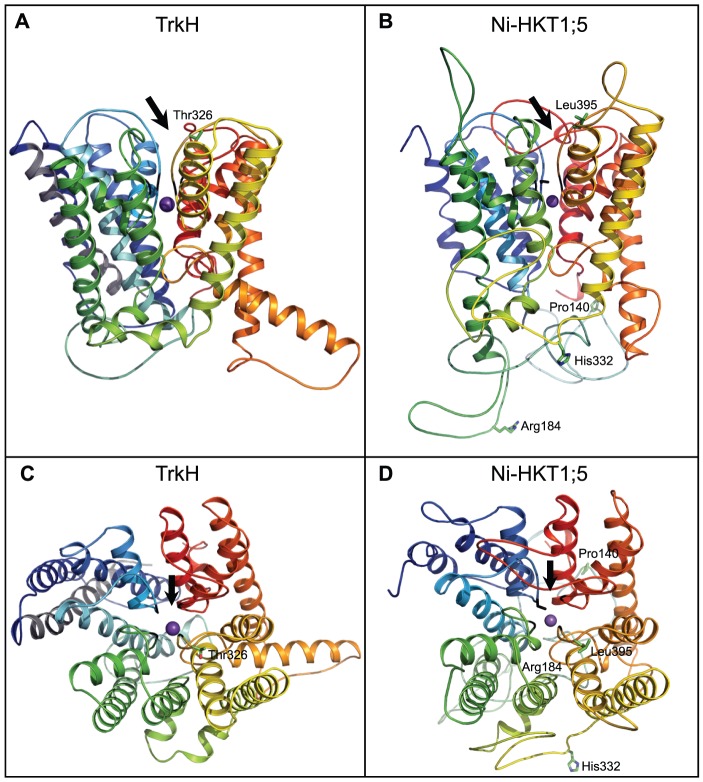
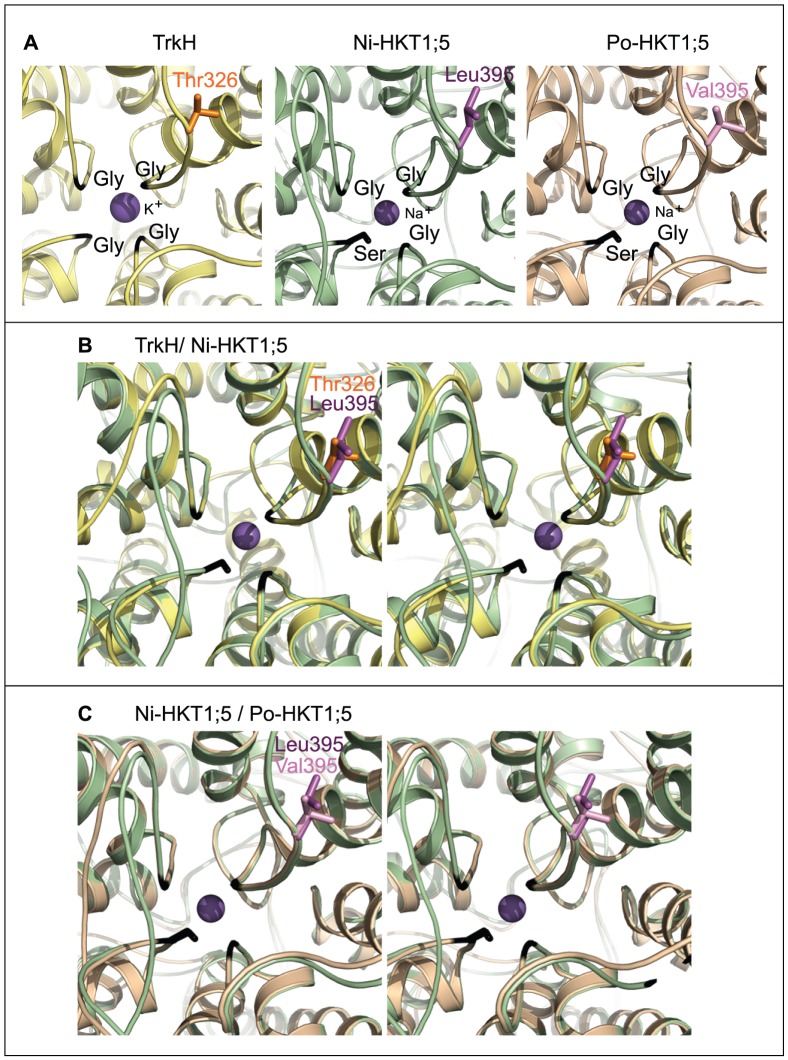
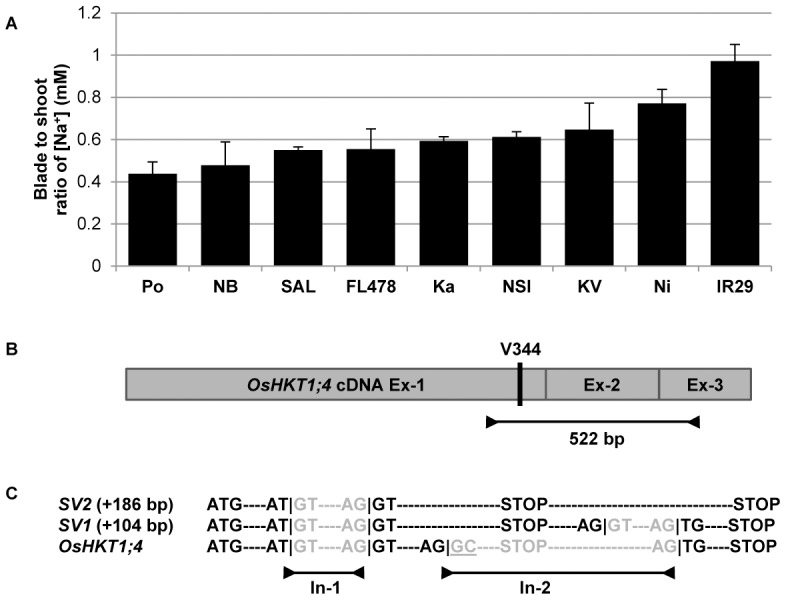
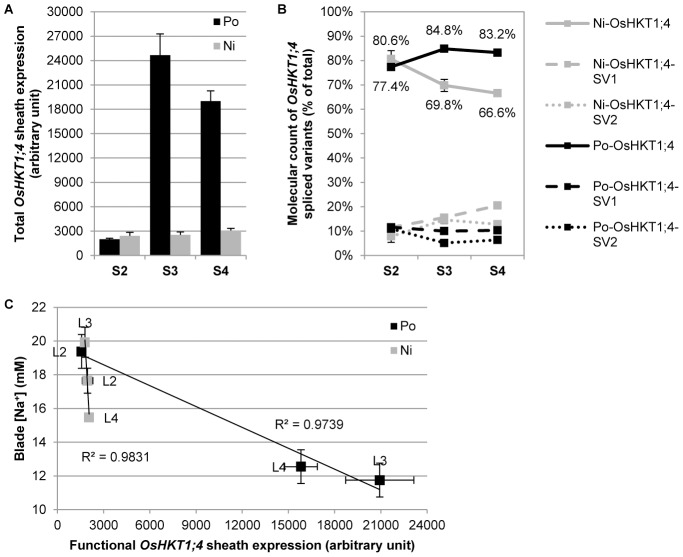
The HKT family of Na(+) and Na(+)/K(+) transporters is implicated in plant salinity tolerance. Amongst these transporters, the cereal HKT1;4 and HKT1;5 are responsible for Na(+) exclusion from photosynthetic tissues, a key mechanism for plant salinity tolerance. It has been suggested that Na(+) is retrieved from the xylem transpiration stream either in the root or the leaf sheath, protecting the leaf blades from excessive Na(+) accumulation. However, direct evidence for this scenario is scarce. Comparative modeling and evaluation of rice (Oryza sativa) HKT-transporters based on the recent crystal structure of the bacterial TrkH K(+) transporter allowed to reconcile transcriptomic and physiological data. For OsHKT1;5, both transcript abundance and protein structural features within the selectivity filter could control shoot Na(+) accumulation in a range of rice varieties. For OsHKT1;4, alternative splicing of transcript and the anatomical complexity of the sheath needed to be taken into account. Thus, Na(+) accumulation in a specific leaf blade seems to be regulated by abundance of a correctly spliced OsHKT1;4 transcript in a corresponding sheath. Overall, allelic variation of leaf blade Na(+) accumulation can be explained by a complex interplay of gene transcription, alternative splicing and protein structure.
HKT 家族的 Na(+) 和 Na(+)/K(+) 转运蛋白与植物耐盐性有关。在这些转运蛋白中,谷物 HKT1;4 和 HKT1;5 负责将 Na(+)从光合组织中排除,这是植物耐盐性的一个关键机制。有人认为,Na(+)是从根或叶鞘中的木质部蒸腾流中回收的,从而防止叶片过度积累 Na(+)。然而,这种情况的直接证据很少。基于最近细菌 TrkH K(+)转运蛋白的晶体结构,对水稻(Oryza sativa)HKT 转运蛋白进行比较建模和评估,使转录组学和生理学数据得以协调。对于 OsHKT1;5,转录本丰度和选择性过滤器内的蛋白质结构特征都可以控制一系列水稻品种的地上部 Na(+)积累。对于 OsHKT1;4,需要考虑转录本的选择性剪接和鞘的解剖结构的复杂性。因此,特定叶片的 Na(+)积累似乎受相应鞘中正确剪接的 OsHKT1;4 转录本的丰度调节。总的来说,叶片 Na(+)积累的等位基因变异可以通过基因转录、选择性剪接和蛋白质结构的复杂相互作用来解释。