Department of Biology and Biochemistry, University of Bath, Bath, United Kingdom.
PLoS One. 2012;7(7):e40077. doi: 10.1371/journal.pone.0040077. Epub 2012 Jul 12.
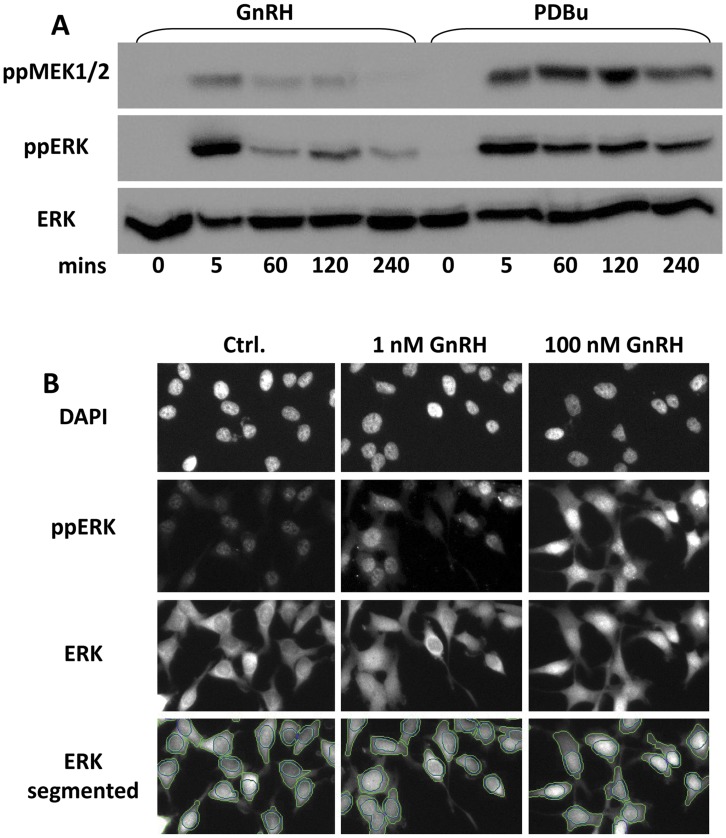
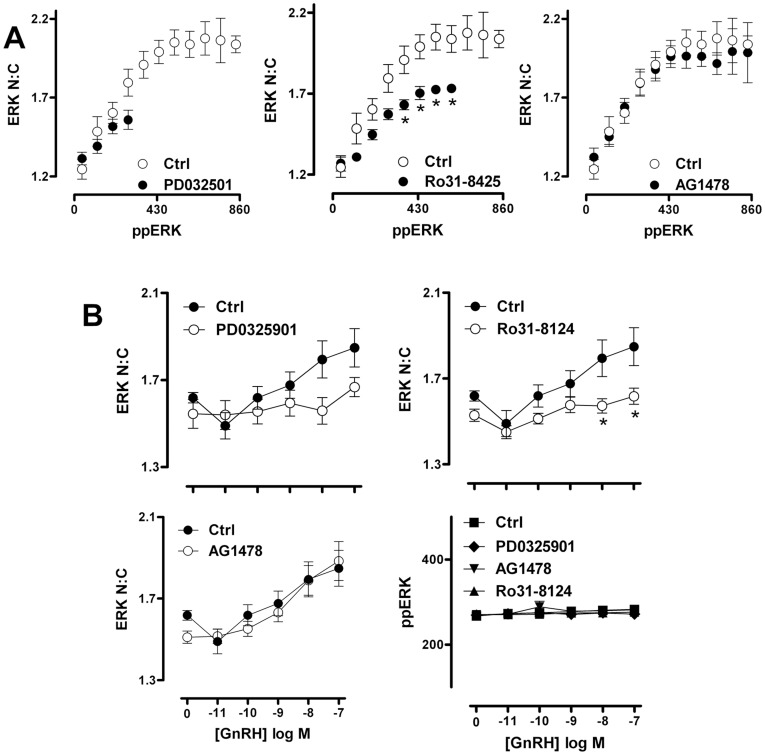
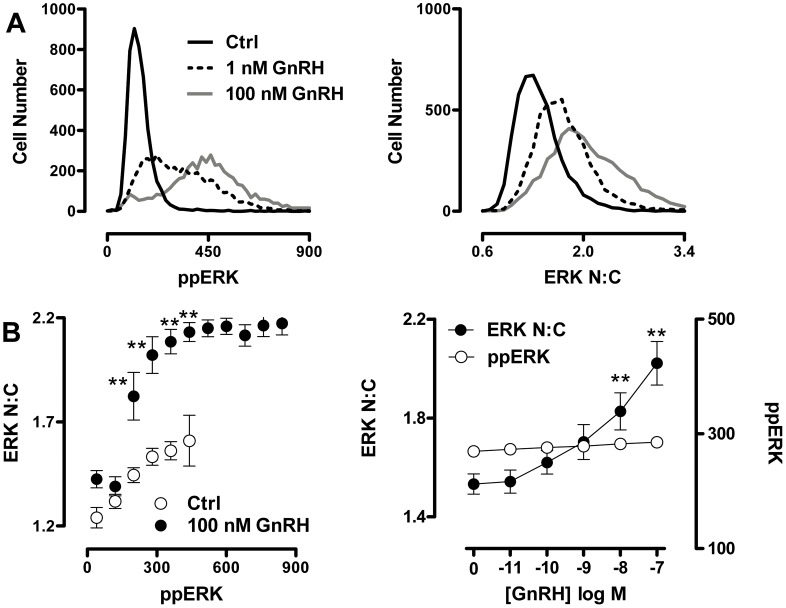
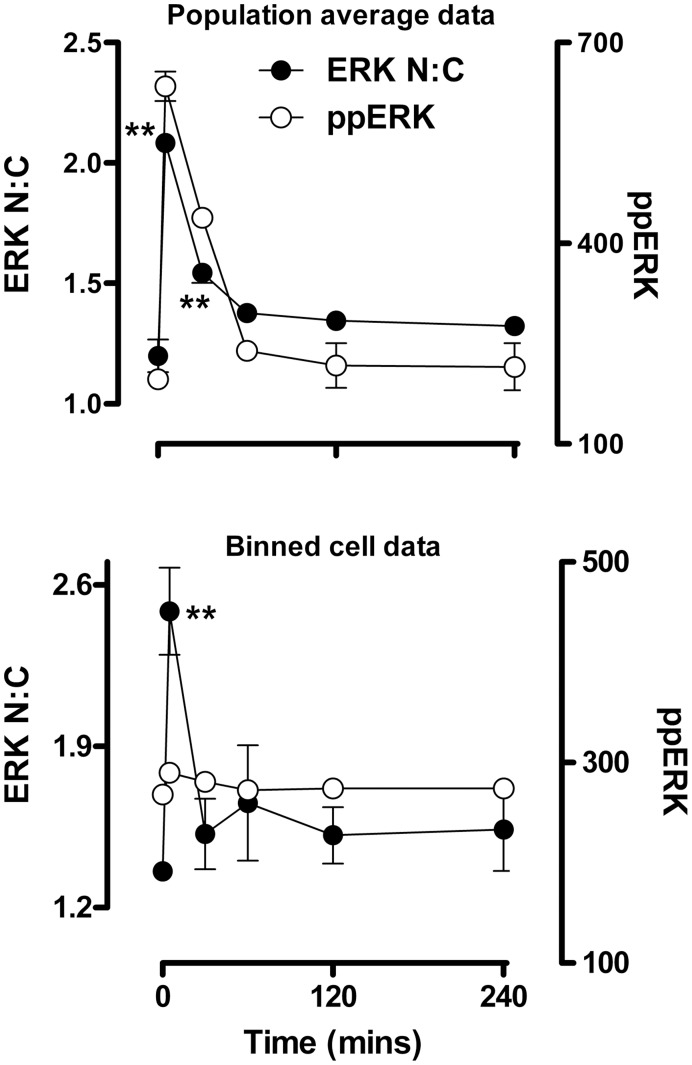
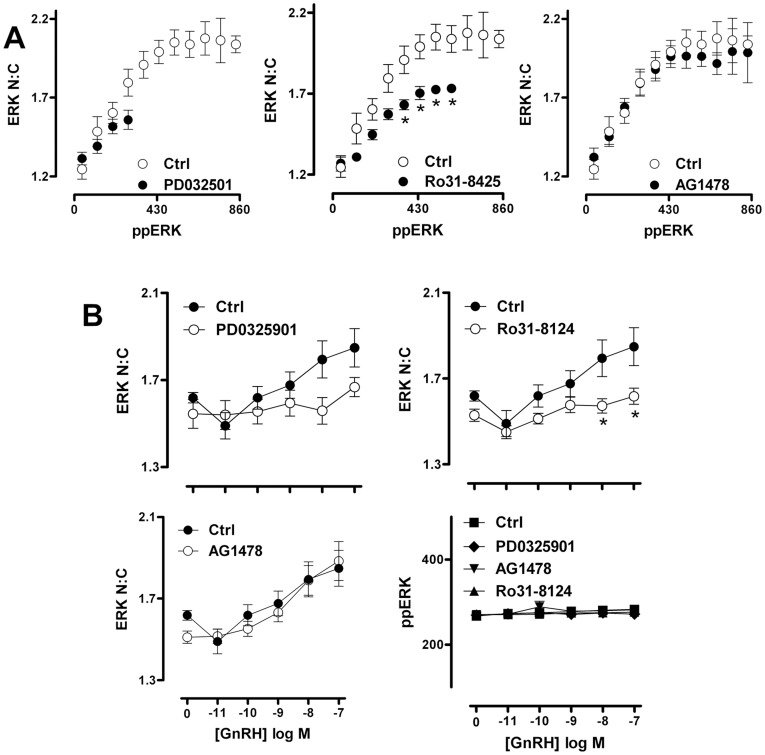
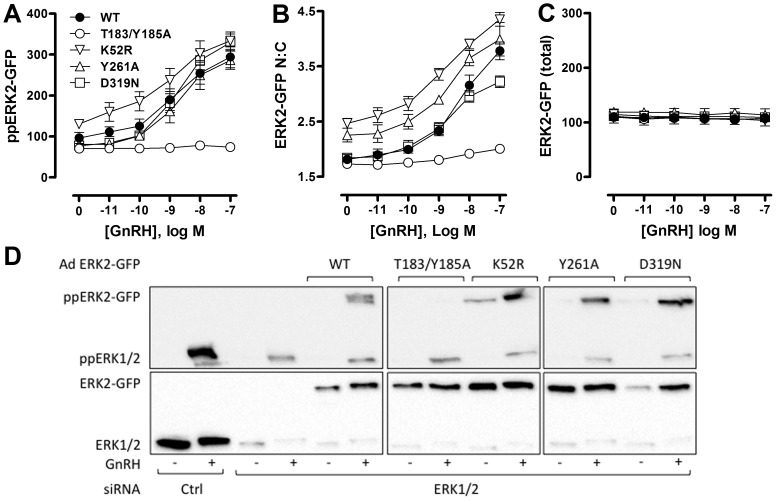
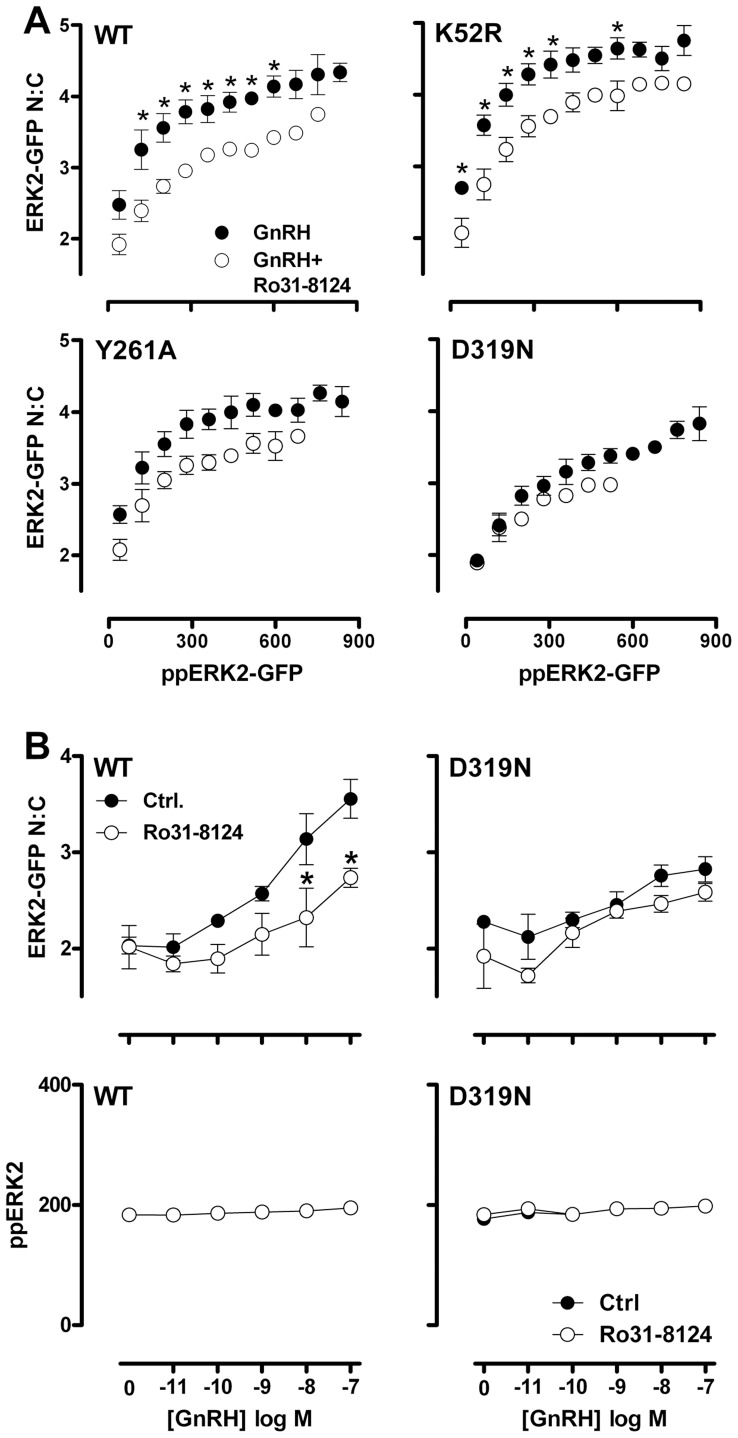
Gonadotropin-releasing hormone receptors (GnRHR) mediate activation and nuclear translocation of the extracellular signal regulated kinases 1 and 2 (ERK) by phosphorylation on the TEY motif. This is necessary for GnRH to initiate transcriptional programmes controlling fertility, but mechanisms that govern ERK targeting are unclear. Using automated microscopy to explore ERK regulation in single cells, we find that GnRHR activation induces marked redistribution of ERK to the nucleus and that this effect can be uncoupled from the level of TEY phosphorylation of ERK. Thus, 5 min stimulation with 100 nM GnRH increased phospho-ERK levels (from 89 ± 34 to 555 ± 45 arbitrary fluorescence units) and increased the nuclear:cytoplasmic (N:C) ERK ratio (from 1.36 ± 0.06 to 2.16 ± 0.05) in the whole cell population, but it also significantly increased N:C ERK in cells binned according to phospho-ERK levels. This phosphorylation unattributable component of the ERK translocation response occurs at a broad range of GnRHR expression levels, in the presence of tyrosine phosphatase and protein synthesis inhibitors, and in ERK mutants unable to undergo catalytic activation. It also occurred in mutants incapable of binding the DEF (docking site for ERK, F/Y-X-F/Y-P) domains found in many ERK binding partners. It was however, reduced by MEK or PKC inhibition and by mutations preventing TEY phosphorylation or that abrogate ERK binding to D (docking) domain partners. We therefore show that TEY phosphorylation of ERK is necessary, but not sufficient for the full nuclear localization response. We further show that this "phosphorylation unattributable" component of GnRH-mediated ERK nuclear translocation requires both PKC activity and association with partner proteins via the D-domain.
促性腺激素释放激素受体 (GnRHR) 通过 TEY 基序上的磷酸化作用,介导细胞外信号调节激酶 1 和 2 (ERK) 的激活和核转位。这对于 GnRH 启动控制生育的转录程序是必要的,但调控 ERK 靶向的机制尚不清楚。使用自动化显微镜探索单个细胞中 ERK 的调节,我们发现 GnRHR 激活诱导 ERK 向核明显重分布,并且这种效应可以与 ERK 的 TEY 磷酸化水平解耦。因此,用 100 nM GnRH 刺激 5 分钟,可增加磷酸化 ERK 水平(从 89 ± 34 到 555 ± 45 任意荧光单位)并增加整个细胞群体的核质比(从 1.36 ± 0.06 到 2.16 ± 0.05),但它也显著增加了根据磷酸化 ERK 水平分组的细胞中的核质比。这种 ERK 易位反应中与磷酸化无关的组成部分发生在广泛的 GnRHR 表达水平、存在酪氨酸磷酸酶和蛋白质合成抑制剂以及不能进行催化激活的 ERK 突变体中。它也发生在不能结合许多 ERK 结合伙伴中发现的 DEF(ERK docking site,F/Y-X-F/Y-P)结构域的突变体中。然而,它可以通过 MEK 或 PKC 抑制以及通过突变来减少,这些突变阻止 TEY 磷酸化或使 ERK 与 D(docking)结构域伙伴结合。因此,我们表明 ERK 的 TEY 磷酸化是完全核定位反应所必需的,但不是充分的。我们进一步表明,这种 GnRH 介导的 ERK 核易位的“磷酸化无关”组成部分需要 PKC 活性和通过 D 结构域与伙伴蛋白的结合。