Maternal and Newborn Health Unit, Child and Reproductive Health Group, Liverpool School of Tropical Medicine, Liverpool, United Kingdom.
PLoS One. 2012;7(7):e40220. doi: 10.1371/journal.pone.0040220. Epub 2012 Jul 10.
Availability of a Skilled Birth Attendant (SBA) during childbirth is a key indicator for MDG5 and a strategy for reducing maternal and neonatal mortality in Africa. There is limited information on how SBAs and their functions are defined. The aim of this study was to map the cadres of health providers considered SBAs in Sub Saharan Africa (SSA); to describe which signal functions of Essential Obstetric Care (EmOC) they perform and assess whether they are legislated to perform these functions.
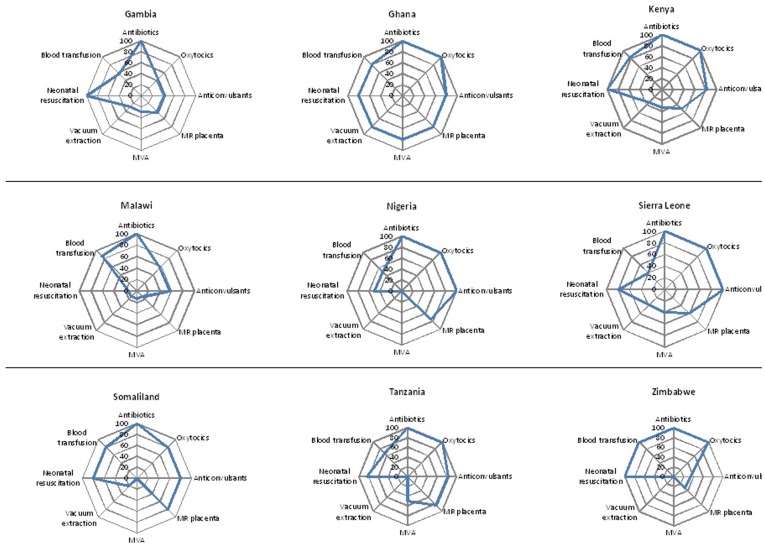
Key personnel in the Ministries of Health, teaching institutions, referral, regional and district hospitals completed structured questionnaires in nine SSA countries in 2009-2011. A total of 21 different cadres of health care providers (HCP) were reported to be SBA. Type and number of EmOC signal functions reported to be provided, varied substantially between cadres and countries. Parenteral antibiotics, uterotonic drugs and anticonvulsants were provided by most SBAs. Removal of retained products of conception and assisted vaginal delivery were the least provided signal functions. Except for the cadres of obstetricians, medical doctors and registered nurse-midwives, there was lack of clarity regarding signal functions reported to be performed and whether they were legislated to perform these. This was particularly for manual removal of placenta, removal of retained products and assisted vaginal delivery. In some countries, cadres not considered SBA performed deliveries and provided EmOC signal functions. In other settings, cadres reported to be SBA were able to but not legislated to perform key EmOC signal functions.
Comparison of cadres of HCPs reported to be SBA across countries is difficult because of lack of standardization in names, training, and functions performed. There is a need for countries to develop clear guidelines defining who is a SBA and which EmOC signal functions each cadre of HCP is expected to provide.
在分娩期间是否有熟练的接生员(SBA)是千年发展目标 5(MDG5)的关键指标,也是减少非洲产妇和新生儿死亡率的策略。关于 SBA 及其职能的定义,信息有限。本研究的目的是绘制撒哈拉以南非洲(SSA)认为是 SBA 的卫生保健提供者的干部队伍;描述他们执行哪些基本产科护理(EmOC)的信号功能,并评估他们是否被立法执行这些功能。
2009-2011 年,卫生部门、教学机构、转诊、地区和地区医院的主要人员在九个 SSA 国家完成了结构问卷。报告有 21 种不同的卫生保健提供者(HCP)干部被认为是 SBA。报告提供的 EmOC 信号功能的类型和数量在干部和国家之间有很大差异。大多数 SBA 提供了肠外抗生素、宫缩剂和抗惊厥药。取出残留的胎盘组织和协助阴道分娩是提供的信号功能最少。除了产科医生、医生和注册护士助产士外,对于报告的执行的信号功能以及是否被立法执行这些功能,并不明确。这特别是对于手动取出胎盘、取出残留组织和协助阴道分娩。在一些国家,不被认为是 SBA 的干部进行分娩并提供 EmOC 信号功能。在其他情况下,报告的 SBA 干部能够但没有被立法执行关键的 EmOC 信号功能。
由于名称、培训和执行的功能缺乏标准化,因此难以比较报告的 SBA 国家之间的 HCP 干部队伍。各国需要制定明确的准则,定义谁是 SBA,以及每个 HCP 干部队伍期望提供哪些 EmOC 信号功能。