Fard Sr Nourollahi, Khalili M
Department of Pathobiology, School of Veterinary Medicine, Shahid Bahonar University of Kerman, Kerman, Iran.
Iran J Arthropod Borne Dis. 2011;5(1):1-6. Epub 2011 Jun 30.
There is a little data on Coxiella burnetii (Q fever agent) in Iran. Ticks may play a significant role in the transmission of C. burnetii among animals. The aim of this study was to use polymerase chain reaction for the detection of C. burnetii in ticks collected in Southeast Iran.
One hundred and sixty ticks were collected from domestic animals in three localities of Kerman Province, Southeast Iran from November to June 2009. The collected ticks were divided into 35 pools and examined by Trans-PCR for C. burnetii.
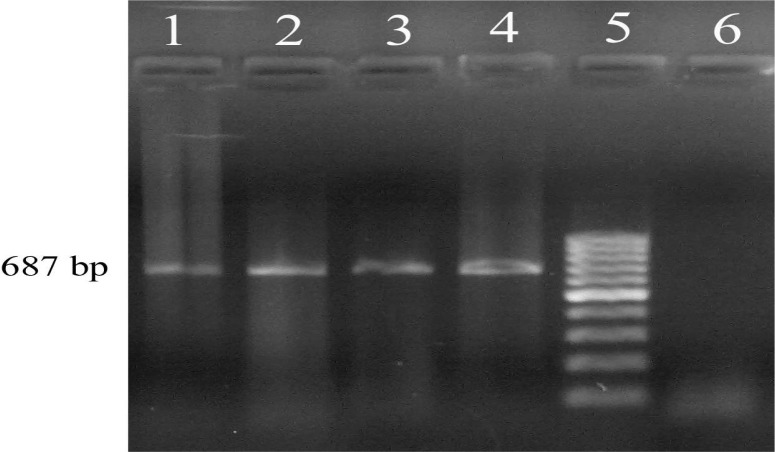
Three pools, each consisting of five female of Hyalomma anatolicum anatolicum and one pool (6 ticks) of Rhipicephalus sanguineus ticks collected from goats and sheep were found to be positive by Trans-PCR.
This paper documents the first molecular detection of C. burnetii in ticks, which shows their role as putative vectors and reservoirs for this pathogenic agent.
伊朗关于伯氏考克斯体(Q热病原体)的数据很少。蜱可能在动物间伯氏考克斯体的传播中起重要作用。本研究的目的是利用聚合酶链反应检测伊朗东南部采集的蜱中伯氏考克斯体。
2009年11月至6月,从伊朗东南部克尔曼省三个地区的家畜身上采集了160只蜱。将采集的蜱分成35组,通过转录聚合酶链反应检测伯氏考克斯体。
通过转录聚合酶链反应发现,有三组检测呈阳性,每组由五只安纳托利亚璃眼蜱雌蜱组成,还有一组(6只蜱)是从山羊和绵羊身上采集的血红扇头蜱。
本文记录了首次在蜱中进行的伯氏考克斯体分子检测,表明蜱作为该病原体假定传播媒介和宿主的作用。