Institute of Virology, Department of Pathobiology, University of Veterinary Medicine, Vienna, Austria.
PLoS One. 2012;7(7):e40611. doi: 10.1371/journal.pone.0040611. Epub 2012 Jul 16.
Gene-directed enzyme prodrug therapy (GDEPT) is a two-step treatment protocol for solid tumors that involves the transfer of a gene encoding a prodrug-activating enzyme followed by administration of the inactive prodrug that is subsequently activated by the enzyme to its tumor toxic form. However, the establishment of such novel treatment regimes to combat pancreatic cancer requires defined and robust animal model systems.
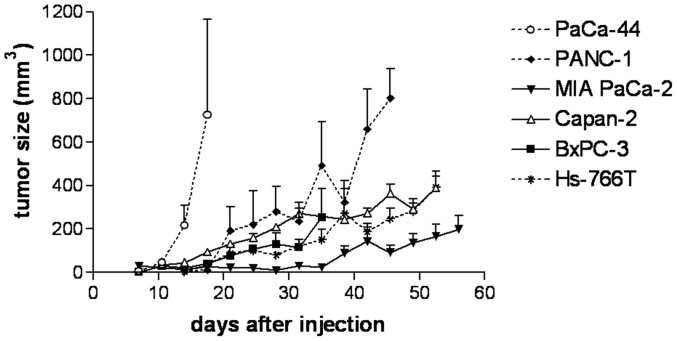
Here, we comprehensively compared six human pancreatic cancer cell lines (PaCa-44, PANC-1, MIA PaCa-2, Hs-766T, Capan-2, and BxPc-3) in subcutaneous and orthotopical mouse models as well as in their susceptibility to different GDEPTs.
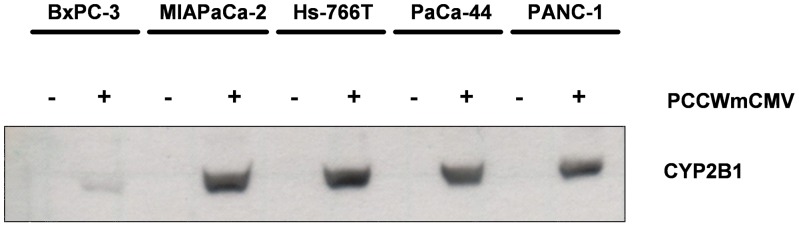
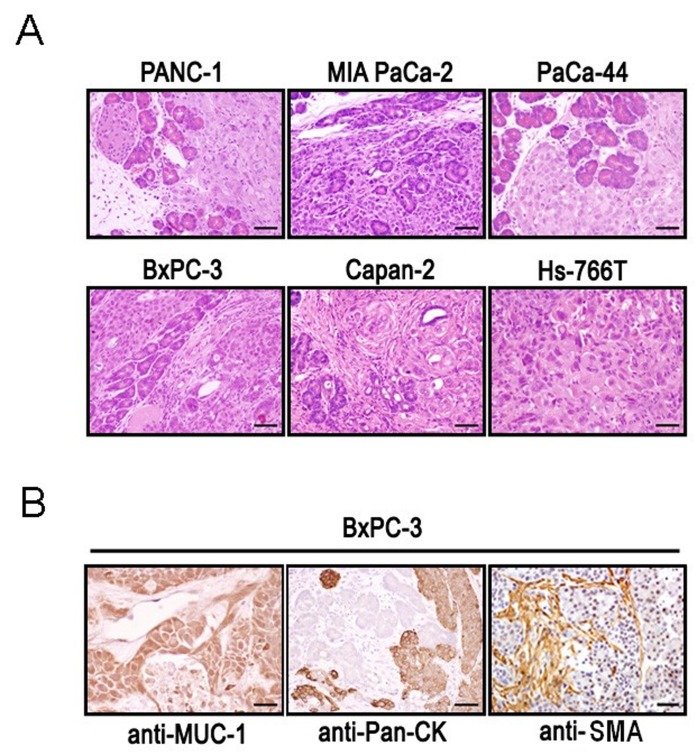
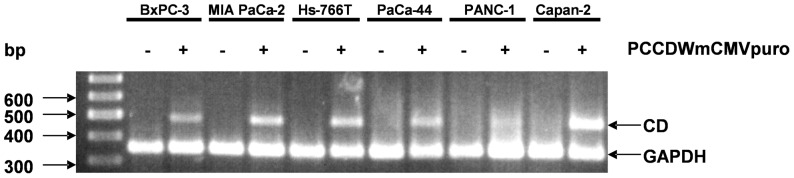
Tumor uptake was 83% to 100% in the subcutaneous model and 60% to 100% in the orthotopical mouse model, except for Hs-766T cells, which did not grow orthotopically. Pathohistological analyses of the orthotopical models revealed an infiltrative growth of almost all tumors into the pancreas; however, the different cell lines gave rise to tumors with different morphological characteristics. All of the resultant tumors were positive for MUC-1 staining indicating their origin from glandular or ductal epithelium, but revealed scattered pan-cytokeratin staining. Transfer of the cytochrome P450 and cytosine deaminase suicide gene, respectively, into the pancreatic cancer cell lines using retroviral vector technology revealed high level infectibility of these cell lines and allowed the analysis of the sensitivity of these cells to the chemotherapeutic drugs ifosfamide and 5-fluorocytosine, respectively.
These data qualify the cell lines as part of valuable in vitro and in vivo models for the use in defined preclinical studies for pancreas tumor therapy.
基因导向酶前药疗法(GDEPT)是一种针对实体瘤的两步治疗方案,涉及转移编码前药激活酶的基因,然后给予无活性的前药,该前药随后被酶激活为其肿瘤毒性形式。然而,为了对抗胰腺癌,建立这种新的治疗方案需要明确和稳健的动物模型系统。
在这里,我们全面比较了六种人胰腺癌细胞系(PaCa-44、PANC-1、MIA PaCa-2、Hs-766T、Capan-2 和 BxPc-3)在皮下和原位小鼠模型中的表现以及它们对不同 GDEPT 的敏感性。
除了 Hs-766T 细胞不能原位生长外,在皮下模型中肿瘤摄取率为 83%至 100%,在原位小鼠模型中为 60%至 100%。原位模型的组织病理学分析显示,几乎所有肿瘤都浸润性地生长到胰腺中;然而,不同的细胞系产生了具有不同形态特征的肿瘤。所有产生的肿瘤均对 MUC-1 染色呈阳性,表明它们起源于腺上皮或导管上皮,但显示出散在的泛细胞角蛋白染色。使用逆转录病毒载体技术将细胞色素 P450 和胞嘧啶脱氨酶自杀基因分别转移到胰腺癌细胞系中,揭示了这些细胞系的高感染性,并允许分析这些细胞对化疗药物异环磷酰胺和 5-氟胞嘧啶的敏感性。
这些数据使这些细胞系成为用于定义胰腺肿瘤治疗的临床前研究的有价值的体外和体内模型的一部分。