Genome Biology Group, Duke Institute for Genome Sciences & Policy, Duke University, Durham, NC, USA.
BMC Genomics. 2012 Jul 20;13:324. doi: 10.1186/1471-2164-13-324.
Centromeres are sites of chromosomal spindle attachment during mitosis and meiosis. While the sequence basis for centromere identity remains a subject of considerable debate, one approach is to examine the genomic organization at these active sites that are correlated with epigenetic marks of centromere function.
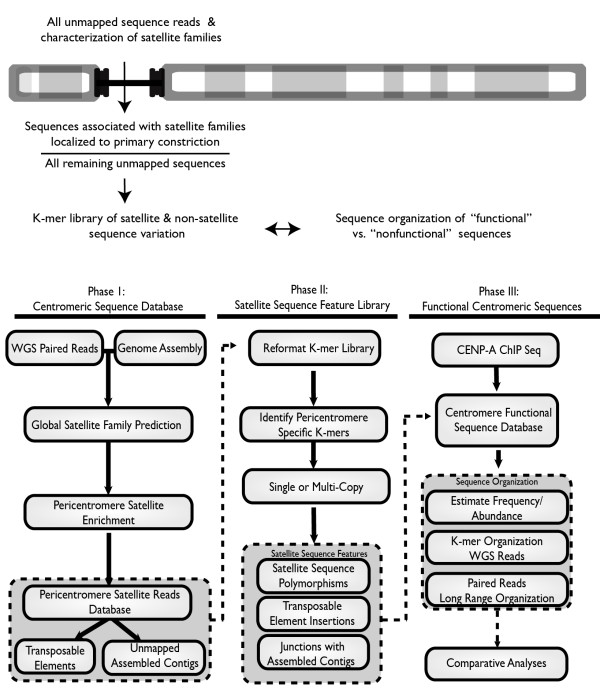
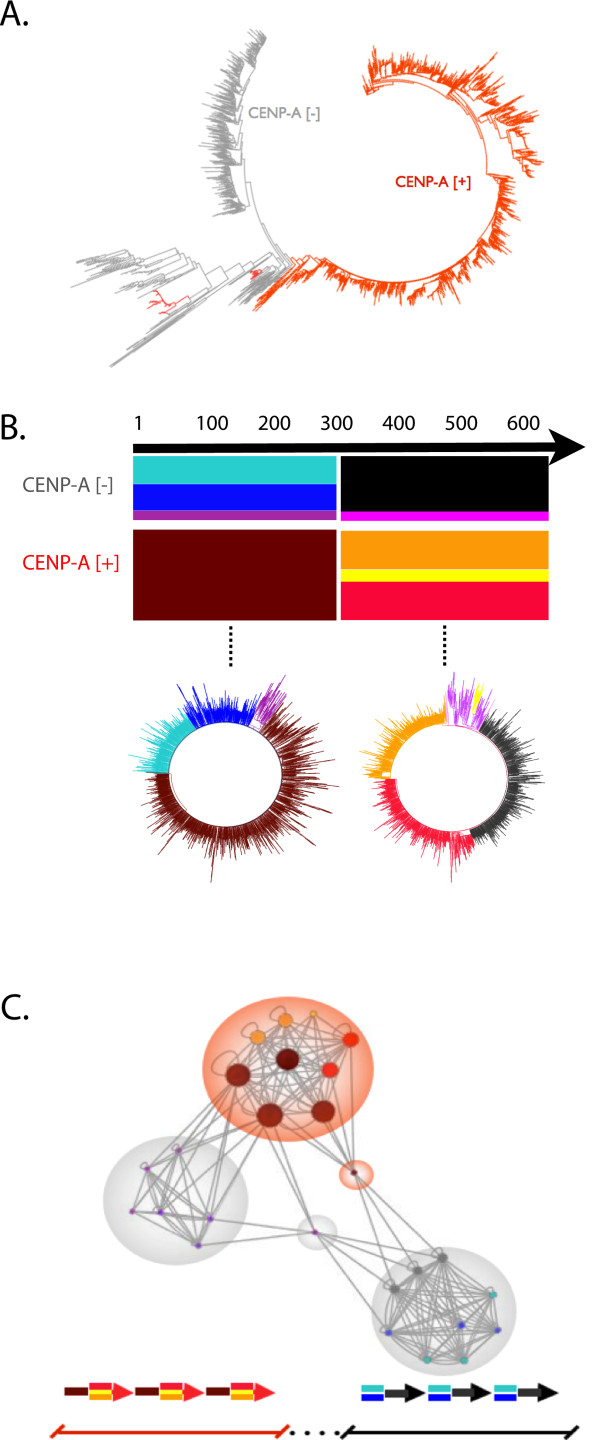
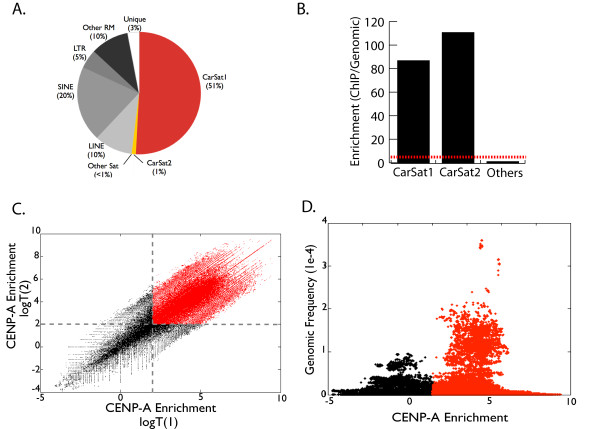
We have developed an approach to characterize both satellite and non-satellite centromeric sequences that are missing from current assemblies in complex genomes, using the dog genome as an example. Combining this genomic reference with an epigenetic dataset corresponding to sequences associated with the histone H3 variant centromere protein A (CENP-A), we identify active satellite sequence domains that appear to be both functionally and spatially distinct within the overall definition of satellite families.
These findings establish a genomic and epigenetic foundation for exploring the functional role of centromeric sequences in the previously sequenced dog genome and provide a model for similar studies within the context of less-characterized genomes.
着丝粒是有丝分裂和减数分裂期间染色体纺锤体附着的位点。虽然着丝粒身份的序列基础仍然是一个相当有争议的话题,但一种方法是检查与着丝粒功能的表观遗传标记相关的这些活跃位点的基因组组织。
我们开发了一种方法来描述当前复杂基因组组装中缺失的卫星和非卫星着丝粒序列,以狗基因组为例。将这种基因组参考与对应于与组蛋白 H3 变体着丝粒蛋白 A(CENP-A)相关的序列的表观遗传数据集相结合,我们确定了活跃的卫星序列域,这些序列域在卫星家族的整体定义内似乎在功能和空间上都不同。
这些发现为在以前测序的狗基因组中探索着丝粒序列的功能作用奠定了基因组和表观遗传基础,并为在特征较少的基因组背景下进行类似研究提供了模型。