Population Council Nairobi, Nairobi, Kenya.
BMC Public Health. 2012 Jul 23;12:540. doi: 10.1186/1471-2458-12-540.
Innovative financing strategies such as those that integrate supply and demand elements like the output-based approach (OBA) have been implemented to reduce financial barriers to maternal health services. The Kenyan government with support from the German Development Bank (KfW) implemented an OBA voucher program to subsidize priority reproductive health services. Little evidence exists on the experience of implementing such programs in different settings. We describe the implementation process of the Kenyan OBA program and draw implications for scale up.
Policy analysis using document review and qualitative data from 10 in-depth interviews with facility in-charges and 18 with service providers from the contracted facilities, local administration, health and field managers in Kitui, Kiambu and Kisumu districts as well as Korogocho and Viwandani slums in Nairobi.
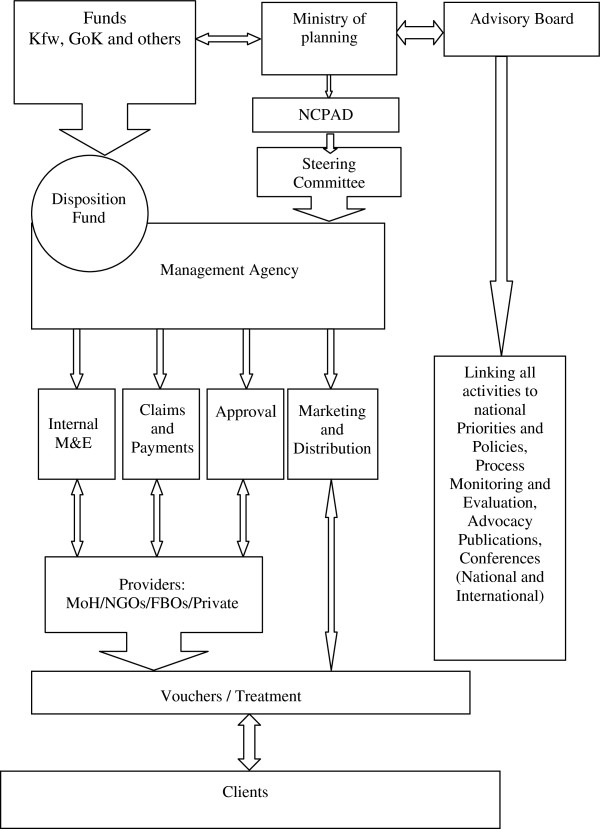
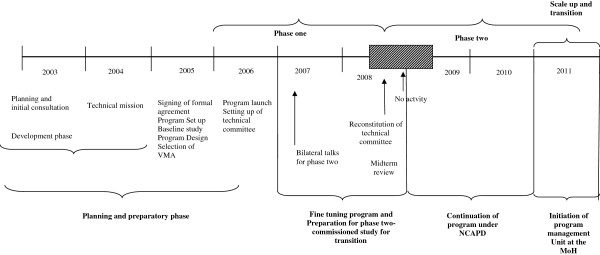
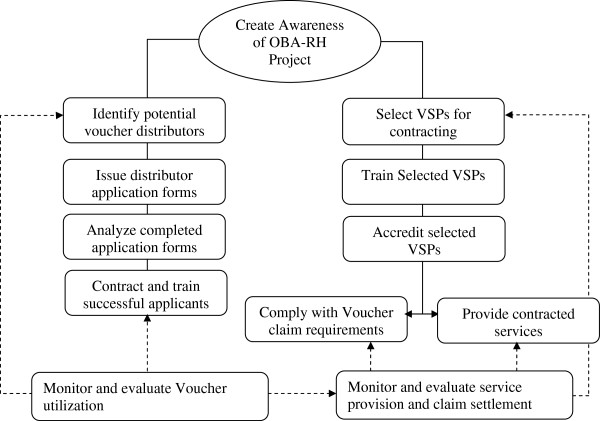
The OBA implementation process was designed in phases providing an opportunity for learning and adapting the lessons to local settings; the design consisted of five components: a defined benefit package, contracting and quality assurance; marketing and distribution of vouchers and claims processing and reimbursement. Key implementation challenges included limited feedback to providers on the outcomes of quality assurance and accreditation and budgetary constraints that limited effective marketing leading to inadequate information to clients on the benefit package. Claims processing and reimbursement was sophisticated but required adherence to time consuming procedures and in some cases private providers complained of low reimbursement rates for services provided.
OBA voucher schemes can be implemented successfully in similar settings. For effective scale up, strong partnership will be required between the public and private entities. The government's role is key and should include provision of adequate funding, stewardship and looking for opportunities to utilize existing platforms to scale up such strategies.
为了降低妇幼保健服务的资金障碍,已经实施了创新的融资策略,例如将供需元素整合在一起的基于成果的方法(OBA)。肯尼亚政府在德国发展银行(KfW)的支持下,实施了 OBA 代金券计划,以补贴优先生殖健康服务。关于在不同环境中实施此类计划的经验证据很少。我们描述了肯尼亚 OBA 计划的实施过程,并为扩大规模提出了启示。
使用文件审查和来自基特古乔和维旺丹尼贫民窟以及基图伊、基安布和基苏木地区的 10 名设施负责人和 18 名服务提供者的深入访谈的定性数据进行政策分析。来自签约设施、地方行政部门、卫生和实地管理人员的服务提供者。
OBA 实施过程分阶段设计,为在当地环境中学习和适应经验教训提供了机会;设计包括五个组成部分:定义的福利套餐、承包和质量保证;代金券的营销和分配以及索赔处理和报销。关键实施挑战包括向提供者提供有关质量保证和认证结果的反馈有限,以及预算限制,这限制了有效的营销,导致客户对福利套餐的信息不足。索赔处理和报销很复杂,但需要遵守耗时的程序,在某些情况下,私人提供者抱怨提供的服务报销率低。
OBA 代金券计划可以在类似的环境中成功实施。为了有效扩大规模,将需要公共和私营实体之间建立强有力的伙伴关系。政府的作用至关重要,应包括提供充足的资金、管理和寻找机会利用现有平台来扩大此类策略。