ScHARR, Regent Court, Sheffield S1 4DA, UK.
BMC Public Health. 2012 Jul 23;12:542. doi: 10.1186/1471-2458-12-542.
Recent terrorist attacks and natural disasters have led to an increased awareness of the importance of emergency planning. However, the extent to which emergency planners can access or use evidence remains unclear. The aim of this study was to identify, analyse and assess the location, source and quality of emergency planning publications in the academic and UK grey literature.
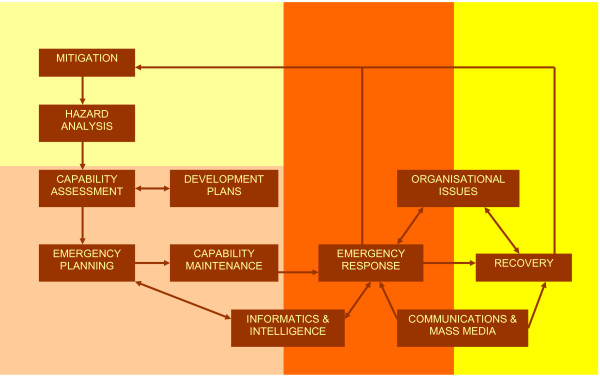
We conducted a scoping review, using as data sources for academic literature Embase, Medline, Medline in Process, Psychinfo, Biosis, Science Citation Index, Cinahl, Cochrane library and Clinicaltrials.gov. For grey literature identification we used databases at the Health Protection Agency, NHS Evidence, British Association of Immediate Care Schemes, Emergency Planning College and the Health and Safety Executive, and the websites of UK Department of Health Emergency Planning Division and UK Resilience.Aggregative synthesis was used to analyse papers and documents against a framework based on a modified FEMA Emergency Planning cycle.
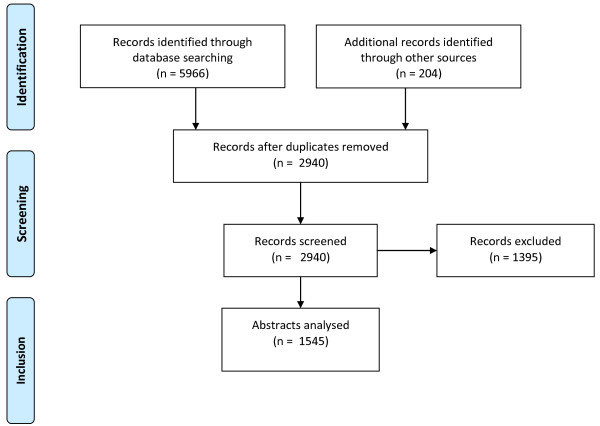
Of 2736 titles identified from the academic literature, 1603 were relevant. 45% were from North America, 27% were commentaries or editorials and 22% were event reports.Of 192 documents from the grey literature, 97 were relevant. 76% of these were event reports.The majority of documents addressed emergency planning and response. Very few documents related to hazard analysis, mitigation or capability assessment.
Although a large body of literature exists, its validity and generalisability is unclear There is little evidence that this potential evidence base has been exploited through synthesis to inform policy and practice. The type and structure of evidence that would be of most value of emergency planners and policymakers has yet to be identified.
最近的恐怖袭击和自然灾害导致人们越来越意识到紧急规划的重要性。然而,紧急规划人员能够获取或使用证据的程度尚不清楚。本研究旨在确定、分析和评估学术和英国灰色文献中紧急规划出版物的位置、来源和质量。
我们进行了范围界定审查,使用 Embase、Medline、Medline in Process、Psychinfo、Biosis、Science Citation Index、Cinahl、Cochrane 图书馆和 Clinicaltrials.gov 等数据库作为学术文献数据来源。为了识别灰色文献,我们使用了英国健康保护署、NHS 证据、英国即时护理计划协会、紧急规划学院和健康与安全执行局的数据库,以及英国卫生部紧急规划司和英国弹性聚合网站。聚合综合分析用于根据基于修改后的 FEMA 紧急规划周期的框架分析论文和文件。
从学术文献中确定的 2736 个标题中,有 1603 个是相关的。其中 45%来自北美,27%是评论或社论,22%是事件报告。从灰色文献中确定的 192 份文件中,有 97 份是相关的。其中 76%是事件报告。大多数文件涉及紧急规划和应对。很少有文件涉及危险分析、缓解或能力评估。
尽管存在大量文献,但文献的有效性和普遍性尚不清楚。几乎没有证据表明,通过综合利用这一潜在证据基础来为政策和实践提供信息。紧急规划人员和政策制定者最需要的证据类型和结构尚未确定。