DFG-Center for Regenerative Therapies Dresden - Cluster of Excellence (CRTD), Technische Universität Dresden, Fetscherstr, 105, Dresden, 01307, Germany.
Neural Dev. 2012 Jul 23;7:27. doi: 10.1186/1749-8104-7-27.
Unlike mammals, zebrafish exhibits extensive neural regeneration after injury in adult stages of its lifetime due to the neurogenic activity of the radial glial cells. However, the genes involved in the regenerative neurogenesis response of the zebrafish brain are largely unknown. Thus, understanding the underlying principles of this regeneration capacity of the zebrafish brain is an interesting research realm that may offer vast clinical ramifications.
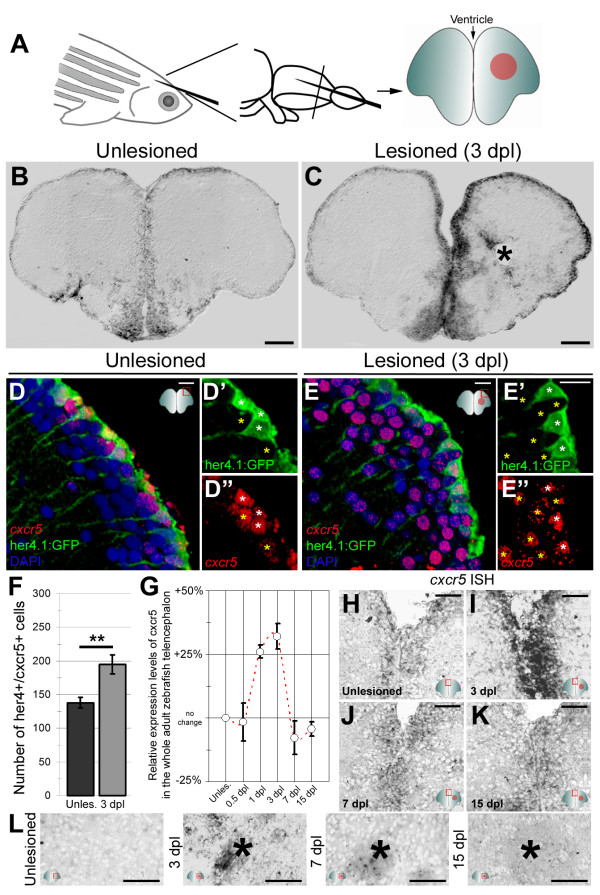
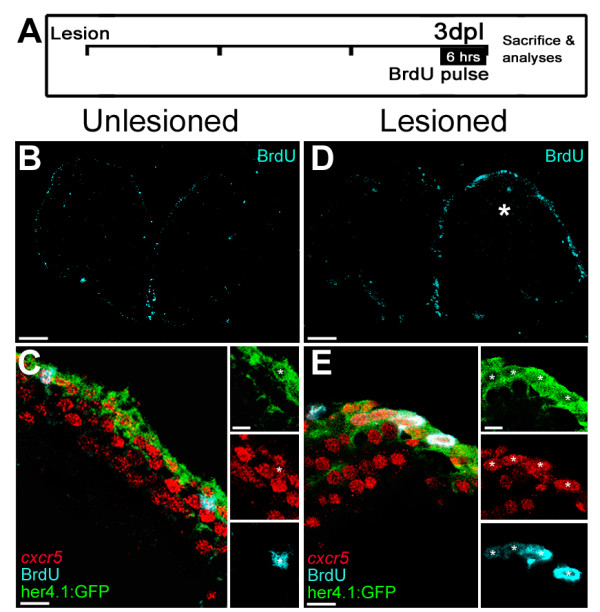
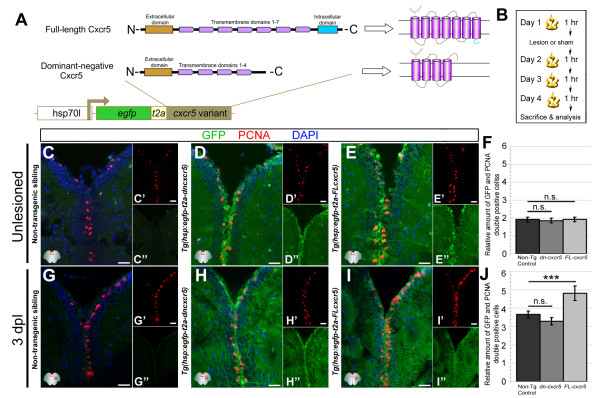
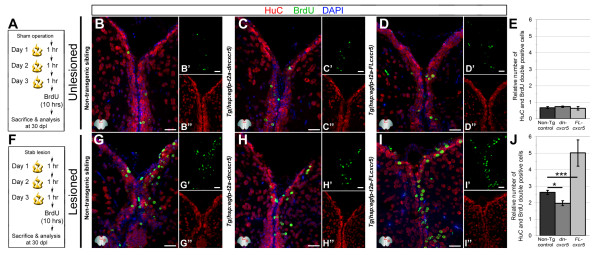
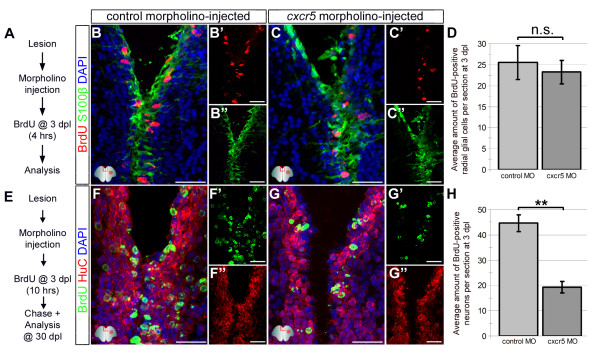
In this paper, we characterized the expression pattern of cxcr5 and analyzed the function of this gene during adult neurogenesis and regeneration of the zebrafish telencephalon. We found that cxcr5 was upregulated transiently in the RGCs and neurons, and the expression in the immune cells such as leukocytes was negligible during both adult neurogenesis and regeneration. We observed that the transgenic misexpression of cxcr5 in the ventricular cells using dominant negative and full-length variants of the gene resulted in altered proliferation and neurogenesis response of the RGCs. When we knocked down cxcr5 using antisense morpholinos and cerebroventricular microinjection, we observed outcomes similar to the overexpression of the dominant negative cxcr5 variant.
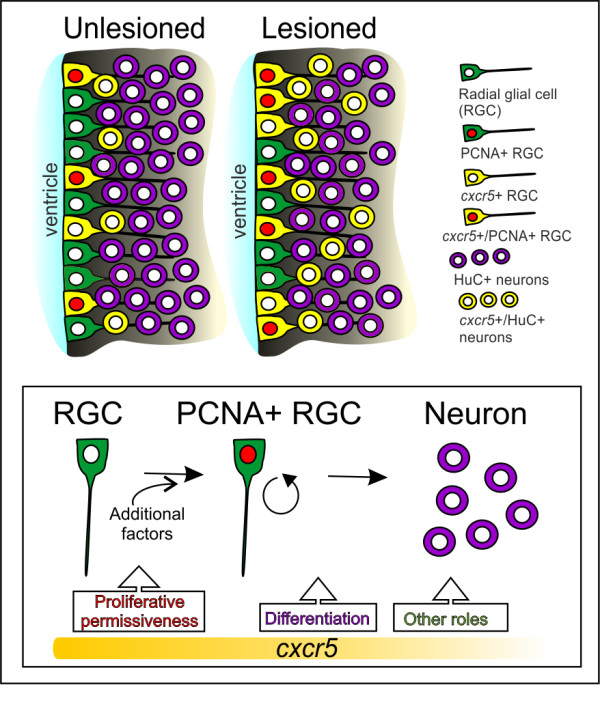
Thus, based on our results, we propose that cxcr5 imposes a proliferative permissiveness to the radial glial cells and is required for differentiation of the RGCs to neurons, highlighting novel roles of cxcr5 in the nervous system of vertebrates. We therefore suggest that cxcr5 is an important cue for ventricular cell proliferation and regenerative neurogenesis in the adult zebrafish telencephalon. Further studies on the role of cxcr5 in mediating neuronal replenishment have the potential to produce clinical ramifications in efforts for regenerative therapeutic applications for human neurological disorders or acute injuries.
与哺乳动物不同,斑马鱼在其一生中的成年阶段由于放射状胶质细胞的神经发生活性而表现出广泛的神经再生。然而,涉及斑马鱼大脑再生神经发生反应的基因在很大程度上是未知的。因此,了解斑马鱼大脑这种再生能力的潜在原理是一个有趣的研究领域,可能会带来广泛的临床影响。
在本文中,我们描述了 cxcr5 的表达模式,并分析了该基因在成年神经发生和斑马鱼端脑再生过程中的功能。我们发现 cxcr5 在 RGCs 和神经元中短暂地上调,并且在成年神经发生和再生过程中,白细胞等免疫细胞中的表达可以忽略不计。我们观察到使用基因的显性负和全长变体将 cxcr5 转基因异常表达于脑室细胞中会导致 RGCs 的增殖和神经发生反应改变。当我们使用反义形态发生素来敲低 cxcr5 并进行脑室内微注射时,我们观察到与过表达显性负 cxcr5 变体相似的结果。
因此,根据我们的结果,我们提出 cxcr5 对放射状胶质细胞施加增殖许可,并需要 RGCs 分化为神经元,这突出了 cxcr5 在脊椎动物神经系统中的新作用。因此,我们认为 cxcr5 是成年斑马鱼端脑脑室细胞增殖和再生神经发生的重要线索。进一步研究 cxcr5 在介导神经元补充中的作用有可能在人类神经疾病或急性损伤的再生治疗应用方面产生临床影响。