Australian Regenerative Medicine Institute, Monash University, Clayton, VIC, 3800, Australia.
Steyer School of Health Professions, Sackler School of Medicine, Tel-Aviv University, P.O. Box 39040, 6997801, Tel Aviv, Israel.
Neural Dev. 2018 Nov 17;13(1):24. doi: 10.1186/s13064-018-0122-9.
Despite conserved developmental processes and organization of the vertebrate central nervous system, only some vertebrates including zebrafish can efficiently regenerate neural damage including after spinal cord injury. The mammalian spinal cord shows very limited regeneration and neurogenesis, resulting in permanent life-long functional impairment. Therefore, there is an urgent need to identify the cellular and molecular mechanisms that can drive efficient vertebrate neurogenesis following injury. A key pathway implicated in zebrafish neurogenesis is fibroblast growth factor signaling.
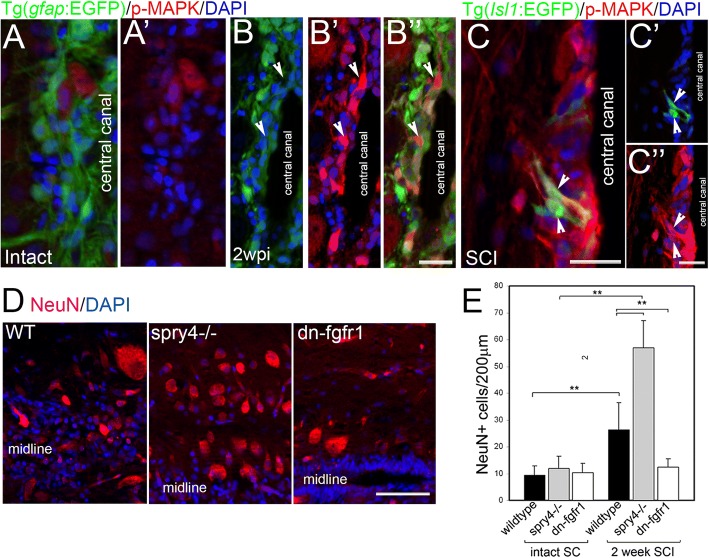
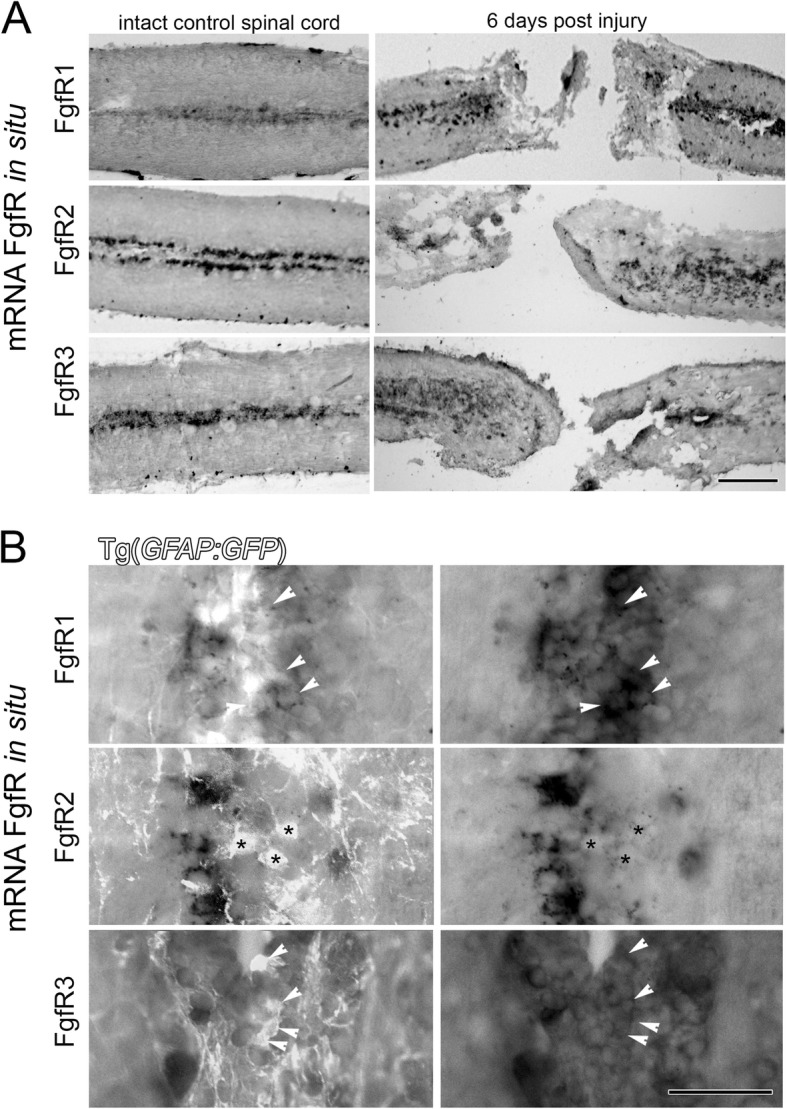
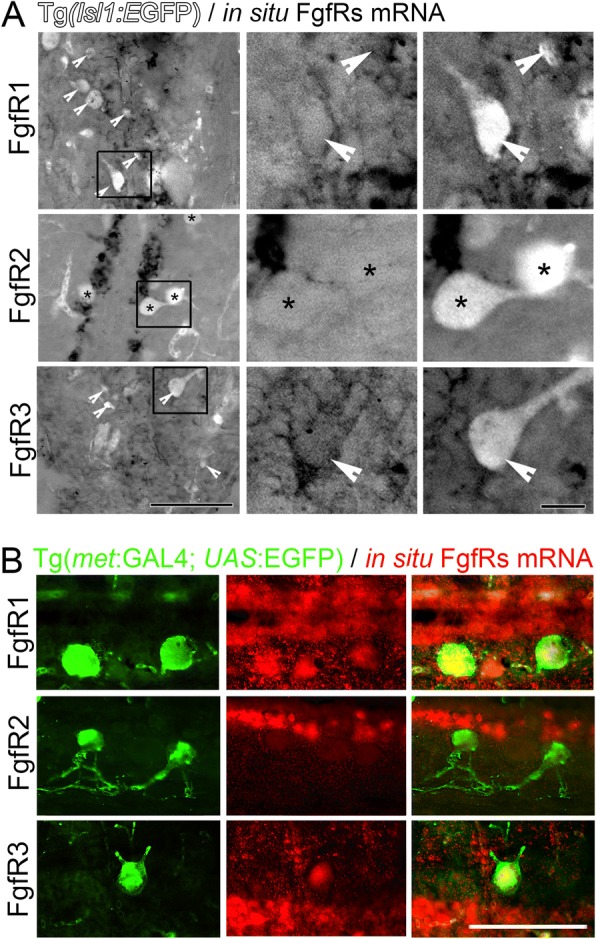
In the present study we investigated the roles of distinct fibroblast growth factor members and their receptors in facilitating different aspects of neural development and regeneration at different timepoints following spinal cord injury. After spinal cord injury in adults and during larval development, loss and/or gain of Fgf signaling was combined with immunohistochemistry, in situ hybridization and transgenes marking motor neuron populations in in vivo zebrafish and in vitro mammalian PC12 cell culture models.
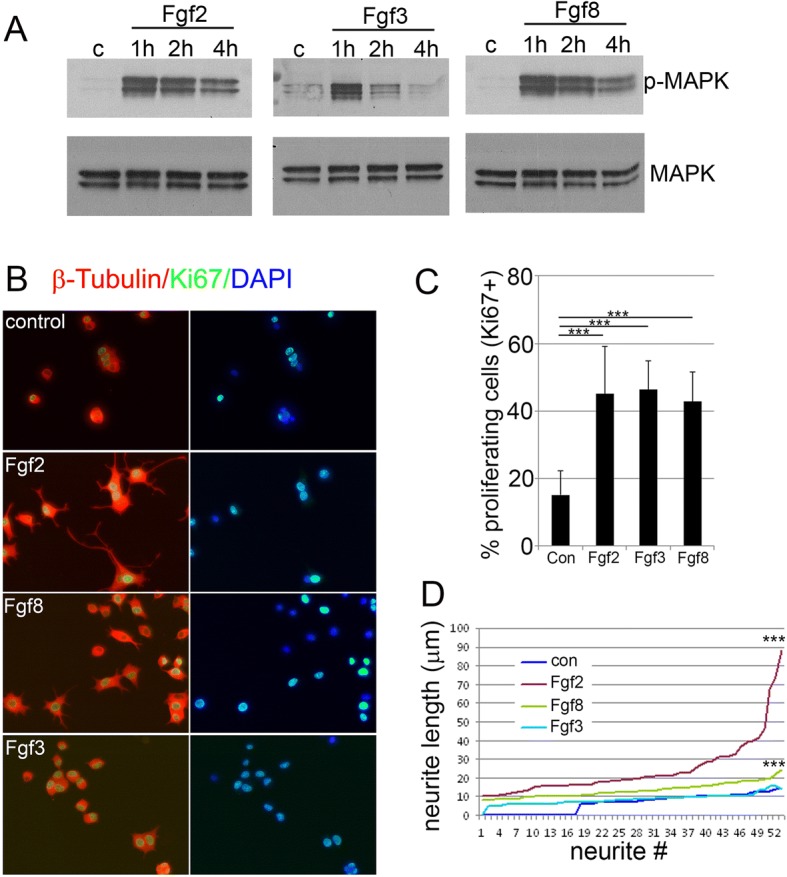
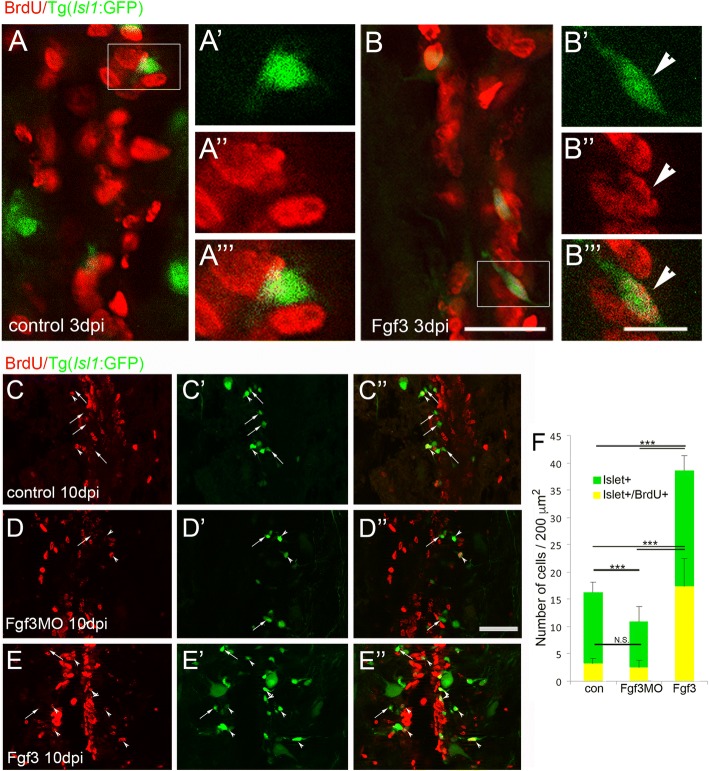
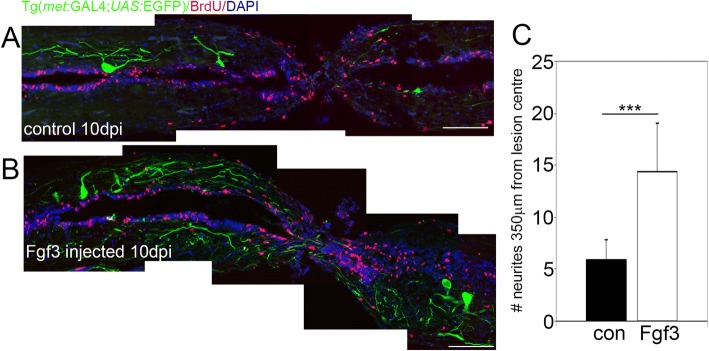
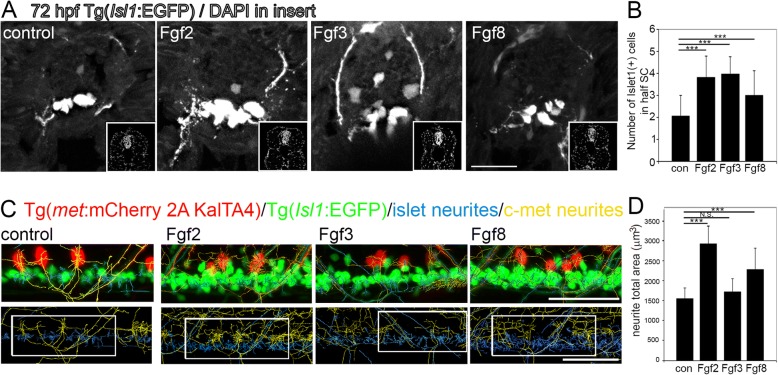
Fgf3 drives neurogenesis of Islet1 expressing motor neuron subtypes and mediate axonogenesis in cMet expressing motor neuron subtypes. We also demonstrate that the role of Fgf members are not necessarily simple recapitulating development. During development Fgf2, Fgf3 and Fgf8 mediate neurogenesis of Islet1 expressing neurons and neuronal sprouting of both, Islet1 and cMet expressing motor neurons. Strikingly in mammalian PC12 cells, all three Fgfs increased cell proliferation, however, only Fgf2 and to some extent Fgf8, but not Fgf3 facilitated neurite outgrowth.
This study demonstrates differential Fgf member roles during neural development and adult regeneration, including in driving neural proliferation and neurite outgrowth of distinct spinal cord neuron populations, suggesting that factors including Fgf type, age of the organism, timing of expression, requirements for different neuronal populations could be tailored to best drive all of the required regenerative processes.
尽管脊椎动物中枢神经系统的发育过程和组织具有保守性,但只有一些脊椎动物,包括斑马鱼,能够有效地再生神经损伤,包括脊髓损伤后。哺乳动物的脊髓显示出非常有限的再生和神经发生,导致永久性的终身功能障碍。因此,迫切需要确定可以在损伤后驱动有效的脊椎动物神经发生的细胞和分子机制。在斑马鱼神经发生中涉及的一个关键途径是成纤维细胞生长因子信号传导。
在本研究中,我们研究了不同的成纤维细胞生长因子成员及其受体在促进脊髓损伤后不同时间点的不同方面的神经发育和再生中的作用。在成年和幼虫发育过程中进行脊髓损伤后,通过免疫组织化学、原位杂交和转基因标记运动神经元群体,结合损失和/或获得 Fgf 信号转导,在体内斑马鱼和体外哺乳动物 PC12 细胞培养模型中进行研究。
Fgf3 驱动 Islet1 表达的运动神经元亚型的神经发生,并介导 cMet 表达的运动神经元亚型的轴突发生。我们还证明,Fgf 成员的作用不一定是简单地重复发育。在发育过程中,Fgf2、Fgf3 和 Fgf8 介导 Islet1 表达神经元的神经发生和 Islet1 和 cMet 表达运动神经元的神经元发芽。引人注目的是,在哺乳动物 PC12 细胞中,所有三种 Fgfs 都增加了细胞增殖,但只有 Fgf2 和在某种程度上 Fgf8,但不是 Fgf3 促进了神经突的生长。
这项研究表明,在神经发育和成年再生过程中,Fgf 成员具有不同的作用,包括驱动不同脊髓神经元群体的神经增殖和神经突生长,这表明包括 Fgf 类型、生物体的年龄、表达的时间、不同神经元群体的需求在内的因素可以进行定制,以最好地驱动所有必需的再生过程。