MRC Laboratory of Molecular Biology, Hills Road, Cambridge CB2 0QH, UK.
Mol Cell. 2012 Jul 27;47(2):183-92. doi: 10.1016/j.molcel.2012.06.028.
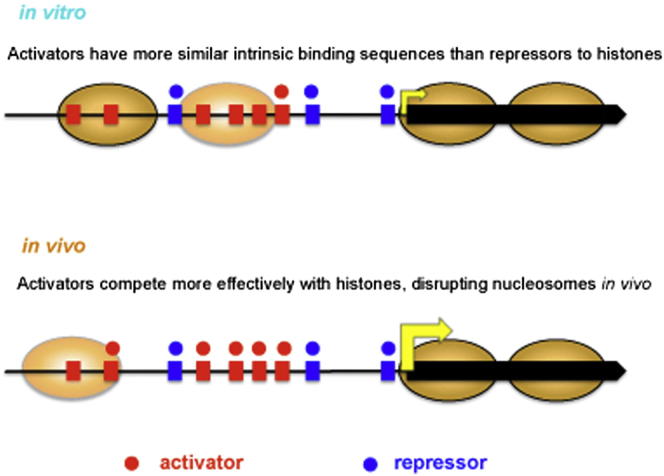
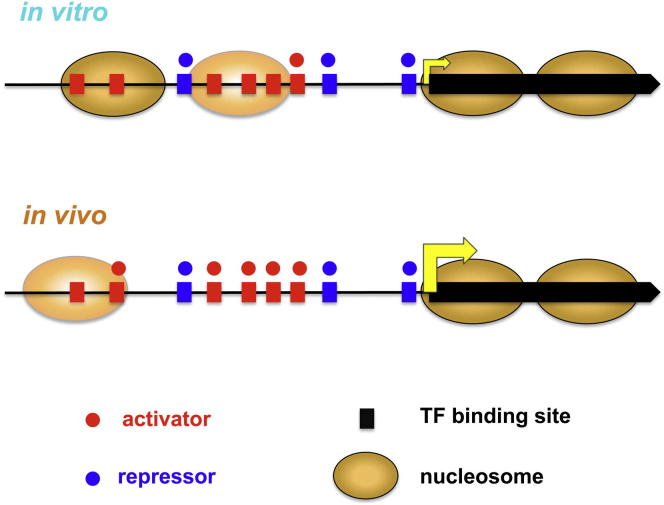
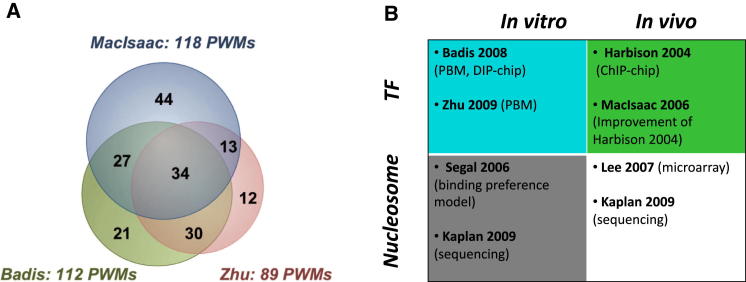
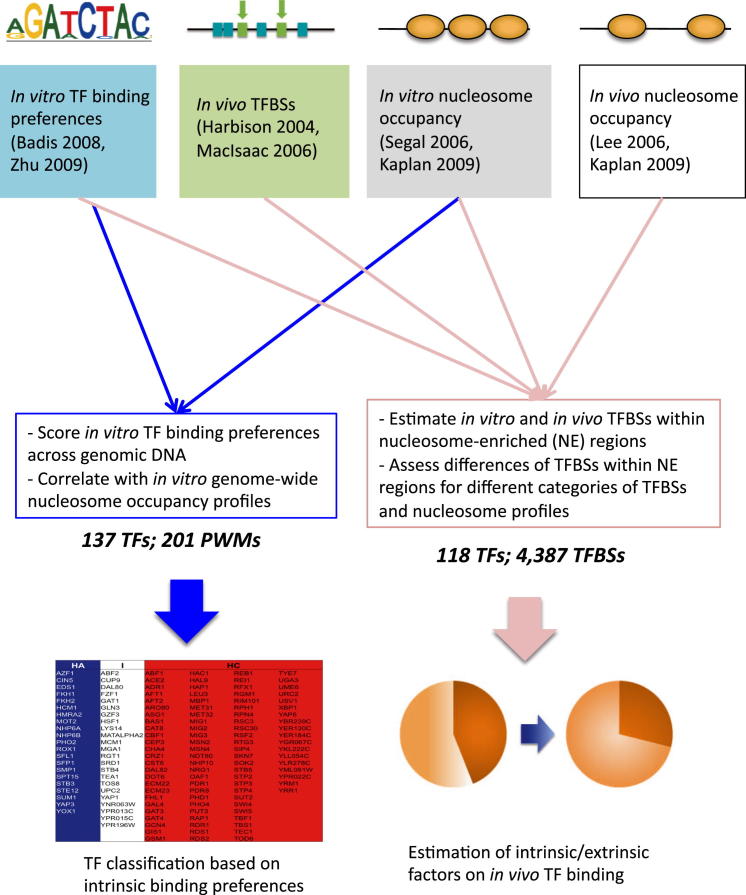
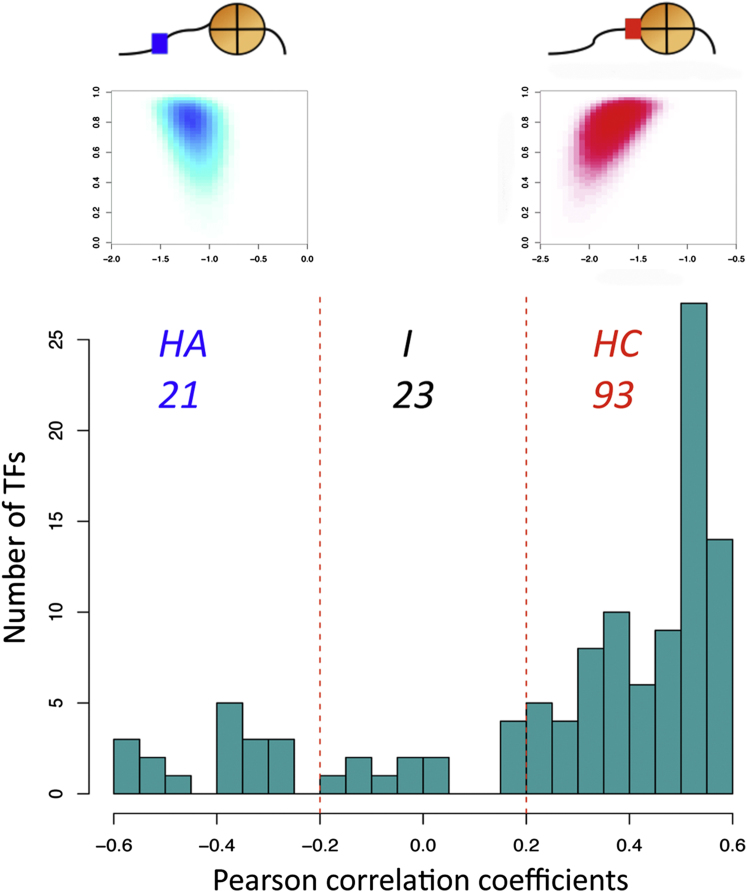
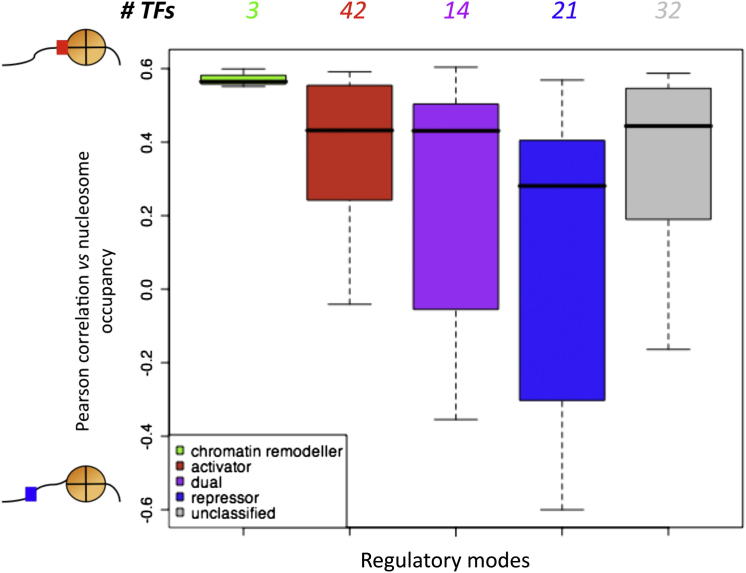
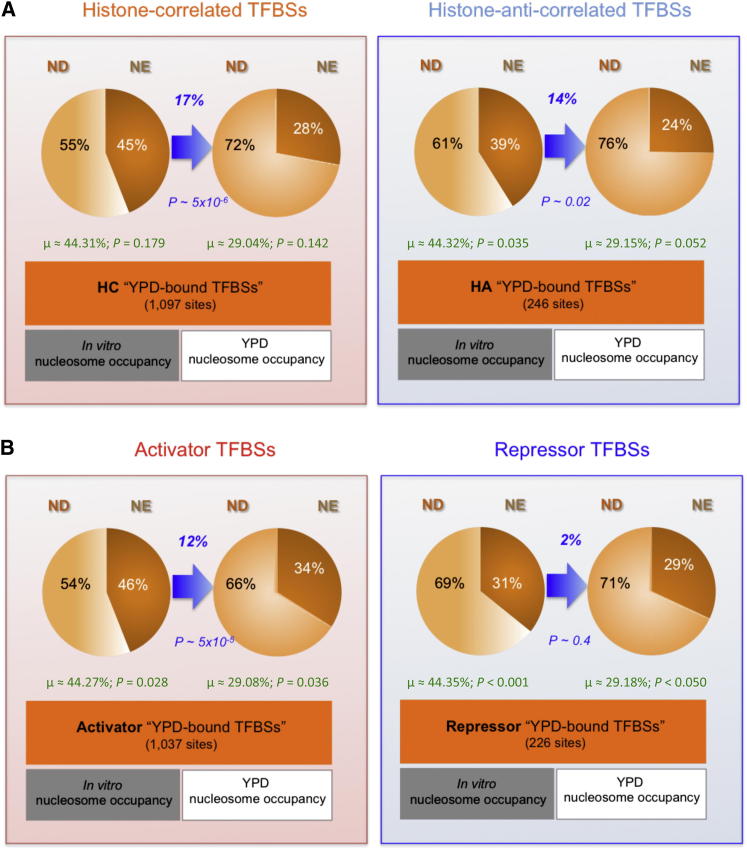
Transcription factors (TFs) and histone octamers are two abundant classes of DNA binding proteins that coordinate the transcriptional program in cells. Detailed studies of individual TFs have shown that TFs bind to nucleosome-occluded DNA sequences and induce nucleosome disruption/repositioning, while recent global studies suggest this is not the only mechanism used by all TFs. We have analyzed to what extent the intrinsic DNA binding preferences of TFs and histones play a role in determining nucleosome occupancy, in addition to nonintrinsic factors such as the enzymatic activity of chromatin remodelers. The majority of TFs in budding yeast have an intrinsic sequence preference overlapping with nucleosomal histones. TFs with intrinsic DNA binding properties highly correlated with those of histones tend to be associated with gene activation and might compete with histones to bind to genomic DNA. Consistent with this, we show that activators induce more nucleosome disruption upon transcriptional activation than repressors.
转录因子 (TFs) 和组蛋白八聚体是两类丰富的 DNA 结合蛋白,它们共同协调细胞中的转录程序。对单个 TF 的详细研究表明,TFs 结合到核小体封闭的 DNA 序列上,并诱导核小体的破坏/重定位,而最近的全局研究表明,这不是所有 TF 都使用的唯一机制。我们分析了 TF 和组蛋白的固有 DNA 结合偏好在决定核小体占有率方面起到了何种程度的作用,除了非固有因素,如染色质重塑酶的酶活性。出芽酵母中的大多数 TF 都具有与核小体组蛋白重叠的固有序列偏好。具有与组蛋白高度相关的固有 DNA 结合特性的 TF 往往与基因激活相关,并可能与组蛋白竞争结合基因组 DNA。与这一观点一致的是,我们表明激活剂在转录激活时比抑制剂诱导更多的核小体破坏。