MRC Centre for Synaptic Plasticity, Department of Physiology and Pharmacology, Bristol University, Bristol, BS8 1TD, UK.
Neuropsychologia. 2012 Nov;50(13):3122-40. doi: 10.1016/j.neuropsychologia.2012.07.034. Epub 2012 Jul 27.
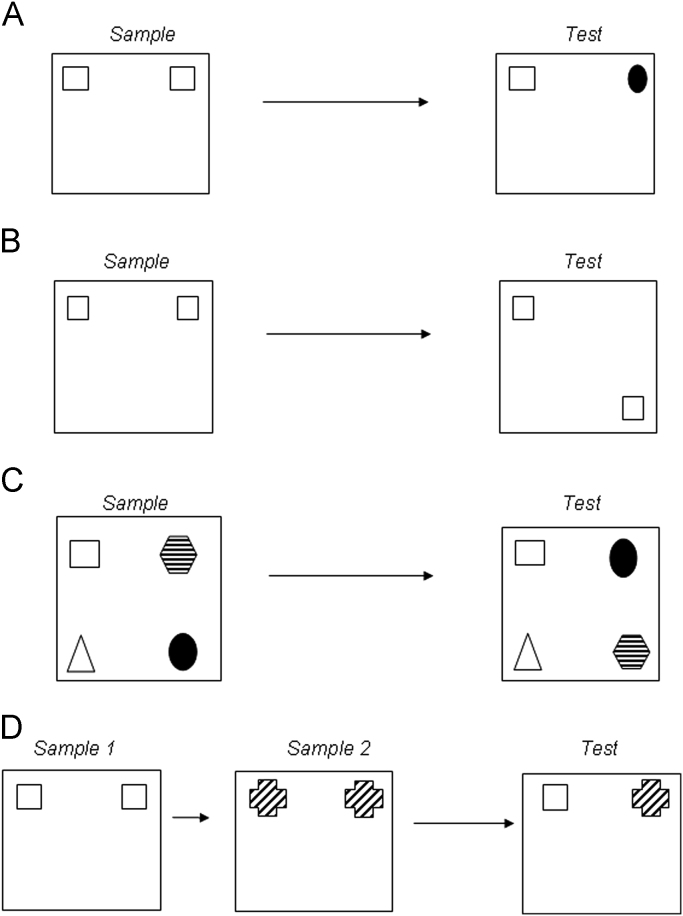
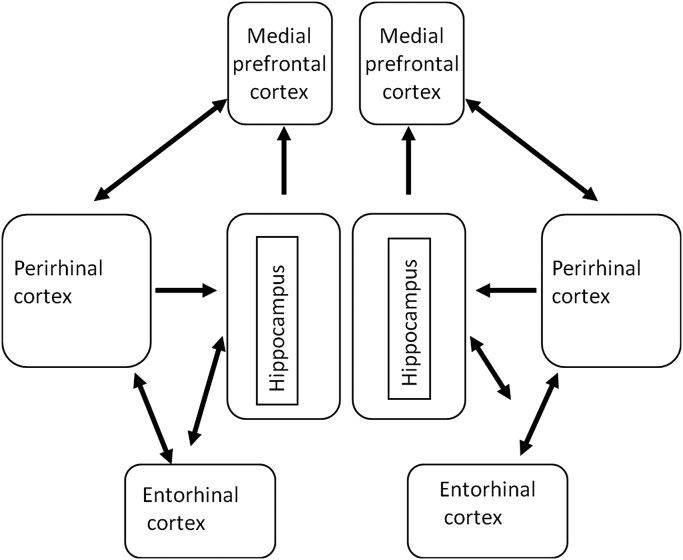
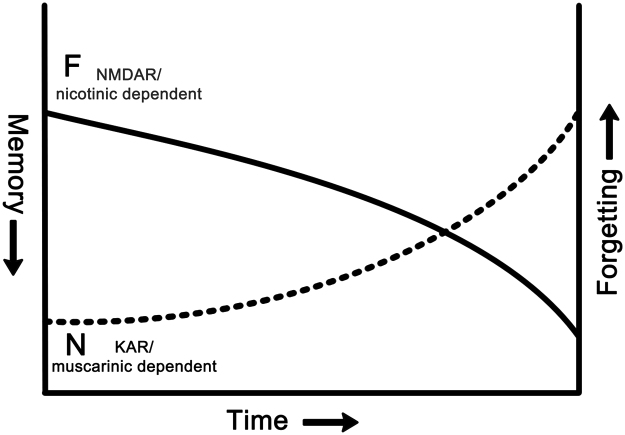
Findings of pharmacological studies that have investigated the involvement of specific regions of the brain in recognition memory are reviewed. The particular emphasis of the review concerns what such studies indicate concerning the role of the perirhinal cortex in recognition memory. Most of the studies involve rats and most have investigated recognition memory for objects. Pharmacological studies provide a large body of evidence supporting the essential role of the perirhinal cortex in the acquisition, consolidation and retrieval of object recognition memory. Such studies provide increasingly detailed evidence concerning both the neurotransmitter systems and the underlying intracellular mechanisms involved in recognition memory processes. They have provided evidence in support of synaptic weakening as a major synaptic plastic process within perirhinal cortex underlying object recognition memory. They have also supplied confirmatory evidence that that there is more than one synaptic plastic process involved. The demonstrated necessity to long-term recognition memory of intracellular signalling mechanisms related to synaptic modification within perirhinal cortex establishes a central role for the region in the information storage underlying such memory. Perirhinal cortex is thereby established as an information storage site rather than solely a processing station. Pharmacological studies have also supplied new evidence concerning the detailed roles of other regions, including the hippocampus and the medial prefrontal cortex in different types of recognition memory tasks that include a spatial or temporal component. In so doing, they have also further defined the contribution of perirhinal cortex to such tasks. To date it appears that the contribution of perirhinal cortex to associative and temporal order memory reflects that in simple object recognition memory, namely that perirhinal cortex provides information concerning objects and their prior occurrence (novelty/familiarity).
本文回顾了研究特定脑区在识别记忆中作用的药理学研究结果。本文特别关注这些研究对于边缘下皮层在识别记忆中的作用所表明的问题。大多数研究涉及大鼠,且大多数研究都调查了对物体的识别记忆。药理学研究提供了大量证据,支持边缘下皮层在获取、巩固和检索物体识别记忆中的关键作用。这些研究提供了越来越详细的证据,涉及识别记忆过程中涉及的神经递质系统和潜在的细胞内机制。它们提供了证据支持突触减弱是边缘下皮层中与物体识别记忆相关的主要突触可塑性过程。它们还提供了确认证据,表明涉及不止一种突触可塑性过程。证明与边缘下皮层内突触修饰相关的细胞内信号转导机制对于长期识别记忆是必要的,这确立了该区域在支持这种记忆的信息存储中的核心作用。因此,边缘下皮层被确立为信息存储位点,而不仅仅是处理站。药理学研究还提供了关于其他区域(包括海马体和内侧前额叶皮层)在包括空间或时间成分的不同类型识别记忆任务中的详细作用的新证据。这样做,它们还进一步定义了边缘下皮层对这些任务的贡献。迄今为止,边缘下皮层对联想和时间顺序记忆的贡献似乎反映了在简单物体识别记忆中的贡献,即边缘下皮层提供了关于物体及其先前出现(新奇/熟悉)的信息。