Center for Human Genome Variation, Duke University School of Medicine, Durham, North Carolina, USA.
Nat Genet. 2012 Sep;44(9):1030-4. doi: 10.1038/ng.2358. Epub 2012 Jul 29.
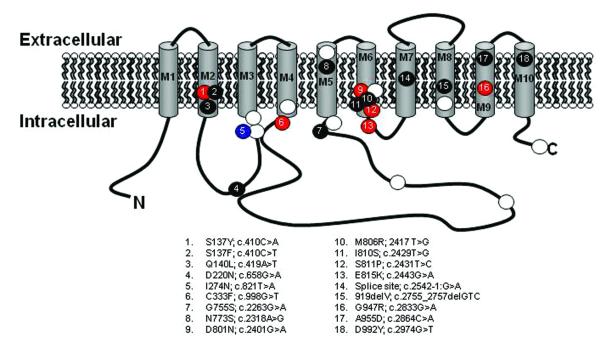
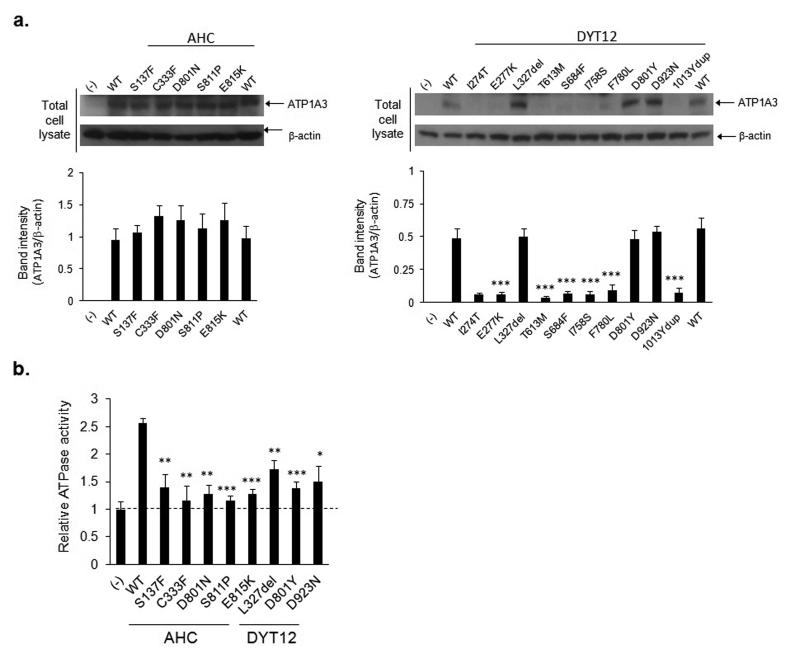
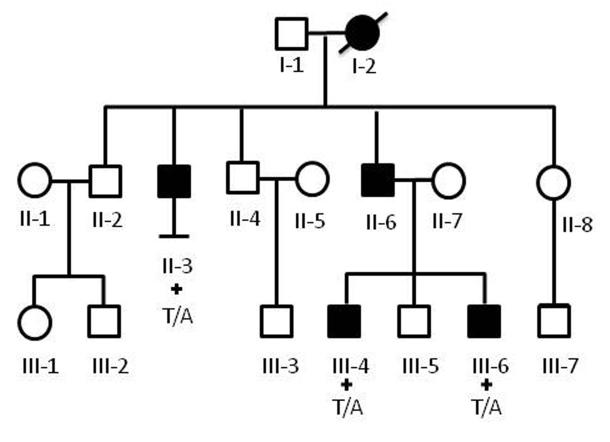
Alternating hemiplegia of childhood (AHC) is a rare, severe neurodevelopmental syndrome characterized by recurrent hemiplegic episodes and distinct neurological manifestations. AHC is usually a sporadic disorder and has unknown etiology. We used exome sequencing of seven patients with AHC and their unaffected parents to identify de novo nonsynonymous mutations in ATP1A3 in all seven individuals. In a subsequent sequence analysis of ATP1A3 in 98 other patients with AHC, we found that ATP1A3 mutations were likely to be responsible for at least 74% of the cases; we also identified one inherited mutation in a case of familial AHC. Notably, most AHC cases are caused by one of seven recurrent ATP1A3 mutations, one of which was observed in 36 patients. Unlike ATP1A3 mutations that cause rapid-onset dystonia-parkinsonism, AHC-causing mutations in this gene caused consistent reductions in ATPase activity without affecting the level of protein expression. This work identifies de novo ATP1A3 mutations as the primary cause of AHC and offers insight into disease pathophysiology by expanding the spectrum of phenotypes associated with mutations in ATP1A3.
儿童交替性偏瘫(AHC)是一种罕见的严重神经发育综合征,其特征是反复发作的偏瘫发作和明显的神经表现。AHC 通常是散发性疾病,病因不明。我们对 7 名 AHC 患者及其未受影响的父母进行外显子组测序,发现所有 7 名患者均存在 ATP1A3 的新生非同义突变。在随后对 98 名其他 AHC 患者的 ATP1A3 进行序列分析中,我们发现 ATP1A3 突变可能至少导致 74%的病例;我们还在一例家族性 AHC 中发现了一个遗传突变。值得注意的是,大多数 AHC 病例是由七个反复出现的 ATP1A3 突变之一引起的,其中 36 例患者观察到一个突变。与导致快速发作性运动障碍帕金森病的 ATP1A3 突变不同,该基因中的 AHC 致病突变导致 ATPase 活性持续降低,而不影响蛋白表达水平。这项工作确定了新生的 ATP1A3 突变是 AHC 的主要原因,并通过扩展与 ATP1A3 突变相关的表型谱,为疾病病理生理学提供了深入了解。