Mader Edward C, Villemarette-Pittman Nicole R, Kashirny Sergei V, Santana-Gould Lenay, Olejniczak Piotr W
Louisiana State University Health Sciences Center, Epilepsy Center of Excellence, 1542 Tulane Avenue, New Orleans, LA 70112, USA.
Clin Med Insights Case Rep. 2012;5:99-106. doi: 10.4137/CCRep.S9861. Epub 2012 Jul 5.
Typical spike-and-wave activity (TSWA) in the electroencephalogram (EEG) indicates idiopathic generalized epilepsy (IGE). IGE-related nonconvulsive status epilepticus (NCSE) is typically an absence status epilepticus (ASE). ASE and TSWA respond dramatically to benzodiazepines. Patients with no history of seizure/epilepsy may develop ASE "de novo" in the context of an acute brain disorder. However, we are aware of only one previous case of de novo ASE with TSWA in hypoxic-ischemic brain injury.
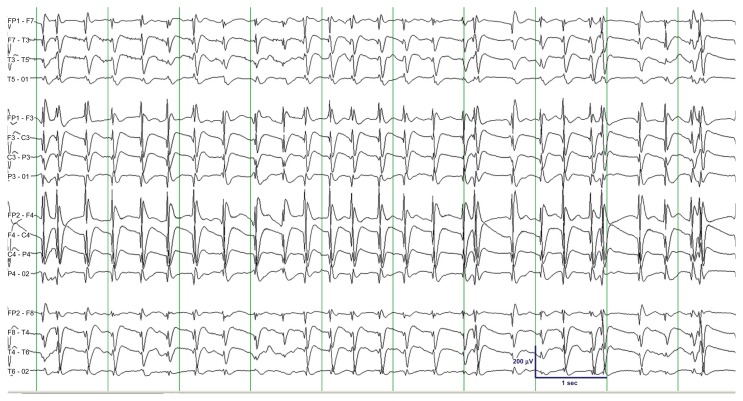
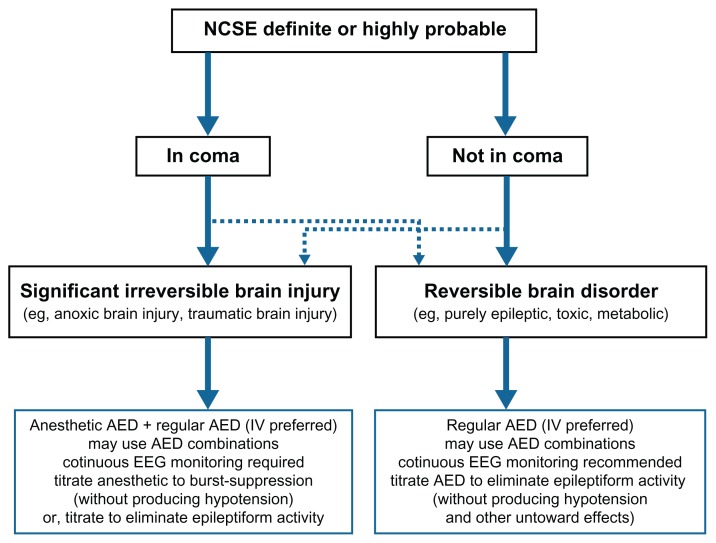
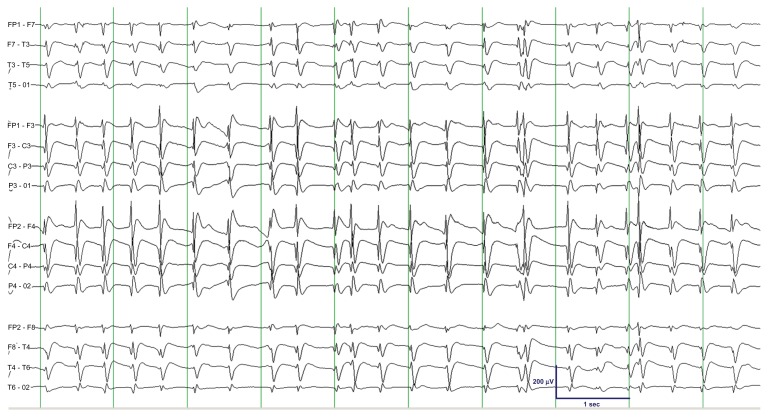
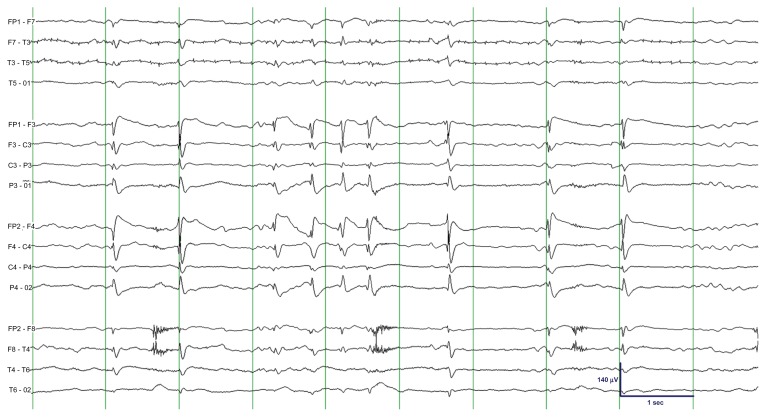
A 65-year-old man, with congestive heart failure and history of substance abuse, survived cardiorespiratory arrest after 18 minutes of cardiopulmonary resuscitation. Post-resuscitation, the patient was in coma with intact brainstem function. Toxicology was positive for cocaine and marijuana. Eyelid myoclonus suggested NCSE, which was initially treated with lorazepam and fosphenytoin. EEG monitoring showed sustained TSWA confirming NCSE and demonstrating de novo ASE (the patient and his family never had seizure/epilepsy). The TSWA was resistant to lorazepam, levetiracetam, and low-dose midazolam; it was eliminated only with midazolam at a dose that resulted in burst-suppression (≥1.2 mg/kg/hour).
This is an unusual case of TSWA and hypoxic-ischemic brain injury in a patient with no history of seizure/epilepsy. The TSWA was relatively resistant to benzodiazepines suggesting that cerebral hypoxia-ischemia spared the thalamocortical apparatus generating TSWA but impaired the cortical/thalamic inhibitory circuits where benzodiazepines act to suppress TSWA. Albeit rare, 'post-hypoxic' TSWA offers us some valuable insights for classifying and managing nonconvulsive status epilepticus.
脑电图(EEG)中的典型棘慢波活动(TSWA)提示特发性全身性癫痫(IGE)。与IGE相关的非惊厥性癫痫持续状态(NCSE)通常为失神癫痫持续状态(ASE)。ASE和TSWA对苯二氮䓬类药物反应显著。无癫痫发作/癫痫病史的患者可能在急性脑疾病的情况下“新发”ASE。然而,我们仅知晓之前有1例缺氧缺血性脑损伤患者新发伴有TSWA的ASE。
一名65岁男性,患有充血性心力衰竭且有药物滥用史,在心肺复苏18分钟后心脏呼吸骤停成功复苏。复苏后,患者处于昏迷状态,脑干功能完好。毒理学检查显示可卡因和大麻呈阳性。眼睑肌阵挛提示NCSE,最初用劳拉西泮和磷苯妥英治疗。EEG监测显示持续的TSWA,证实为NCSE并提示新发ASE(患者及其家属既往从未有过癫痫发作/癫痫)。TSWA对劳拉西泮、左乙拉西坦和低剂量咪达唑仑耐药;仅在咪达唑仑剂量达到导致爆发抑制(≥1.2mg/kg/小时)时才消除。
这是1例无癫痫发作/癫痫病史患者出现TSWA和缺氧缺血性脑损伤的不寻常病例。TSWA对苯二氮䓬类药物相对耐药,提示脑缺氧缺血使产生TSWA的丘脑皮质装置未受影响,但损害了苯二氮䓬类药物抑制TSWA作用的皮质/丘脑抑制性回路。尽管罕见,“缺氧后”TSWA为我们对非惊厥性癫痫持续状态的分类和管理提供了一些有价值的见解。