Instituto de Investigaciones Biomédicas, Facultad de Medicina, Universidad de Buenos Aires, Buenos Aires, Argentina.
PLoS One. 2012;7(7):e41299. doi: 10.1371/journal.pone.0041299. Epub 2012 Jul 23.
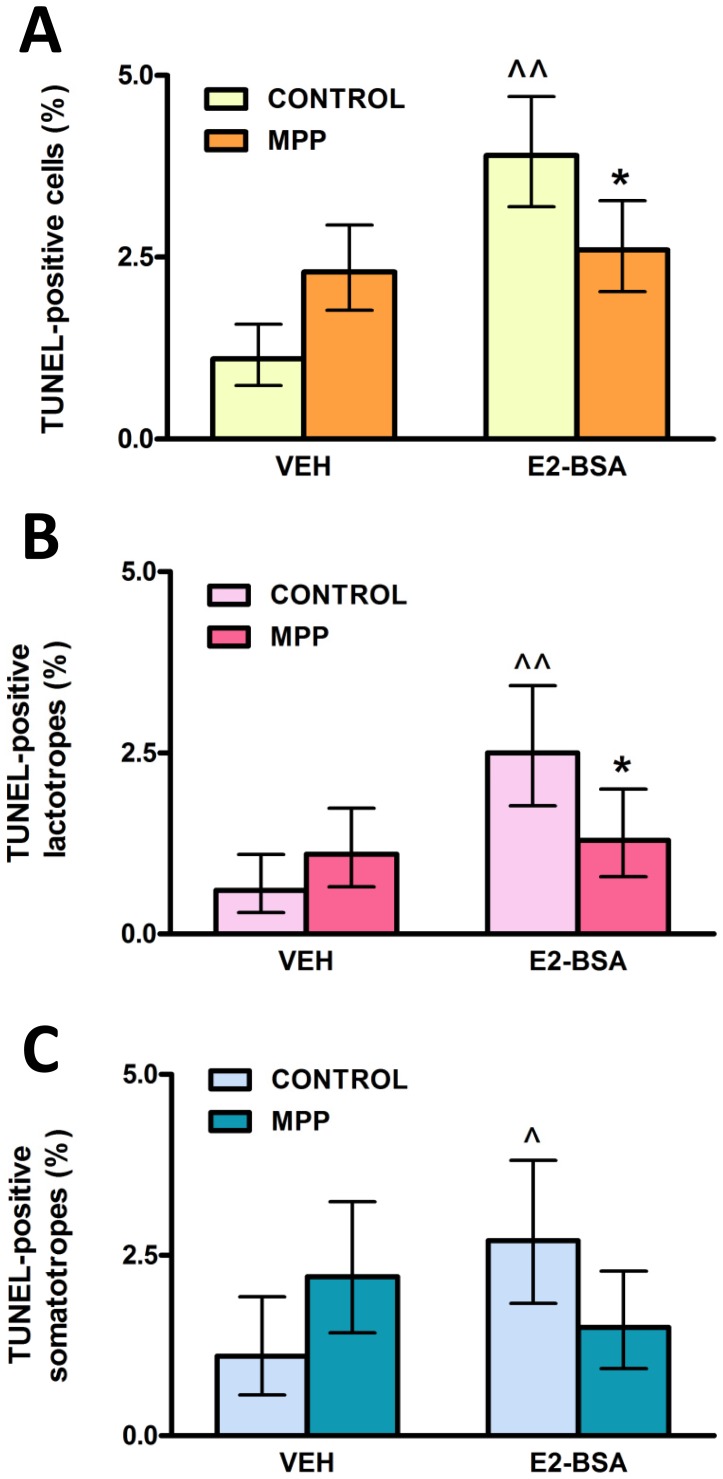
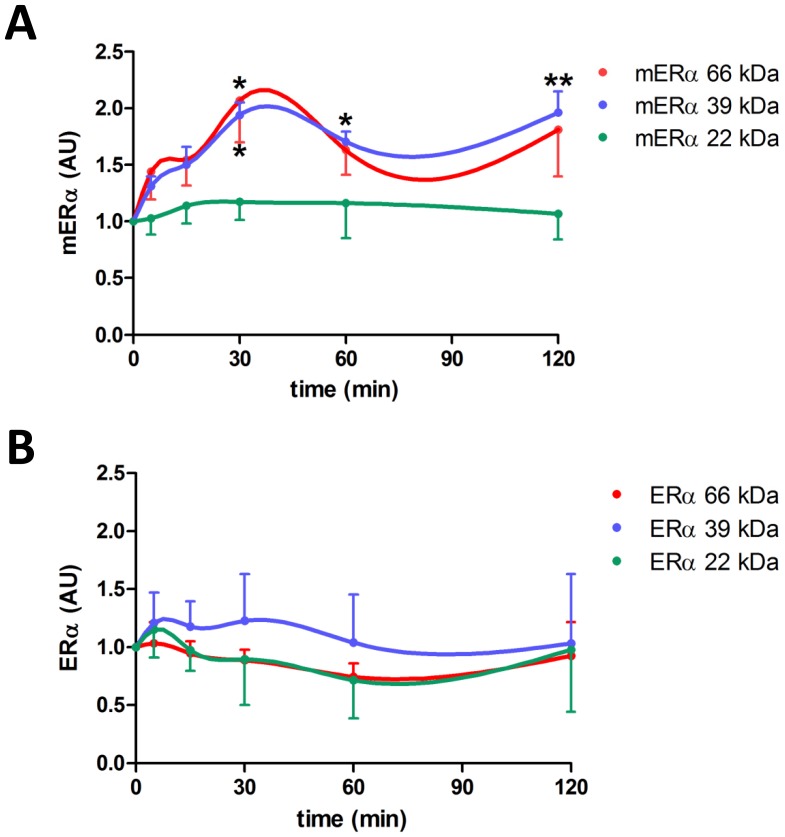
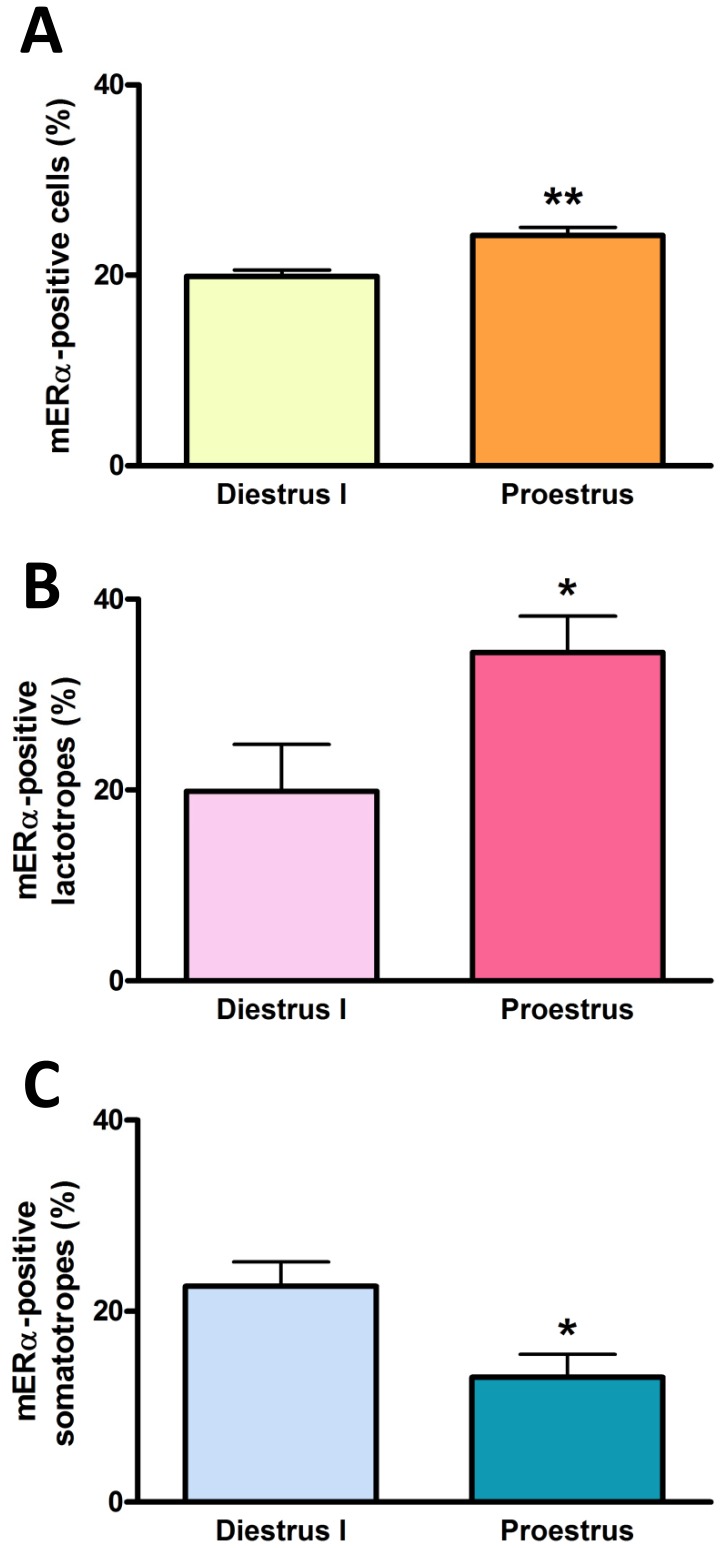
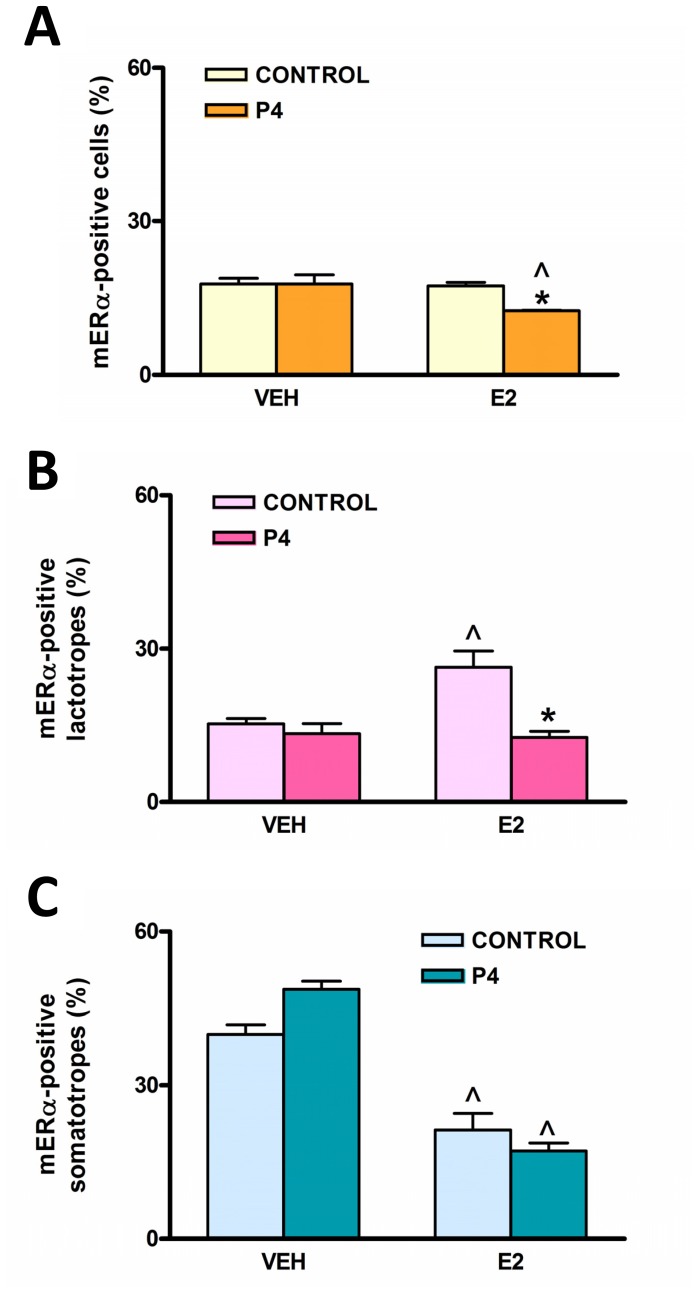
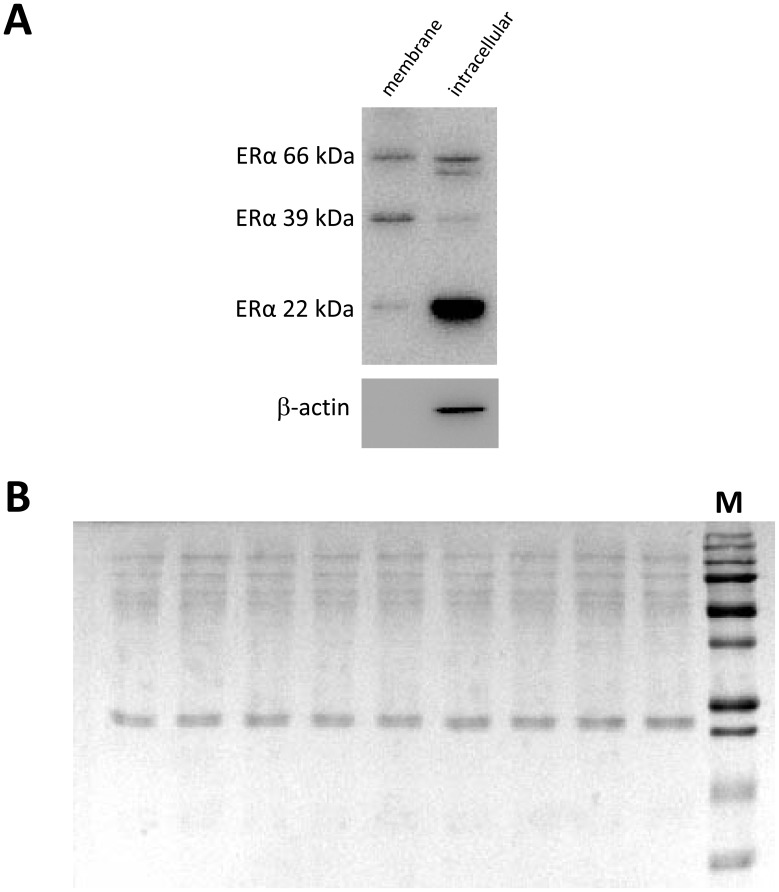
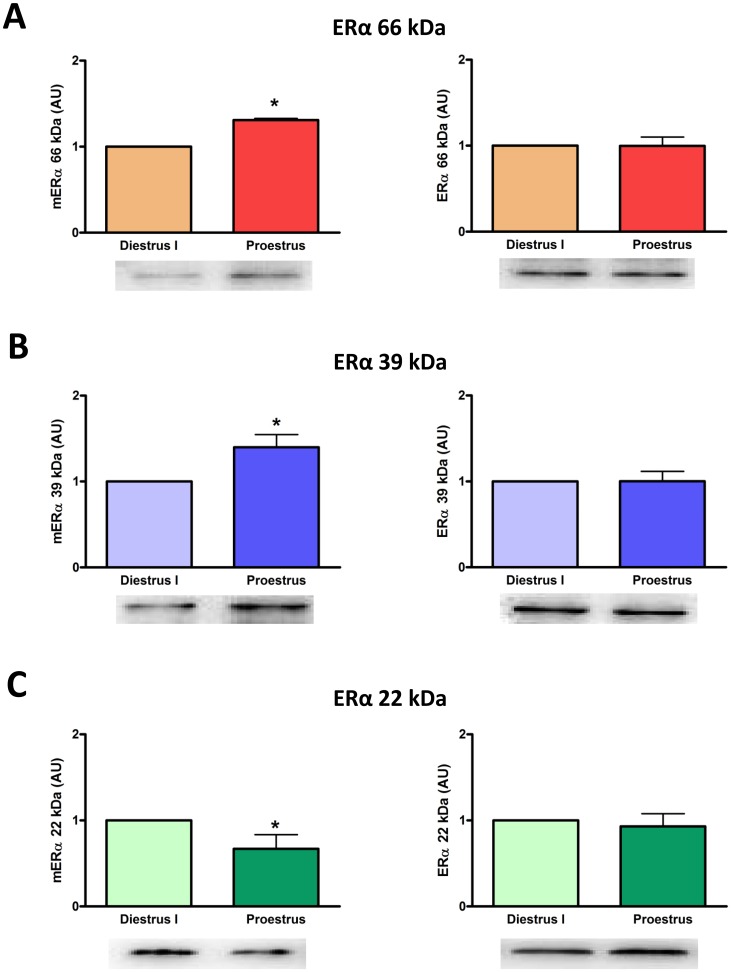
Estrogens are key to anterior pituitary function, stimulating hormone release and controlling cell fate to achieve pituitary dynamic adaptation to changing physiological conditions. In addition to their classical mechanism of action through intracellular estrogen receptors (ERs), estrogens exert rapid actions via cell membrane-localized ERs (mERs). We previously showed that E2 exerts a rapid pro-apoptotic action in anterior pituitary cells, especially in lactotropes and somatotropes, through activation of mERs. In the present study, we examined the involvement of mERα in the rapid pro-apoptotic action of estradiol by TUNEL in primary cultures of anterior pituitary cells from ovariectomized rats using a cell-impermeable E2 conjugate (E2-BSA) and an ERα selective antagonist (MPP dihydrochloride). We studied mERα expression during the estrous cycle and its regulation by gonadal steroids in vivo by flow cytometry. We identified ERα variants in the plasma membrane of anterior pituitary cells during the estrous cycle and studied E2 regulation of these mERα variants in vitro by surface biotinylation and Western Blot. E2-BSA-induced apoptosis was abrogated by MPP in total anterior pituitary cells and lactotropes. In cycling rats, we detected a higher number of lactotropes and a lower number of somatotropes expressing mERα at proestrus than at diestrus. Acute E2 treatment increased the percentage of mERα-expressing lactotropes whereas it decreased the percentage of mERα-expressing somatotropes. We detected three mERα isoforms of 66, 39 and 22 kDa. Expression of mERα66 and mERα39 was higher at proestrus than at diestrus, and short-term E2 incubation increased expression of these two mERα variants. Our results indicate that the rapid apoptotic action exerted by E2 in lactotropes depends on mERα, probably full-length ERα and/or a 39 kDa ERα variant. Expression and activation of mERα variants in lactotropes could be one of the mechanisms through which E2 participates in anterior pituitary cell renewal during the estrous cycle.
雌激素是垂体前叶功能的关键,它刺激激素释放并控制细胞命运,以实现垂体对不断变化的生理条件的动态适应。除了通过细胞内雌激素受体 (ER) 发挥经典作用外,雌激素还通过细胞膜定位的 ER (mER) 发挥快速作用。我们之前表明,E2 通过激活 mER 在前垂体细胞中发挥快速促凋亡作用,特别是在催乳素细胞和生长激素细胞中。在本研究中,我们使用细胞不可渗透的 E2 缀合物 (E2-BSA) 和 ERα 选择性拮抗剂 (MPP 二盐酸盐),通过 TUNEL 在去卵巢大鼠的垂体前叶细胞原代培养物中检查 mERα 在 E2 快速促凋亡作用中的参与。我们通过流式细胞术研究了发情周期中 mERα 的表达及其在体内性腺类固醇中的调节。我们在发情周期中鉴定了垂体前叶细胞的质膜中的 ERα 变体,并研究了 E2 对这些 mERα 变体的体外调节。E2-BSA 诱导的凋亡在前垂体细胞和催乳素细胞中被 MPP 阻断。在发情周期大鼠中,我们检测到发情前期催乳素细胞的 mERα 表达数量较多,而生长激素细胞的 mERα 表达数量较少。急性 E2 处理增加了表达 mERα 的催乳素细胞的百分比,而降低了表达 mERα 的生长激素细胞的百分比。我们检测到三种 66、39 和 22 kDa 的 mERα 同工型。mERα66 和 mERα39 的表达在发情前期高于发情后期,短期 E2 孵育增加了这两种 mERα 变体的表达。我们的结果表明,E2 在催乳素细胞中发挥的快速凋亡作用依赖于 mERα,可能是全长 ERα 和/或 39 kDa ERα 变体。催乳素细胞中 mERα 变体的表达和激活可能是 E2 在发情周期中参与垂体前叶细胞更新的机制之一。