Institute of Cell Biology, University of Bern, Bern, Switzerland.
PLoS One. 2012;7(7):e39054. doi: 10.1371/journal.pone.0039054. Epub 2012 Jul 25.
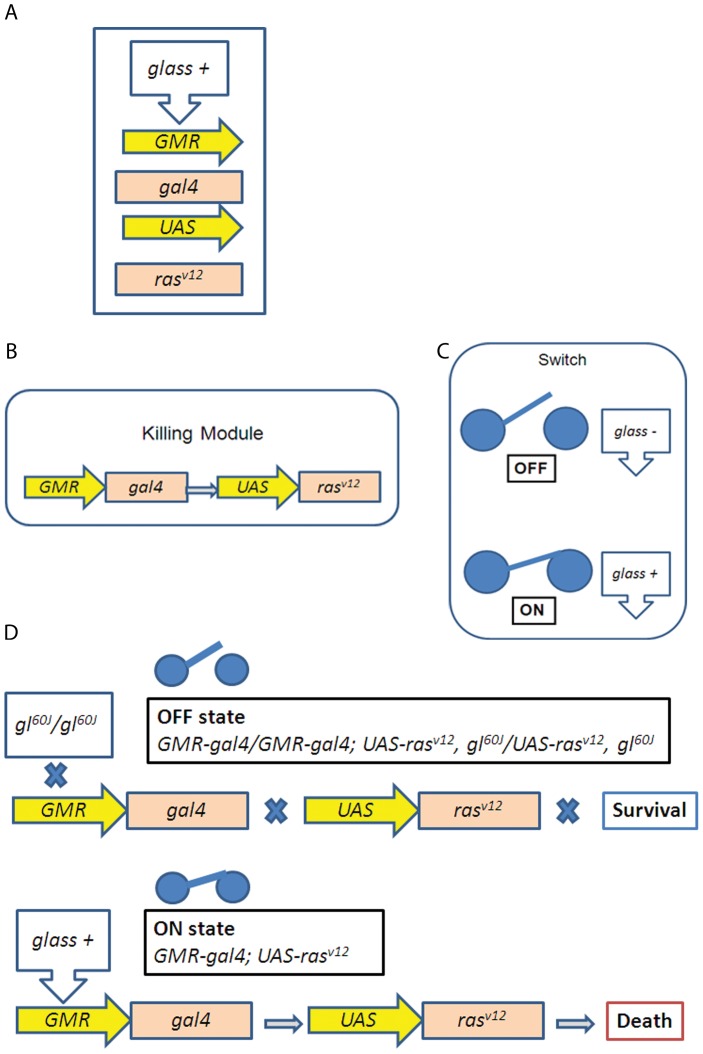
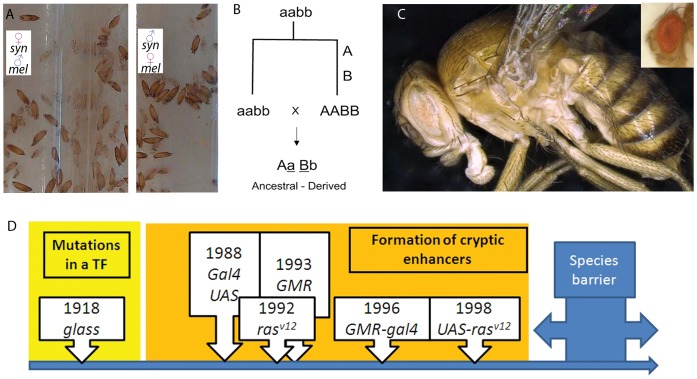
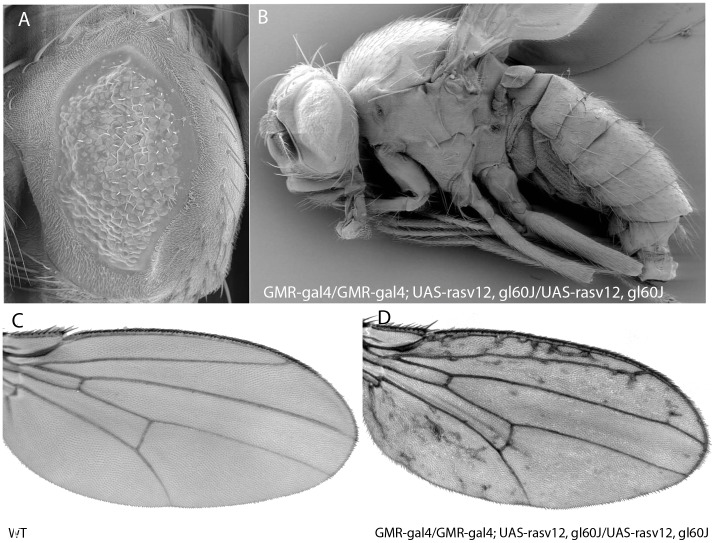
Synthetic biology is an area of biological research that combines science and engineering. Here, I merge the principles of synthetic biology and regulatory evolution to create a new species with a minimal set of known elements. Using preexisting transgenes and recessive mutations of Drosophila melanogaster, a transgenic population arises with small eyes and a different venation pattern that fulfils the criteria of a new species according to Mayr's Biological Species Concept. The population described here is the first transgenic organism that cannot hybridize with the original wild type population but remains fertile when crossed with other identical transgenic animals. I therefore propose the term "synthetic species" to distinguish it from "natural species", not only because it has been created by genetic manipulation, but also because it may never be able to survive outside the laboratory environment. The use of genetic engineering to design artificial species barriers could help us understand natural speciation and may have practical applications. For instance, the transition from transgenic organisms towards synthetic species could constitute a safety mechanism to avoid the hybridization of genetically modified animals with wild type populations, preserving biodiversity.
合成生物学是将科学和工程结合起来的生物研究领域。在这里,我将合成生物学和调控进化的原理结合起来,用一组已知的最小元素创造出一个新的物种。利用现存的转座子和黑腹果蝇的隐性突变,一个具有小眼睛和不同脉序模式的转基因种群出现了,根据迈尔的生物学物种概念,这些特征符合一个新物种的标准。这里描述的种群是第一个不能与原始野生型种群杂交的转基因生物,但与其他相同的转基因动物杂交时仍然具有繁殖能力。因此,我提出了“合成物种”这个术语来与“自然物种”区分开来,不仅因为它是通过遗传操作创造的,还因为它可能永远无法在实验室环境之外生存。利用基因工程设计人工物种障碍可以帮助我们理解自然物种形成过程,并可能具有实际应用。例如,从转基因生物向合成物种的转变可以构成一种安全机制,以避免基因修饰动物与野生种群杂交,从而保护生物多样性。