Research Centre, Novartis Vaccines and Diagnostics, Siena, Italy.
PLoS One. 2012;7(7):e40411. doi: 10.1371/journal.pone.0040411. Epub 2012 Jul 27.
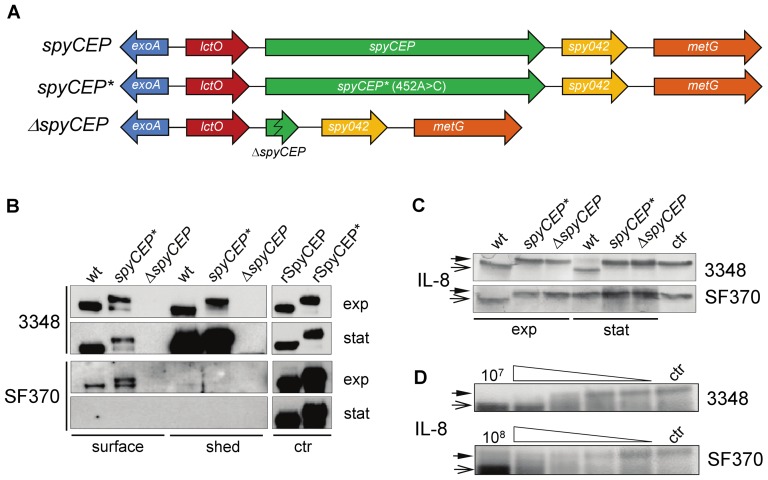
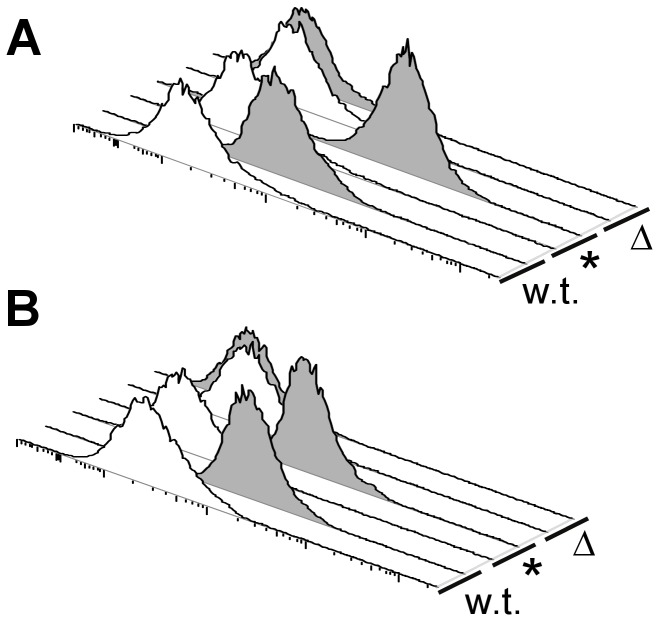
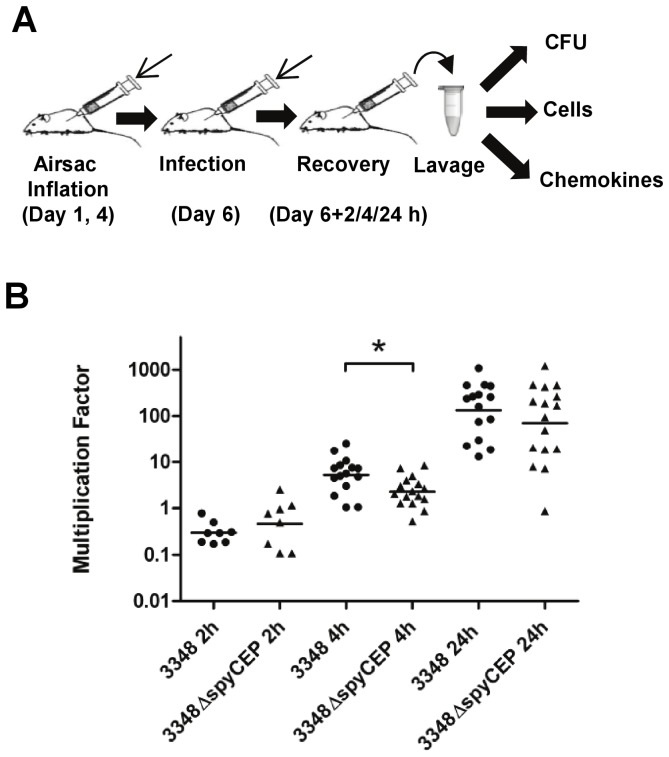
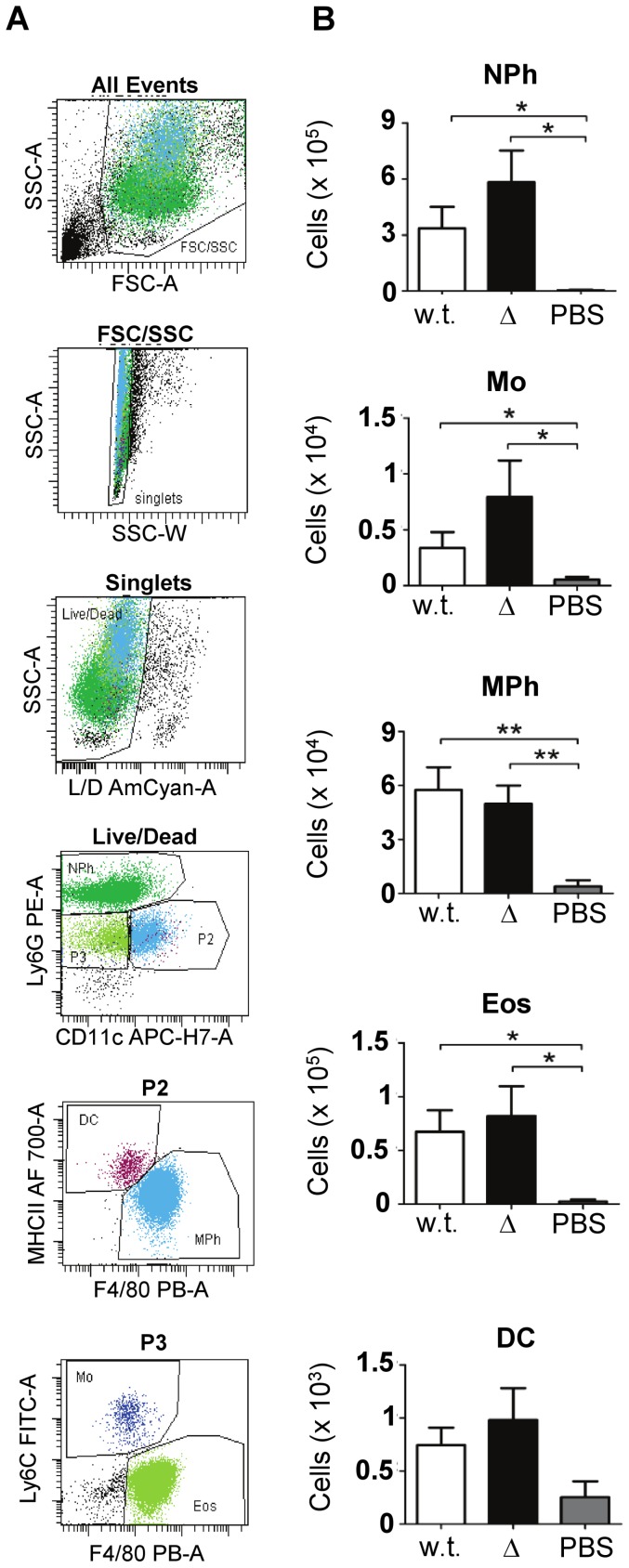
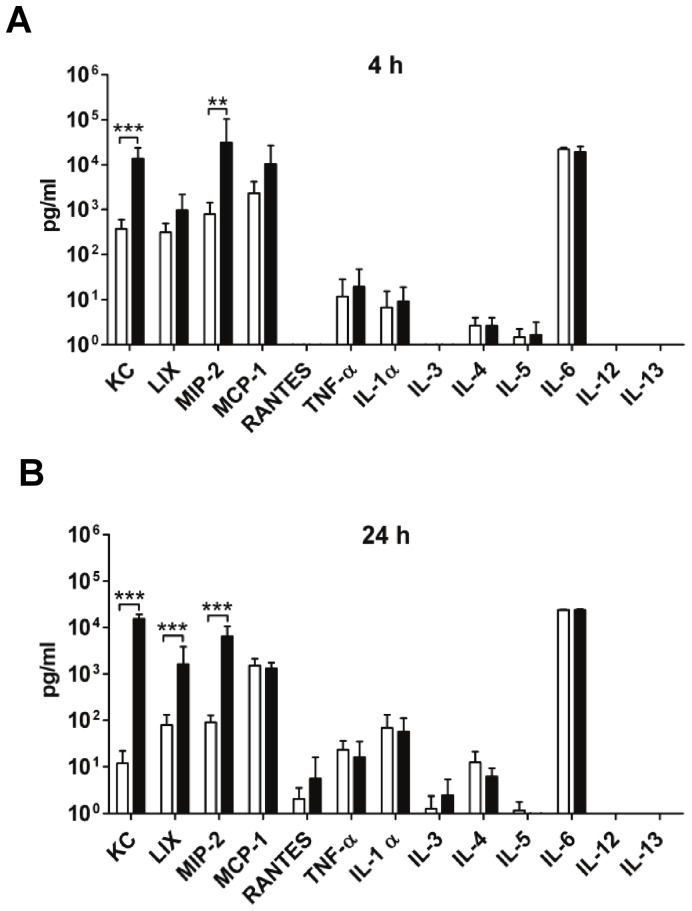
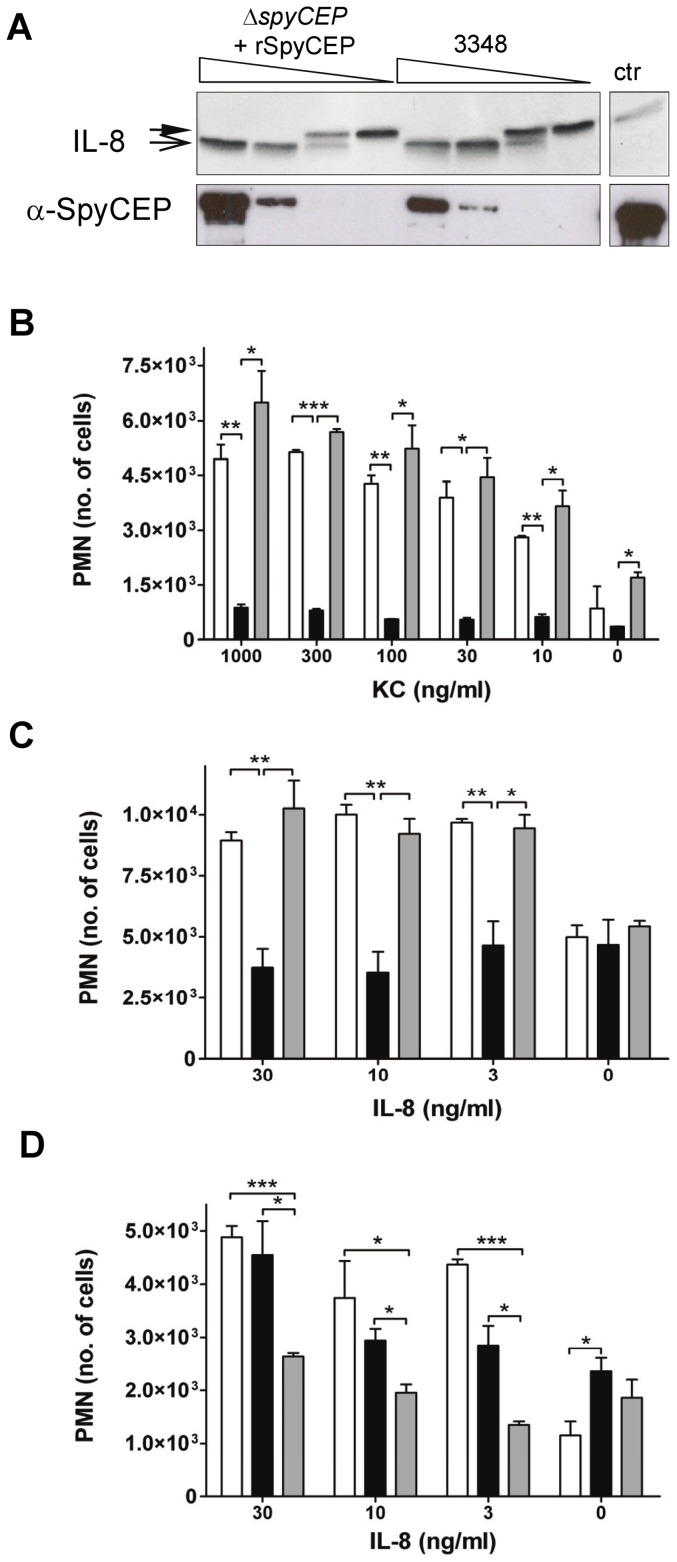
Streptococcus pyogenes is a major human pathogen worldwide, responsible for both local and systemic infections. These bacteria express the subtilisin-like protease SpyCEP which cleaves human IL-8 and related chemokines. We show that localization of SpyCEP is growth-phase and strain dependent. Significant shedding was observed only in a strain naturally overexpressing SpyCEP, and shedding was not dependent on SpyCEP autoproteolytic activity. Surface-bound SpyCEP in two different strains was capable of cleaving IL-8. To investigate SpyCEP action in vivo, we adapted the mouse air pouch model of infection for parallel quantification of bacterial growth, host immune cell recruitment and chemokine levels in situ. In response to infection, the predominant cells recruited were neutrophils, monocytes and eosinophils. Concomitantly, the chemokines KC, LIX, and MIP-2 in situ were drastically increased in mice infected with the SpyCEP knockout strain, and growth of this mutant strain was reduced compared to the wild type. SpyCEP has been described as a potential vaccine candidate against S. pyogenes, and we showed that surface-associated SpyCEP was recognized by specific antibodies. In vitro, such antibodies also counteracted the inhibitory effects of SpyCEP on chemokine mediated PMN recruitment. Thus, α-SpyCEP antibodies may benefit the host both directly by enabling opsonophagocytosis, and indirectly, by neutralizing an important virulence factor. The animal model we employed shows promise for broad application in the study of bacterial pathogenesis.
化脓性链球菌是一种主要的人类病原体,在全球范围内引起局部和全身感染。这些细菌表达枯草溶菌素样蛋白酶 SpyCEP,可切割人白细胞介素 8 和相关趋化因子。我们发现 SpyCEP 的定位与生长阶段和菌株有关。仅在自然过表达 SpyCEP 的菌株中观察到明显的脱落,而脱落不依赖于 SpyCEP 的自切割活性。两种不同菌株的表面结合 SpyCEP 能够切割白细胞介素 8。为了研究 SpyCEP 在体内的作用,我们适应了小鼠气囊感染模型,以同时定量检测细菌生长、宿主免疫细胞募集和趋化因子的原位水平。在感染过程中,主要募集的细胞是中性粒细胞、单核细胞和嗜酸性粒细胞。同时,SpyCEP 敲除株感染小鼠的原位趋化因子 KC、LIX 和 MIP-2 急剧增加,与野生型相比,该突变株的生长减少。SpyCEP 已被描述为一种针对化脓性链球菌的潜在疫苗候选物,我们发现表面相关的 SpyCEP 被特异性抗体识别。在体外,这些抗体还可以抵抗 SpyCEP 对趋化因子介导的 PMN 募集的抑制作用。因此,α-SpyCEP 抗体可能通过促进调理吞噬作用直接使宿主受益,并通过中和一种重要的毒力因子间接使宿主受益。我们采用的动物模型有望广泛应用于细菌发病机制的研究。