Centre for Human Immunology, Department of Microbiology and Immunology, The University of Western Ontario, London, Ontario, Canada.
PLoS One. 2012;7(7):e41726. doi: 10.1371/journal.pone.0041726. Epub 2012 Jul 25.
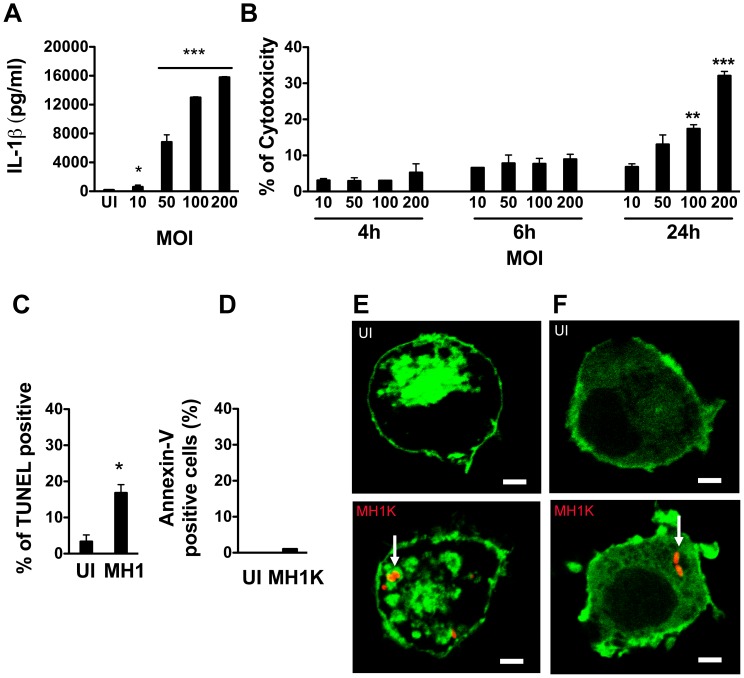
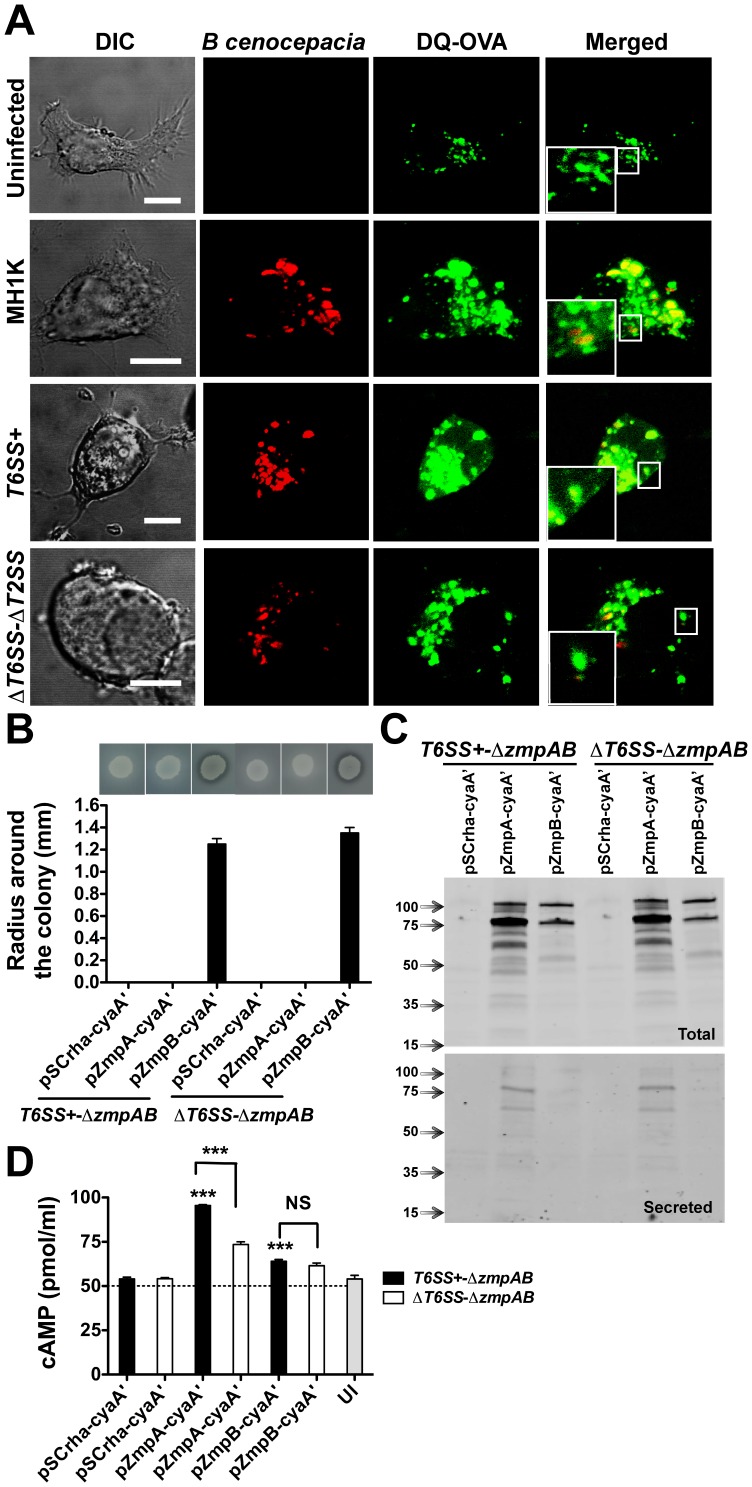
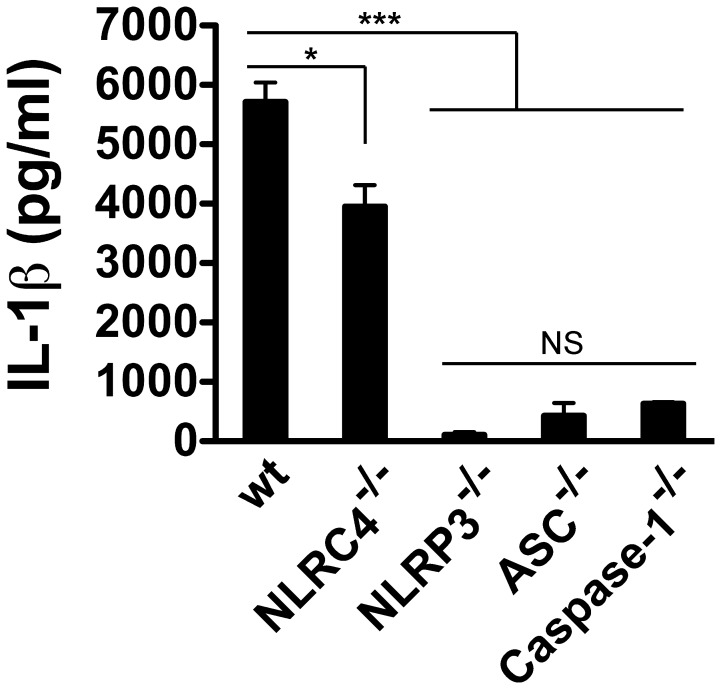
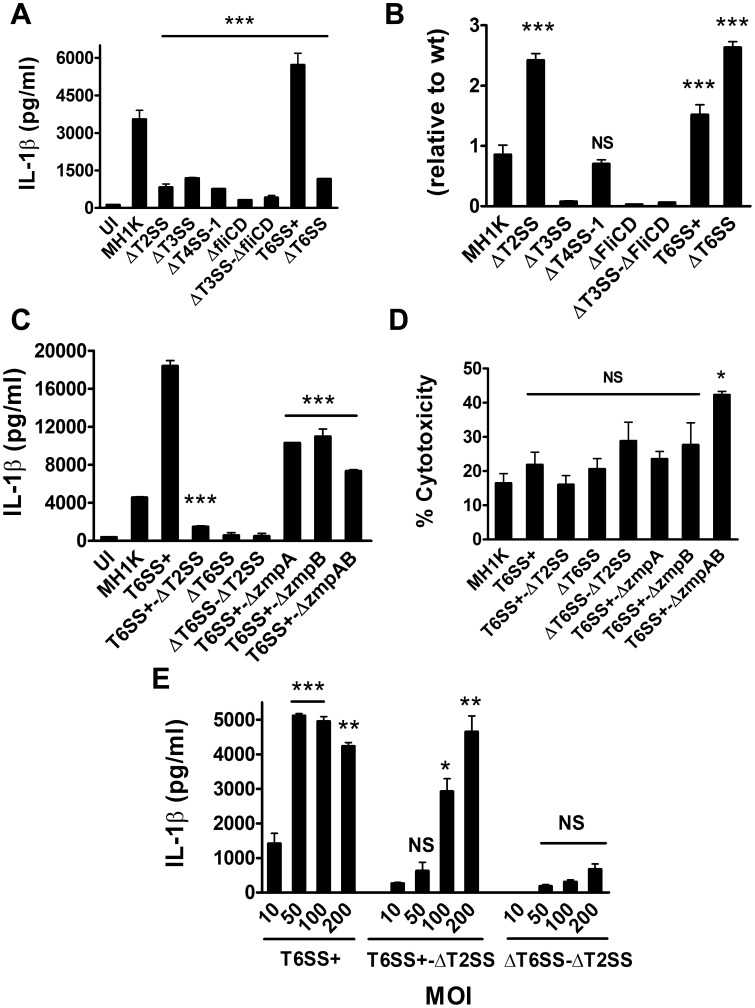
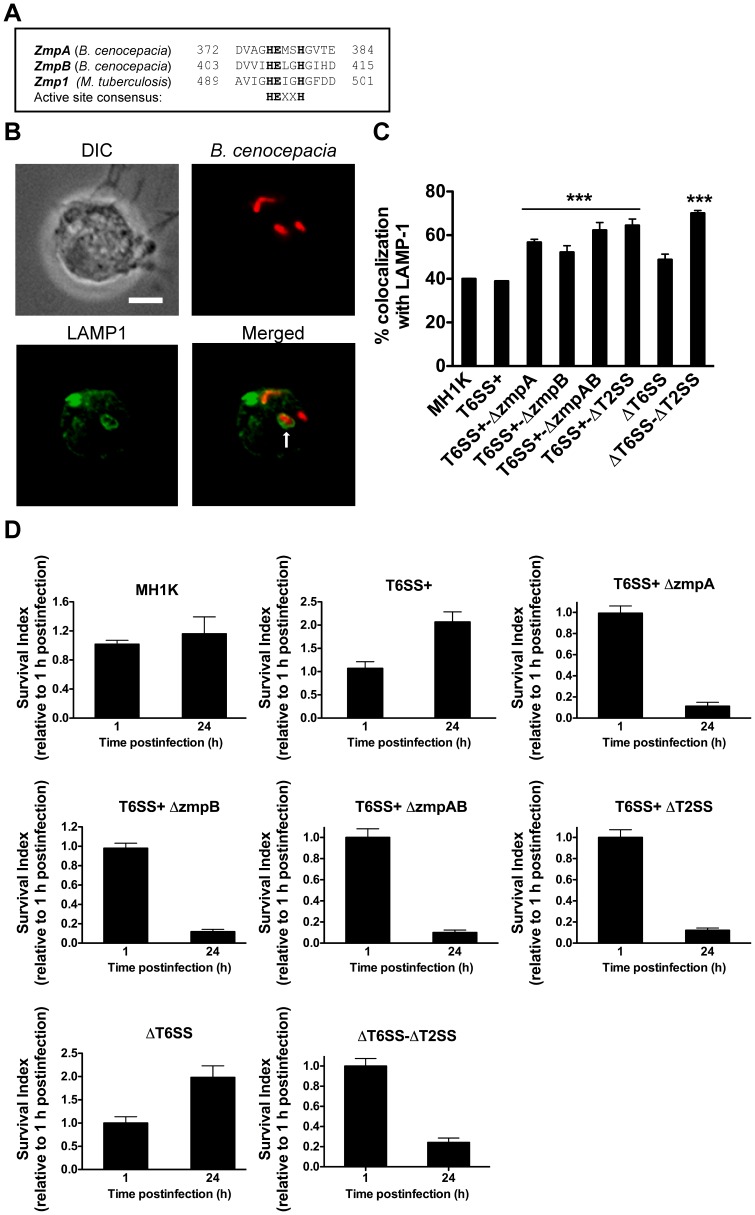
Burkholderia cenocepacia is an opportunistic pathogen that survives intracellularly in macrophages and causes serious respiratory infections in patients with cystic fibrosis. We have previously shown that bacterial survival occurs in bacteria-containing membrane vacuoles (BcCVs) resembling arrested autophagosomes. Intracellular bacteria stimulate IL-1β secretion in a caspase-1-dependent manner and induce dramatic changes to the actin cytoskeleton and the assembly of the NADPH oxidase complex onto the BcCV membrane. A Type 6 secretion system (T6SS) is required for these phenotypes but surprisingly it is not required for the maturation arrest of the BcCV. Here, we show that macrophages infected with B. cenocepacia employ the NLRP3 inflammasome to induce IL-1β secretion and pyroptosis. Moreover, IL-1β secretion by B. cenocepacia-infected macrophages is suppressed in deletion mutants unable to produce functional Type VI, Type IV, and Type 2 secretion systems (SS). We provide evidence that the T6SS mediates the disruption of the BcCV membrane, which allows the escape of proteins secreted by the T2SS into the macrophage cytoplasm. This was demonstrated by the activity of fusion derivatives of the T2SS-secreted metalloproteases ZmpA and ZmpB with adenylcyclase. Supporting this notion, ZmpA and ZmpB are required for efficient IL-1β secretion in a T6SS dependent manner. ZmpA and ZmpB are also required for the maturation arrest of the BcCVs and bacterial intra-macrophage survival in a T6SS-independent fashion. Our results uncover a novel mechanism for inflammasome activation that involves cooperation between two bacterial secretory pathways, and an unanticipated role for T2SS-secreted proteins in intracellular bacterial survival.
洋葱伯克霍尔德菌是一种机会致病菌,能够在巨噬细胞中存活并在囊性纤维化患者中引起严重的呼吸道感染。我们之前已经表明,细菌存活发生在含有细菌的膜空泡(BcCVs)中,类似于被阻断的自噬体。细胞内细菌以依赖半胱天冬酶-1 的方式刺激 IL-1β 的分泌,并诱导肌动蛋白细胞骨架和 NADPH 氧化酶复合物组装到 BcCV 膜上的剧烈变化。一种类型 6 分泌系统(T6SS)是这些表型所必需的,但令人惊讶的是,它不是 BcCV 成熟的必需条件。在这里,我们表明感染洋葱伯克霍尔德菌的巨噬细胞利用 NLRP3 炎症小体诱导 IL-1β 的分泌和细胞焦亡。此外,在无法产生功能性 T6、T4 和 T2 分泌系统(SS)的缺失突变体中,B. cenocepacia 感染的巨噬细胞中 IL-1β 的分泌受到抑制。我们提供的证据表明,T6SS 介导 BcCV 膜的破坏,这使得 T2SS 分泌的蛋白质能够逃入巨噬细胞质中。这是通过 T2SS 分泌的金属蛋白酶 ZmpA 和 ZmpB 的融合衍生物与腺苷酸环化酶的活性来证明的。支持这一观点,ZmpA 和 ZmpB 以 T6SS 依赖的方式有效地分泌 IL-1β。ZmpA 和 ZmpB 也以 T6SS 独立的方式促进 BcCV 的成熟和细菌在巨噬细胞内的存活。我们的研究结果揭示了一种新的炎症小体激活机制,涉及两种细菌分泌途径的合作,以及 T2SS 分泌的蛋白质在细胞内细菌存活中的意外作用。