The State Key Laboratory of Ophthalmology, Zhongshan Ophthalmic Center of Sun Yat-sen University, Guangzhou, China.
PLoS One. 2012;7(7):e41858. doi: 10.1371/journal.pone.0041858. Epub 2012 Jul 25.
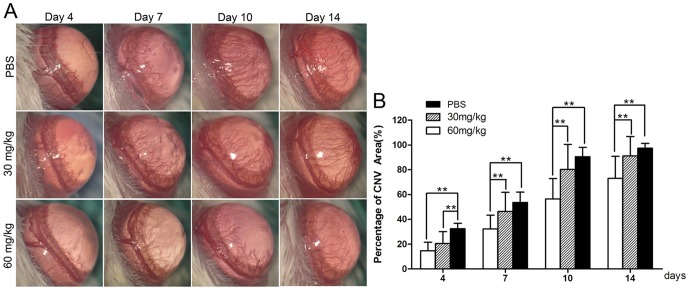
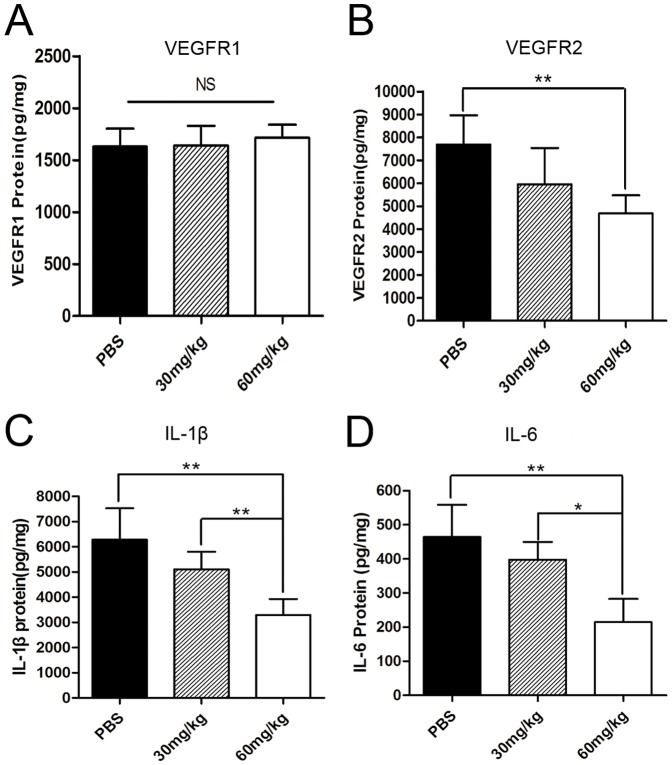
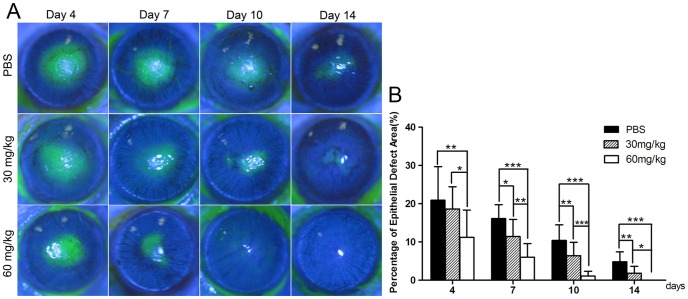
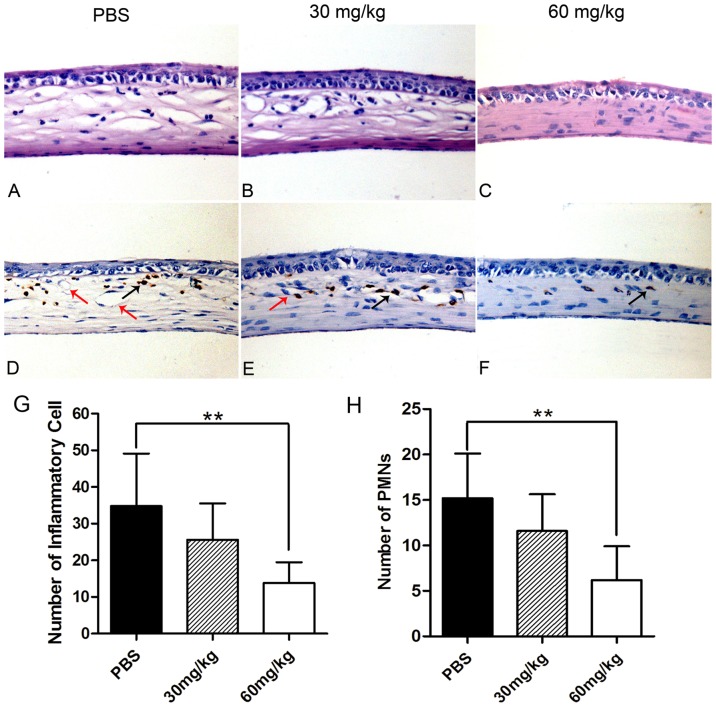
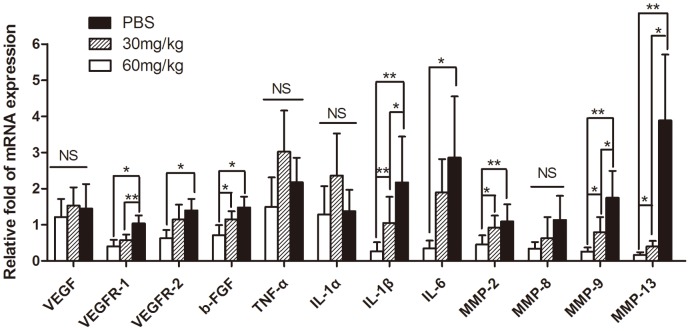
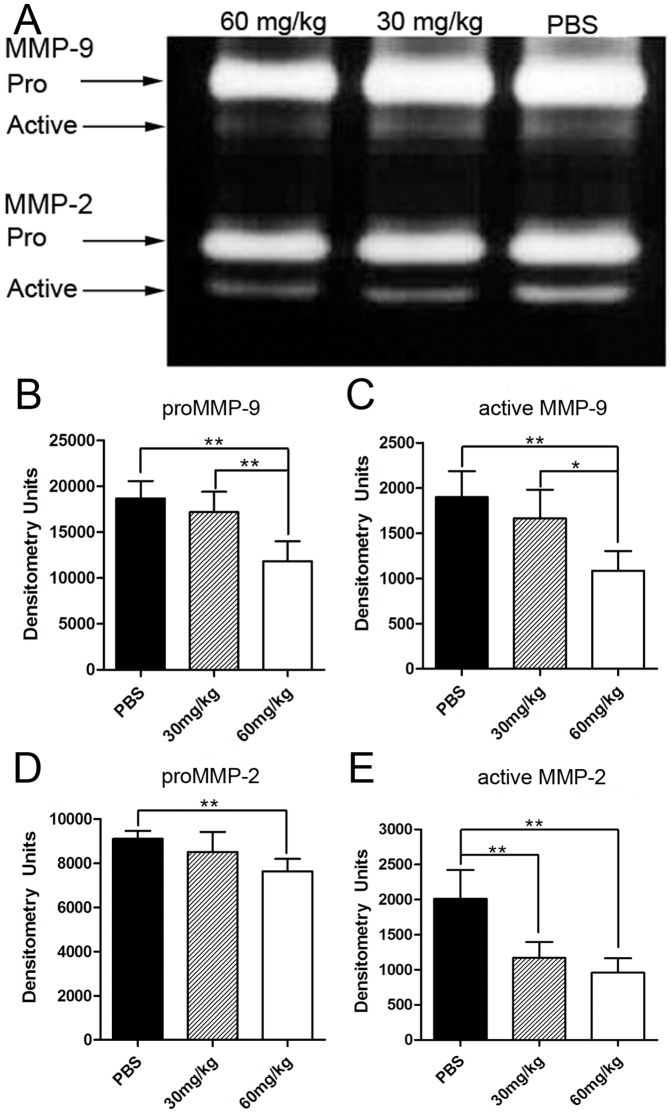
The purpose of this study was to investigate the effects of minocycline on alkali burn-induced corneal neovascularization (CNV). A total of 105 mice treated with alkali burns were randomly divided into three groups to receive intraperitoneal injections of either phosphate buffered saline (PBS) or minocycline twice a day (60 mg/kg or 30 mg/kg) for 14 consecutive days. The area of CNV and corneal epithelial defects was measured on day 4, 7, 10, and14 after alkali burns. On day 14, a histopathological examination was performed to assess morphological change and the infiltration of polymorphonuclear neutrophils (PMNs). The mRNA expression levels of vascular endothelial growth factor (VEGF) and its receptors (VEGFRs), basic fibroblast growth factor (bFGF), matrix metalloproteinases (MMPs), interleukin-1α, 1β, 6 (IL-1α, IL-1β, IL-6) were analyzed using real-time quantitative polymerase chain reaction. The expression of MMP-2 and MMP-9 proteins was determined by gelatin zymography. In addition, enzyme-linked immunosorbent assay was used to analyze the protein levels of VEGFR1, VEGFR2, IL-1β and IL-6. Minocycline at a dose of 60 mg/kg or 30 mg/kg significantly enhanced the recovery of the corneal epithelial defects more than PBS did. There were significant decreases of corneal neovascularization in the group of high-dosage minocycline compared with the control group at all checkpoints. On day 14, the infiltrated PMNs was reduced, and the mRNA expression of VEGFR1, VEGFR2, bFGF, IL-1β, IL-6, MMP-2, MMP-9, -13 as well as the protein expression of VEGFR2, MMP-2, -9, IL-1β, IL-6 in the corneas were down-regulated with the use of 60 mg/kg minocycline twice a day. Our results showed that the intraperitoneal injection of minocycline (60 mg/kg b.i.d.) can significantly inhibit alkali burn-induced corneal neovascularization in mice, possibly by accelerating corneal wound healing and by reducing the production of angiogenic factors, inflammatory cytokines and MMPs.
本研究旨在探讨米诺环素对碱烧伤诱导的角膜新生血管(CNV)的影响。共 105 只接受碱烧伤治疗的小鼠被随机分为三组,分别接受腹腔内注射磷酸盐缓冲液(PBS)或米诺环素(60mg/kg 或 30mg/kg),每天两次,连续 14 天。在碱烧伤后第 4、7、10 和 14 天测量 CNV 和角膜上皮缺损的面积。在第 14 天,进行组织病理学检查以评估形态变化和多形核白细胞(PMN)的浸润。使用实时定量聚合酶链反应分析血管内皮生长因子(VEGF)及其受体(VEGFRs)、碱性成纤维细胞生长因子(bFGF)、基质金属蛋白酶(MMPs)、白细胞介素-1α、1β、6(IL-1α、IL-1β、IL-6)的 mRNA 表达水平。通过明胶酶谱法测定 MMP-2 和 MMP-9 蛋白的表达。此外,酶联免疫吸附测定用于分析 VEGFR1、VEGFR2、IL-1β 和 IL-6 的蛋白水平。米诺环素(60mg/kg 或 30mg/kg)剂量显著促进角膜上皮缺损的恢复,优于 PBS 组。与对照组相比,高剂量米诺环素组在所有检查点的角膜新生血管均显著减少。在第 14 天,浸润的 PMN 减少,VEGFR1、VEGFR2、bFGF、IL-1β、IL-6、MMP-2、MMP-9、-13 的 mRNA 表达以及角膜中 VEGFR2、MMP-2、-9、IL-1β、IL-6 的蛋白表达均下调。我们的结果表明,每天两次腹腔注射米诺环素(60mg/kg)可显著抑制小鼠碱烧伤诱导的角膜新生血管形成,可能通过加速角膜伤口愈合以及减少血管生成因子、炎症细胞因子和 MMPs 的产生来实现。