Olvera Hector A, Perez Daniel, Clague Juan W, Cheng Yung-Sung, Li Wen-Whai, Amaya Maria A, Burchiel Scott W, Berwick Marianne, Pingitore Nicholas E
Center for Environmental Resource Management, University of Texas at El Paso, 500 W. University Avenue, El Paso, TX 79968, USA.
Pulm Med. 2012;2012:736290. doi: 10.1155/2012/736290. Epub 2012 Jul 11.
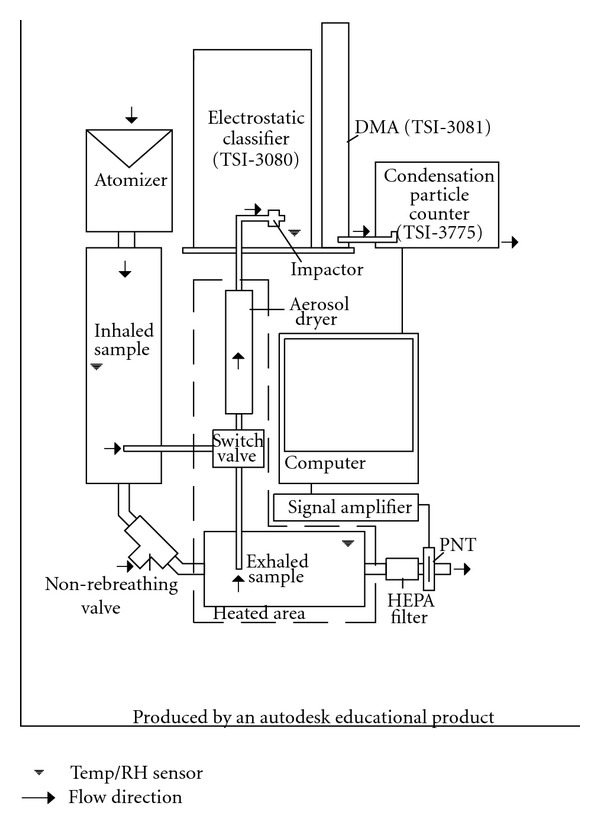
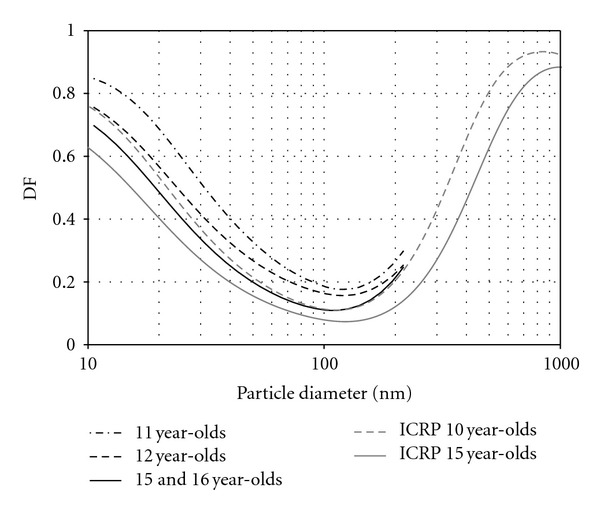
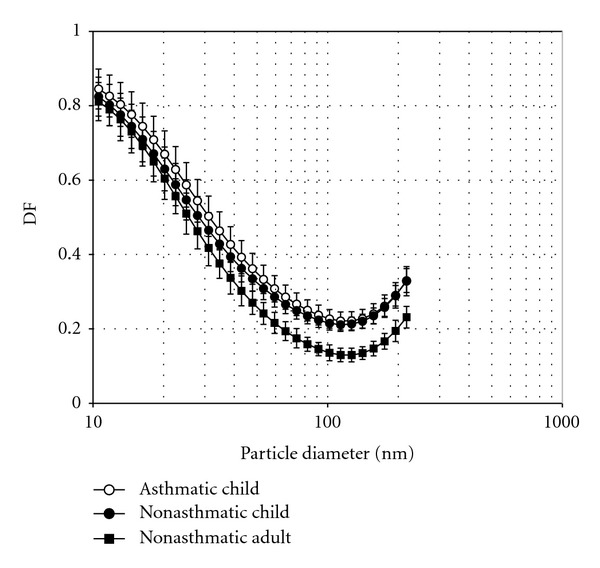
Ultrafine particles (UFPs) contribute to health risks associated with air pollution, especially respiratory disease in children. Nonetheless, experimental data on UFP deposition in asthmatic children has been minimal. In this study, the effect of ventilation, developing respiratory physiology, and asthmatic condition on the deposition efficiency of ultrafine particles in children was explored. Deposited fractions of UFP (10-200 nm) were determined in 9 asthmatic children, 8 nonasthmatic children, and 5 nonasthmatic adults. Deposition efficiencies in adults served as reference of fully developed respiratory physiologies. A validated deposition model was employed as an auxiliary tool to assess the independent effect of varying ventilation on deposition. Asthmatic conditions were confirmed via pre-and post-bronchodilator spirometry. Subjects were exposed to a hygroscopic aerosol with number geometric mean diameter of 27-31 nm, geometric standard deviation of 1.8-2.0, and concentration of 1.2 × 10(6) particles cm(-3). Exposure was through a silicone mouthpiece. Total deposited fraction (TDF) and normalized deposition rate were 50% and 32% higher in children than in adults. Accounting for tidal volume and age variation, TDF was 21% higher in asthmatic than in non-asthmatic children. The higher health risks of air pollution exposure observed in children and asthmatics might be augmented by their susceptibility to higher dosages of UFP.
超细颗粒物(UFPs)会导致与空气污染相关的健康风险,尤其是儿童呼吸道疾病。尽管如此,关于哮喘儿童中超细颗粒物沉积的实验数据却非常有限。在本研究中,探讨了通气、发育中的呼吸生理学以及哮喘状况对儿童超细颗粒物沉积效率的影响。测定了9名哮喘儿童、8名非哮喘儿童和5名非哮喘成年人中UFP(10 - 200纳米)的沉积分数。成年人的沉积效率作为完全发育的呼吸生理学的参考。采用经过验证的沉积模型作为辅助工具,以评估不同通气对沉积的独立影响。通过支气管扩张剂前后的肺活量测定法确认哮喘状况。受试者通过硅胶咬嘴暴露于数几何平均直径为27 - 31纳米、几何标准偏差为1.8 - 2.0且浓度为1.2×10⁶颗粒/立方厘米的吸湿性气溶胶中。暴露是通过硅胶咬嘴进行的。儿童的总沉积分数(TDF)和标准化沉积率比成年人高50%和32%。考虑到潮气量和年龄差异,哮喘儿童的TDF比非哮喘儿童高21%。儿童和哮喘患者中观察到的空气污染暴露更高的健康风险可能因他们对更高剂量UFP的易感性而加剧。