Department of Radiology, Leiden University Medical Center, Leiden, the Netherlands.
Diabetes. 2012 Dec;61(12):3255-9. doi: 10.2337/db11-1835. Epub 2012 Jul 30.
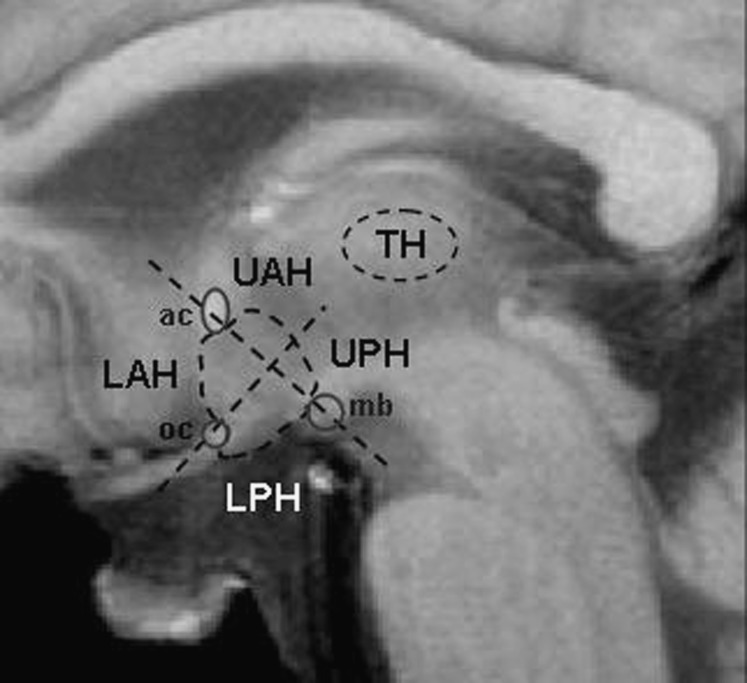
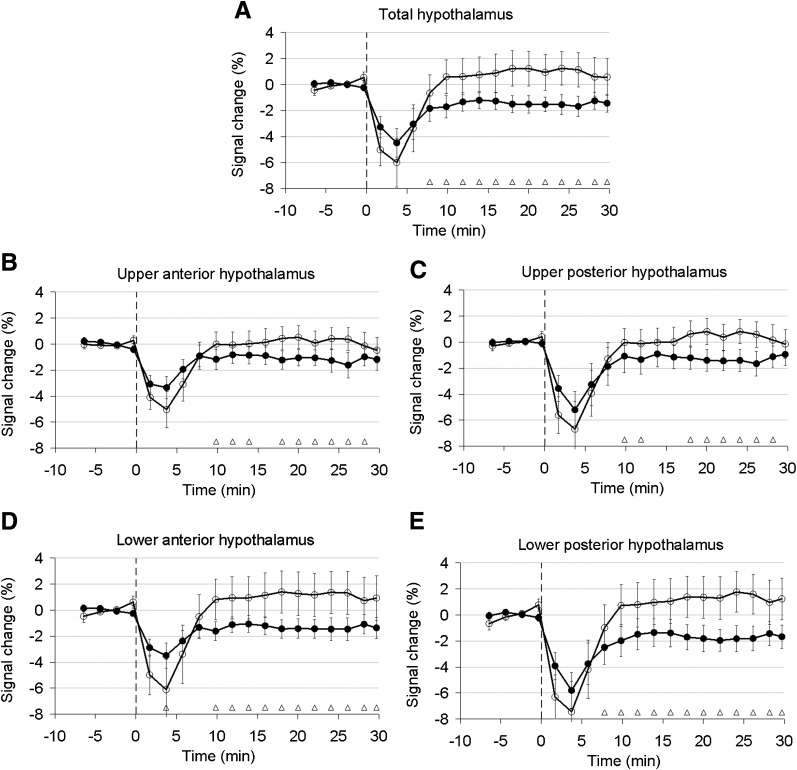
The hypothalamus is critically involved in the regulation of feeding. Previous studies have shown that glucose ingestion inhibits hypothalamic neuronal activity. However, this was not observed in patients with type 2 diabetes. Restoring energy balance by reducing caloric intake and losing weight are important therapeutic strategies in patients with type 2 diabetes. We hypothesized that caloric restriction would have beneficial effects on the hypothalamic neuronal response to glucose ingestion. Functional magnetic resonance imaging was performed in 10 male type 2 diabetic patients before and after a 4-day very-low-calorie diet (VLCD) at a 3.0 Tesla scanner using a blood oxygen level-dependent technique for measuring neuronal activity in the hypothalamus in response to an oral glucose load. Hypothalamic signals were normalized to baseline value, and differences between the pre- and postdiet condition were tested using paired t tests. Pre-VLCD scans showed no response of the hypothalamus to glucose intake (i.e., no signal decrease after glucose intake was observed). Post-VLCD scans showed a prolonged signal decrease after glucose ingestion. The results of the current study demonstrate that short-term caloric restriction readily normalizes hypothalamic responsiveness to glucose ingestion in patients with type 2 diabetes.
下丘脑在进食调节中起着至关重要的作用。先前的研究表明,葡萄糖摄入可抑制下丘脑神经元的活动。然而,这一现象在 2 型糖尿病患者中并未观察到。通过减少热量摄入和减轻体重来恢复能量平衡是 2 型糖尿病患者的重要治疗策略。我们假设热量限制将对葡萄糖摄入引起的下丘脑神经元反应产生有益影响。使用血氧水平依赖技术,在 3.0T 扫描仪上对 10 名男性 2 型糖尿病患者进行了功能磁共振成像,在 4 天极低热量饮食(VLCD)前后测量了下丘脑对口服葡萄糖负荷的神经元活动反应。将下丘脑信号归一化为基线值,并使用配对 t 检验测试饮食前后条件之间的差异。VLCD 扫描前,葡萄糖摄入并未引起下丘脑反应(即,葡萄糖摄入后未观察到信号下降)。VLCD 扫描后,葡萄糖摄入后信号下降时间延长。本研究结果表明,短期热量限制可使 2 型糖尿病患者的下丘脑对葡萄糖摄入的反应迅速恢复正常。