Schmidt Christina, Peigneux Philippe, Cajochen Christian
Centre for Chronobiology, Psychiatric Hospital of the University of Basel Basel, Switzerland.
Front Neurol. 2012 Jul 26;3:118. doi: 10.3389/fneur.2012.00118. eCollection 2012.
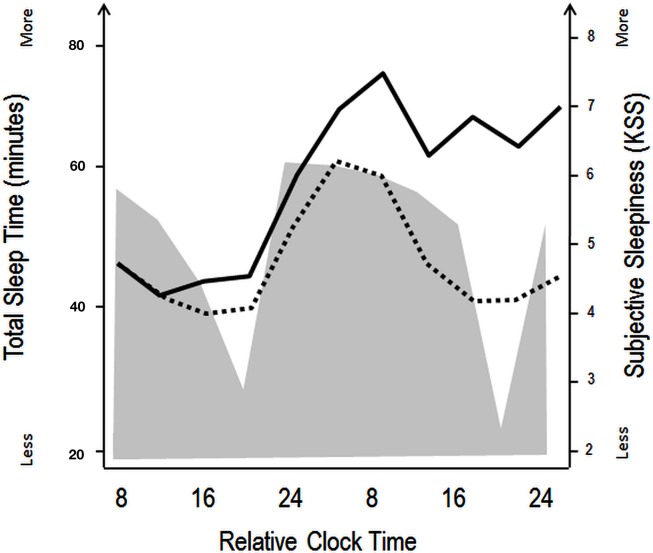
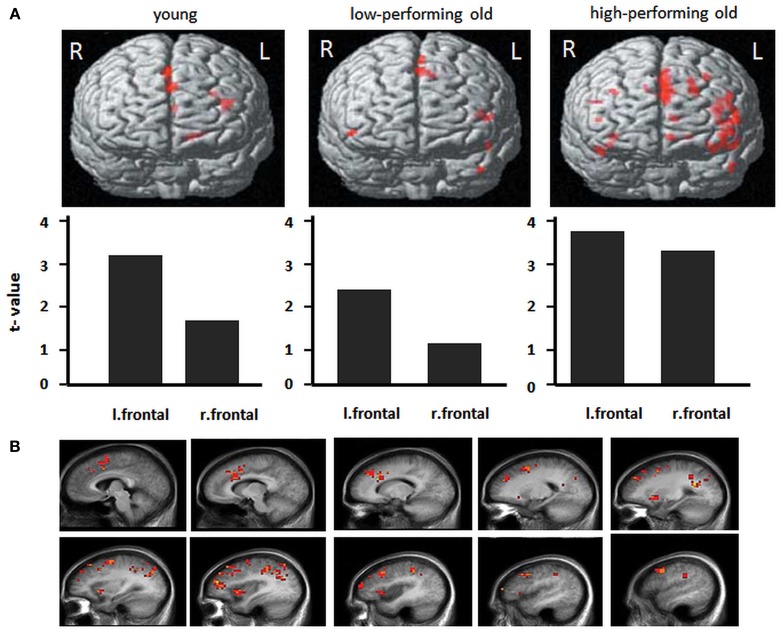
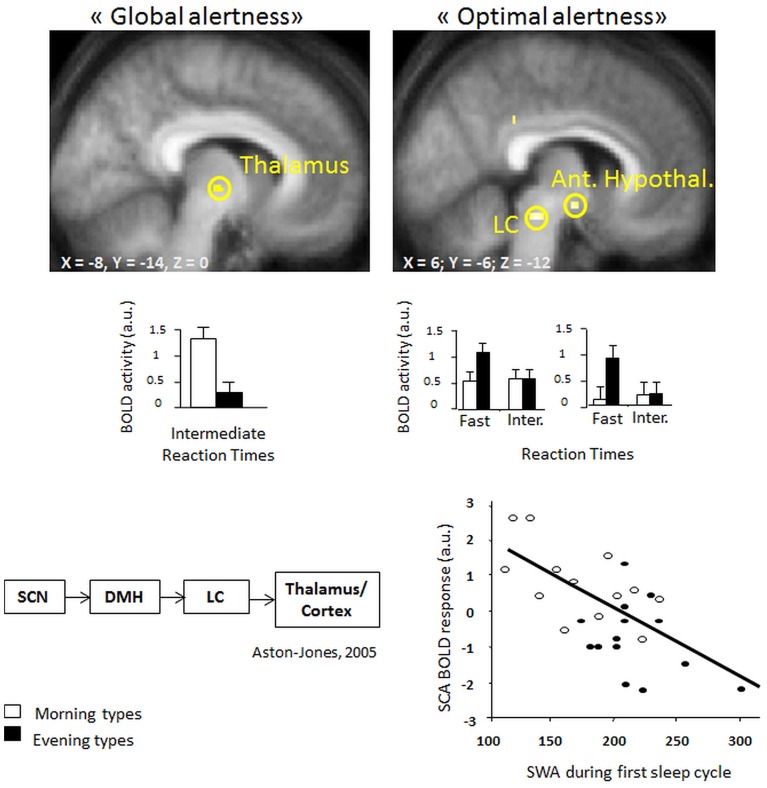
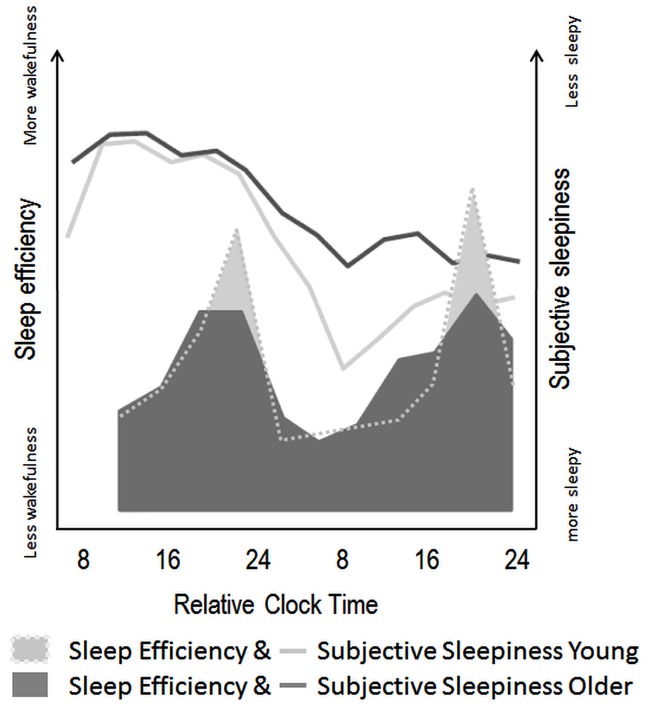
Circadian and homeostatic sleep-wake regulatory processes interact in a fine tuned manner to modulate human cognitive performance. Dampening of the circadian alertness signal and attenuated deterioration of psychomotor vigilance in response to elevated sleep pressure with aging change this interaction pattern. As evidenced by neuroimaging studies, both homeostatic sleep pressure and circadian sleep-wake promotion impact on cognition-related cortical and arousal-promoting subcortical brain regions including the thalamus, the anterior hypothalamus, and the brainstem locus coeruleus (LC). However, how age-related changes in circadian and homeostatic processes impact on the cerebral activity subtending waking performance remains largely unexplored. Post-mortem studies point to neuronal degeneration in the SCN and age-related modifications in the arousal-promoting LC. Alongside, cortical frontal brain areas are particularly susceptible both to aging and misalignment between circadian and homeostatic processes. In this perspective, we summarize and discuss here the potential neuroanatomical networks underlying age-related changes in circadian and homeostatic modulation of waking performance, ranging from basic arousal to higher order cognitive behaviors.
昼夜节律和稳态睡眠-觉醒调节过程以精细调节的方式相互作用,以调节人类的认知表现。随着年龄的增长,昼夜警觉信号的减弱以及对升高的睡眠压力时精神运动警觉性衰退的减弱改变了这种相互作用模式。神经影像学研究表明,稳态睡眠压力和昼夜睡眠-觉醒促进作用均会影响与认知相关的皮质以及促进觉醒的皮质下脑区,包括丘脑、下丘脑前部和脑干蓝斑(LC)。然而,昼夜节律和稳态过程中与年龄相关的变化如何影响维持清醒表现的大脑活动,在很大程度上仍未得到探索。尸检研究指出视交叉上核(SCN)中的神经元退化以及促进觉醒的蓝斑中与年龄相关的改变。此外,皮质额叶脑区特别容易受到衰老以及昼夜节律和稳态过程之间失调的影响。从这个角度出发,我们在此总结并讨论昼夜节律和稳态对清醒表现调节中与年龄相关变化潜在的神经解剖网络,范围从基本觉醒到高阶认知行为。