Molecular and Cell Biology Laboratory, Salk Institute for Biological Studies, La Jolla, California, United States of America.
PLoS One. 2012;7(7):e36961. doi: 10.1371/journal.pone.0036961. Epub 2012 Jul 31.
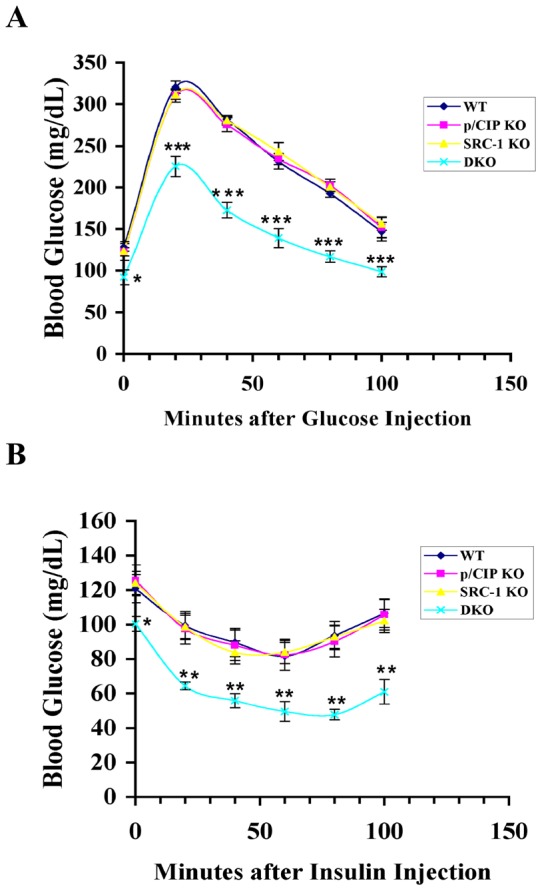
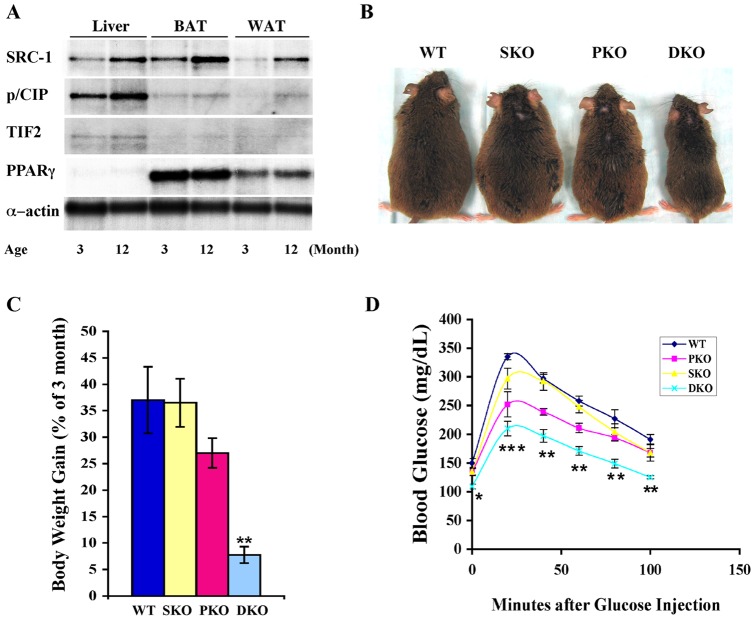
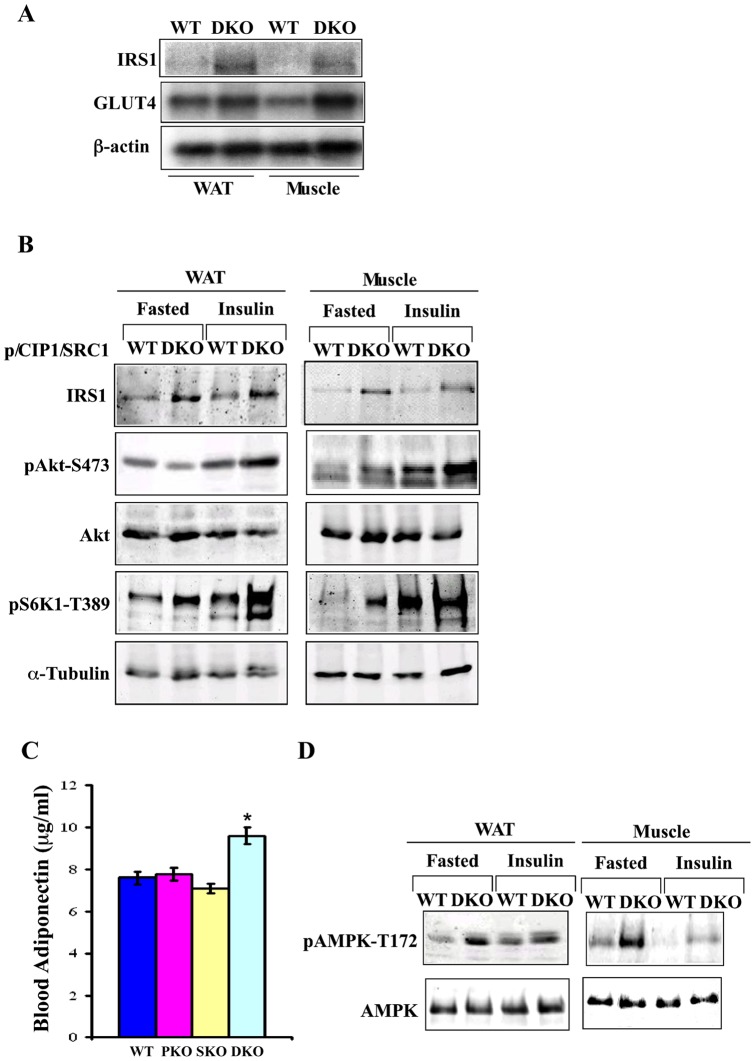
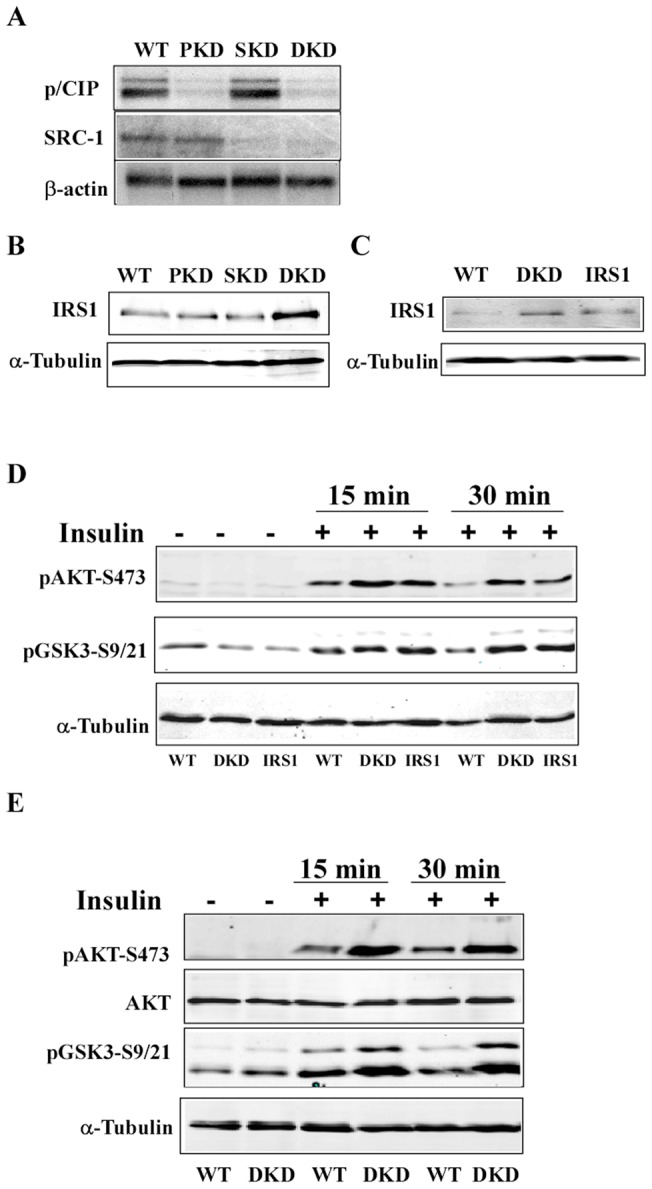
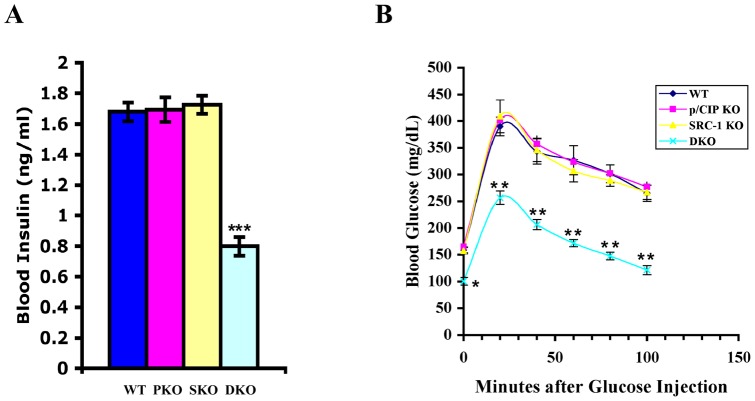
Three p160 family members, p/CIP, SRC1, and TIF2, have been identified as transcriptional coactivators for nuclear hormone receptors and other transcription factors in vitro. In a previous study, we reported initial characterization of the obesity-resistant phenotypes of p/CIP and SRC-1 double knockout (DKO) mice, which exhibit increased energy expenditure, and suggested that nuclear hormone receptor target genes were involved in these phenotypes. In this study, we demonstrate that p/CIP and SRC1 control insulin signaling in a cell-autonomous manner both in vitro and in vivo. Genetic deletion of p/CIP and SRC-1 increases glucose uptake and enhances insulin sensitivity in both regular chow- and high fat diet-fed DKO mice despite increased food intake. Interestingly, we discover that loss of p/CIP and SRC-1 results in resistance to age-related obesity and glucose intolerance. We show that expression levels of a key insulin signaling component, insulin receptor substrate 1 (IRS1), are significantly increased in two cell lines representing fat and muscle lineages with p/CIP and SRC-1 deletions and in white adipose tissue and skeletal muscle of DKO mice; this may account for increased glucose metabolism and insulin sensitivity. This is the first evidence that the p160 coactivators control insulin signaling and glucose metabolism through IRS1. Therefore, our studies indicate that p/CIP and SRC-1 are potential therapeutic targets not only for obesity but also for diabetes.
三种 p160 家族成员,p/CIP、SRC1 和 TIF2,已被鉴定为核激素受体和其他转录因子的体外转录共激活剂。在之前的研究中,我们报道了 p/CIP 和 SRC-1 双敲除 (DKO) 小鼠肥胖抗性表型的初步特征,这些表型表现出增加的能量消耗,并表明核激素受体靶基因参与这些表型。在这项研究中,我们证明了 p/CIP 和 SRC1 以细胞自主的方式在体外和体内控制胰岛素信号。尽管食物摄入量增加,但 p/CIP 和 SRC-1 的遗传缺失增加了常规饲料和高脂肪饮食喂养的 DKO 小鼠的葡萄糖摄取并增强了胰岛素敏感性。有趣的是,我们发现 p/CIP 和 SRC-1 的缺失导致与年龄相关的肥胖和葡萄糖不耐受的抗性。我们表明,关键胰岛素信号成分胰岛素受体底物 1 (IRS1) 的表达水平在两个具有 p/CIP 和 SRC-1 缺失的脂肪和肌肉谱系的细胞系以及 DKO 小鼠的白色脂肪组织和骨骼肌中显著增加;这可能解释了葡萄糖代谢和胰岛素敏感性的增加。这是第一个证明 p160 共激活剂通过 IRS1 控制胰岛素信号和葡萄糖代谢的证据。因此,我们的研究表明,p/CIP 和 SRC-1 不仅是肥胖的潜在治疗靶点,也是糖尿病的潜在治疗靶点。