Veterans Affairs Medical Center, Houston, Texas, United States of America.
PLoS One. 2012;7(7):e40518. doi: 10.1371/journal.pone.0040518. Epub 2012 Jul 10.
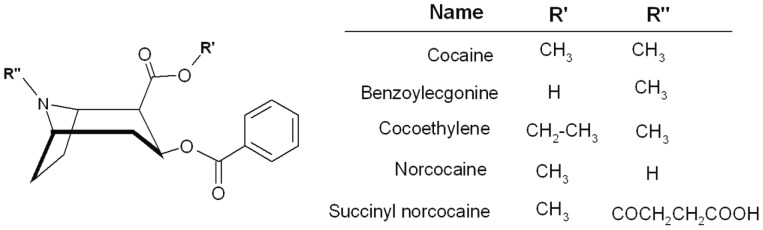
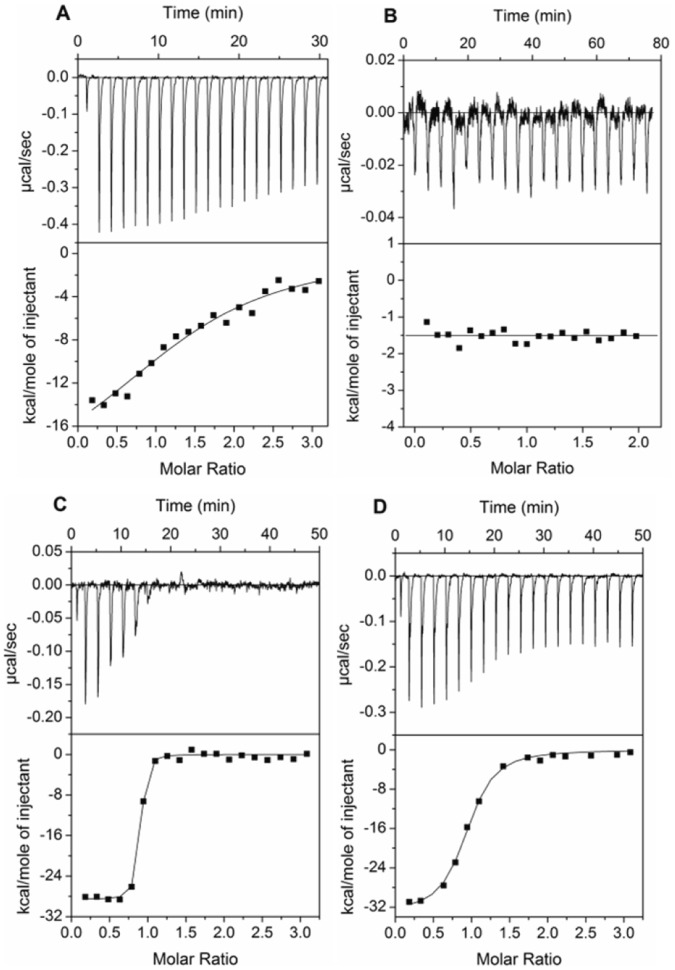
Despite progress in cocaine immunotherapy, the kinetic and thermodynamic properties of antibodies which bind to cocaine and its metabolites are not well understood. It is also not clear how the interactions between them differ in a complex matrix such as the serum present in the human body. In the present study, we have used microscale thermophoresis (MST), isothermal titration calorimetry (ITC), and surface plasmon resonance (SPR) we have evaluated the affinity properties of a representative mouse monoclonal (mAb08) as well as those of polyclonal antibodies purified from vaccinated mouse and human patient serum.
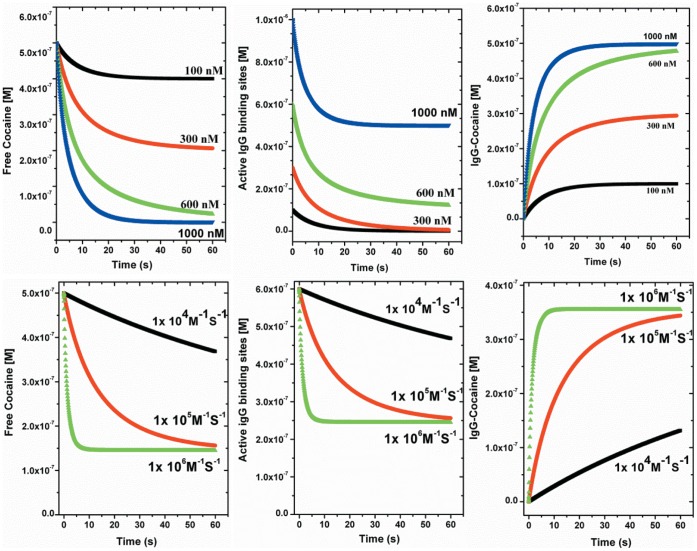
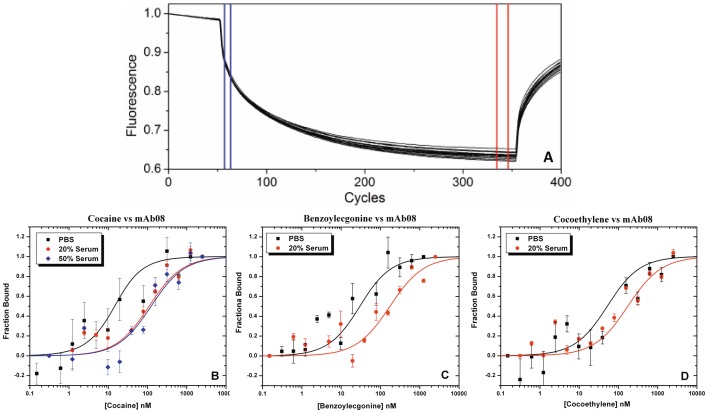
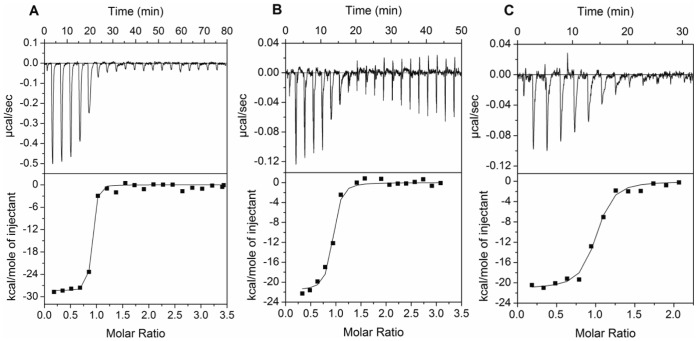
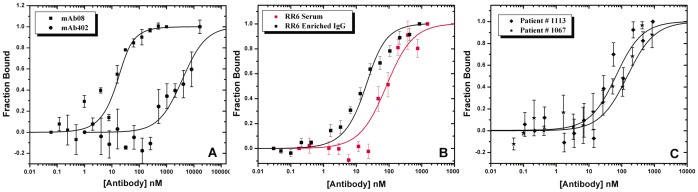
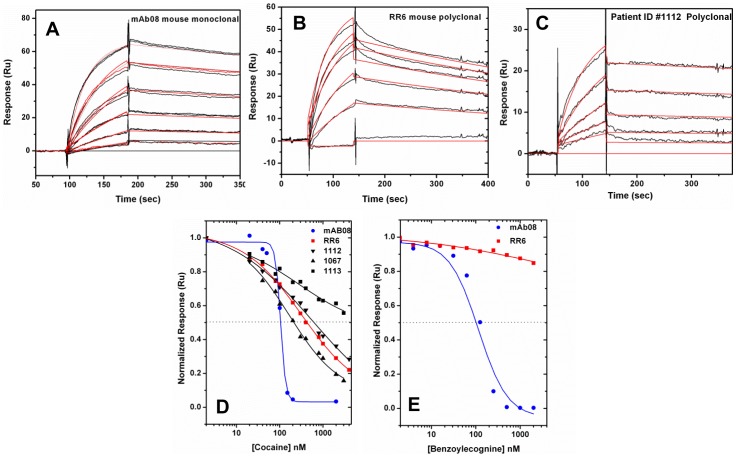
MST analysis of fluorescently tagged mAb08 binding to cocaine reveals an approximately 15 fold decrease in its equilibrium dissociation constant in 20-50% human serum compared with that in saline buffer. A similar trend was also found using enriched polyclonal antibodies purified from vaccinated mice and patient serum, for which we have used fluorescently tagged bovine serum albumin conjugated to succinyl norcocaine (BSA-SNC). This conjugate closely mimics both cocaine and the hapten used to raise these antibodies. The ITC data also revealed that cocaine has a moderate affinity of about 2 µM to 20% human serum and very little interaction with human serum albumin or nonspecific human IgG at that concentration range. In a SPR inhibition experiment, the binding of mAb08 to immobilized BSA-SNC was inhibited by cocaine and benzoylecgonine in a highly competitive manner, whereas the purified polyclonal antibodies from vaccinated humans and mice, revealed preferential selectivity to pharmacologically active cocaine but not to the inactive metabolite benzoylecgonine. We have also developed a simple binding model to simulate the challenges associated with cocaine immunotherapy using the variable quantitative and kinetic properties of the antibodies.
High sensitivity calorimetric determination of antibody binding to cocaine and its metabolites provide valuable information for characterization of their interactions and thermodynamic properties. In addition MST measurements of antibody affinity in the presence of biological fluids will provide a better opportunity to make reliable decisions and facilitate the design of cocaine vaccines and immunization conditions. The methods should be more widely adopted in characterization of antibody complexes.
尽管可卡因免疫疗法取得了进展,但与可卡因及其代谢物结合的抗体的动力学和热力学特性仍不清楚。目前也不清楚它们在人体血清等复杂基质中的相互作用有何不同。在本研究中,我们使用了微量热泳动(MST)、等温滴定量热法(ITC)和表面等离子体共振(SPR),评估了代表性的小鼠单克隆抗体(mAb08)以及从接种疫苗的小鼠和人类患者血清中纯化的多克隆抗体的亲和力特性。
荧光标记的 mAb08 与可卡因结合的 MST 分析表明,与生理盐水缓冲液相比,在 20-50%人血清中,其平衡解离常数降低了约 15 倍。使用从接种疫苗的小鼠和患者血清中纯化的富含多克隆抗体也发现了类似的趋势,我们使用荧光标记的与琥珀酰可卡因偶联的牛血清白蛋白(BSA-SNC)进行了研究。该缀合物紧密模拟了可卡因和用于产生这些抗体的半抗原。ITC 数据还表明,可卡因与人血清的亲和力适中,约为 2 µM,在该浓度范围内,与人血清白蛋白或非特异性人 IgG 的相互作用很小。在 SPR 抑制实验中,mAb08 与固定化 BSA-SNC 的结合被可卡因和苯甲酰可卡因而以高度竞争性的方式抑制,而从接种疫苗的人类和小鼠中分离出的多克隆抗体则显示出对具有药理活性的可卡因而非无活性代谢物苯甲酰可卡因而的优先选择性。我们还开发了一个简单的结合模型,以模拟使用抗体的定量和动力学特性的变化来进行可卡因免疫疗法所面临的挑战。
对抗体与可卡因及其代谢物结合的高灵敏度量热法测定提供了有价值的信息,有助于对其相互作用和热力学特性进行表征。此外,在生物流体存在的情况下进行抗体亲和力的 MST 测量将为做出可靠决策提供更好的机会,并有助于设计可卡因疫苗和免疫条件。该方法应更广泛地应用于抗体复合物的特性研究。