Laboratory of Molecular RNA Virology and Antiviral Strategies, Department of Microbiology, Yong Loo Lin School of Medicine, National University of Singapore, Singapore, Singapore.
PLoS One. 2012;7(7):e41932. doi: 10.1371/journal.pone.0041932. Epub 2012 Jul 30.
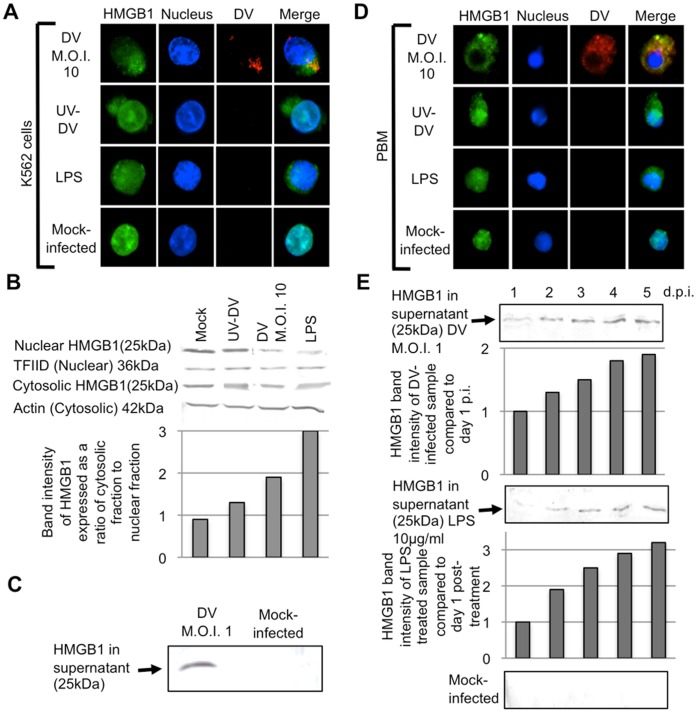
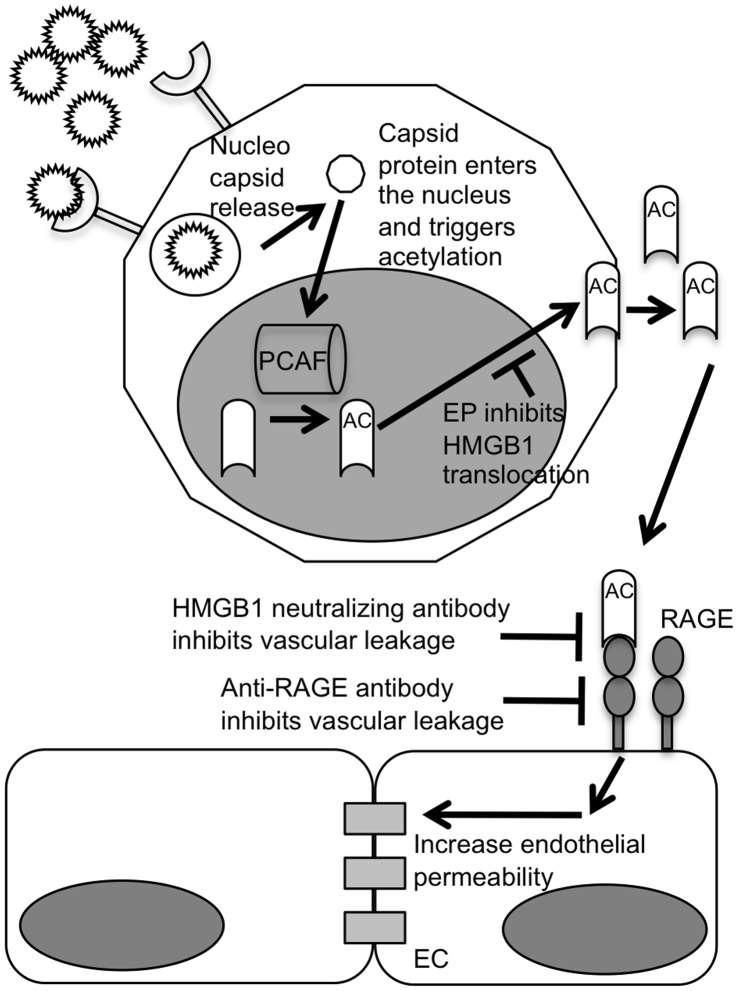
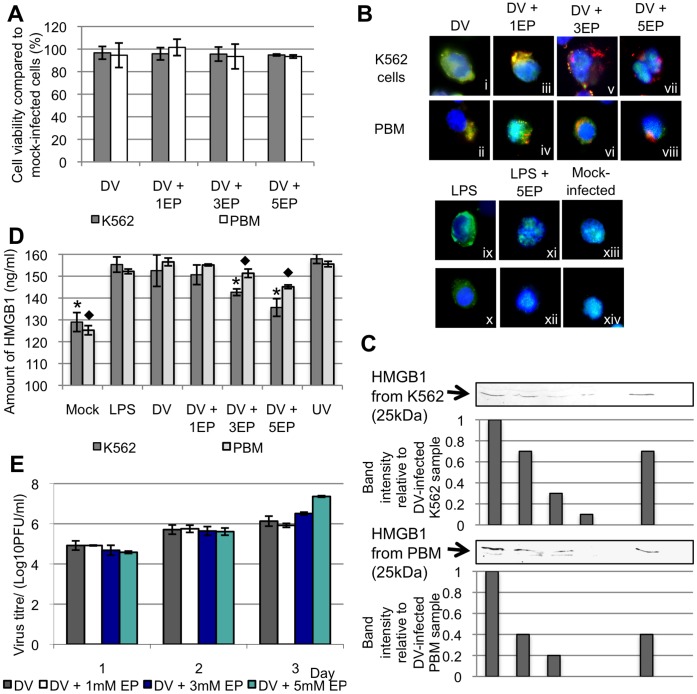
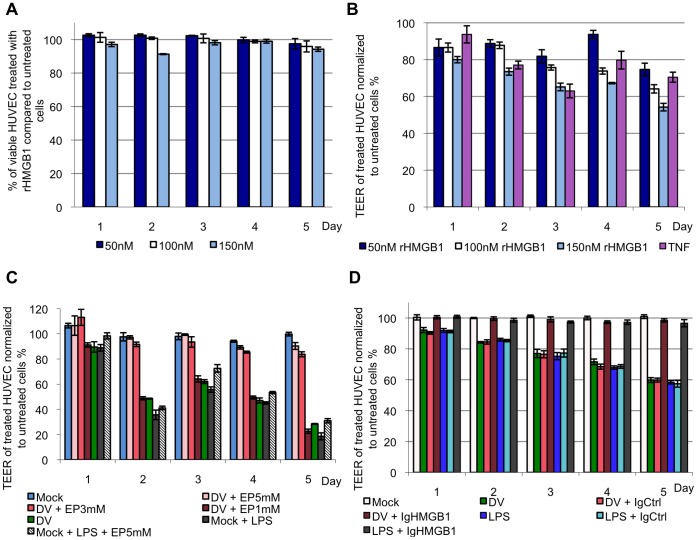
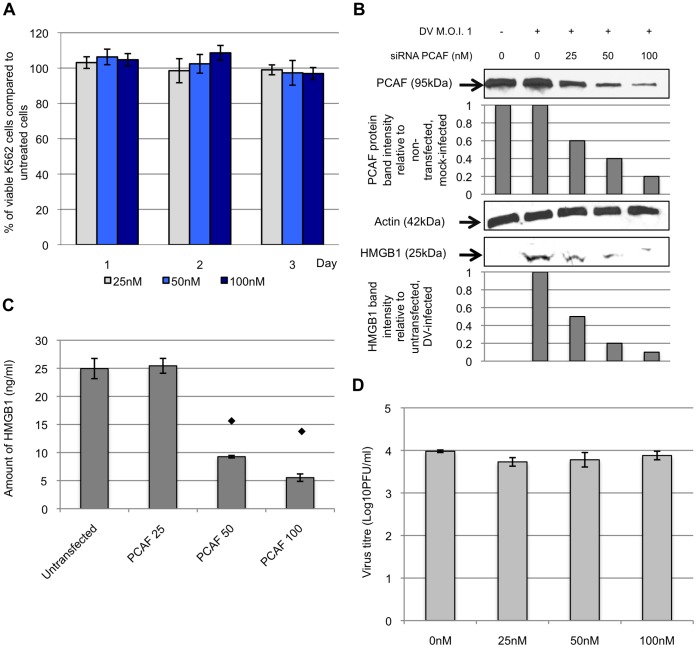
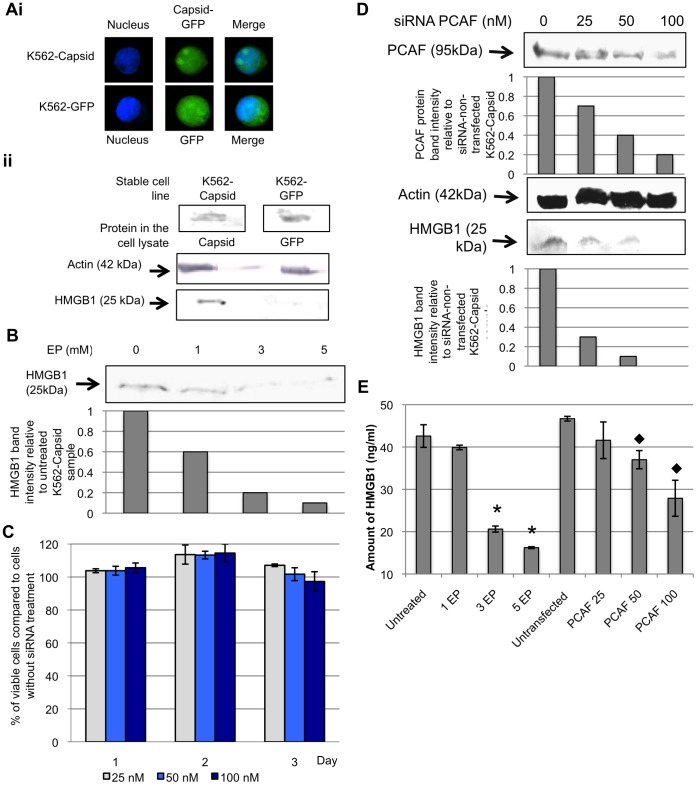
High mobility group box 1 (HMGB1) protein is released from cells as a pro-inflammatory cytokine in response to an injury or infection. During dengue hemorrhagic fever (DHF)/dengue shock syndrome (DSS), a number of pro-inflammatory cytokines are released, contributing to disease pathogenesis. In this study, the release of HMGB1 from human myelogenous leukemia cell line K562 and primary peripheral blood monocytes (PBM) cells was examined during dengue virus (DV)-infection. HMGB1 was shown to translocate from cell nuclei to the cytoplasm in both K562- and PBM-infected cells. The translocation of HMGB1 from the nucleus to the cytoplasm was shown to be mediated by the host cell p300/CBP-associated factor (PCAF) acetylase complex in K562 cells. In addition, DV capsid protein was observed to be the putative viral protein in actuating HMGB1 migration from the nucleus to cytoplasm through the involvement of PCAF acetylase. HMGB1 was released from DV-infected K562 cells into the extracellular milieu in a multiplicity of infection (M.O.I.)-independent manner and its release can be inhibited by the addition of 1-5 mM of ethyl pyruvate (EP) in a dose-dependent manner. Application of DV-infected K562 cell culture supernatants to primary endothelial cells induced vascular permeability. In contrast, supernatants from DV-infected K562 cells treated with EP or HMGB1 neutralizing antibody were observed to maintain the structural integrity of the vascular barrier.
高迁移率族蛋白 B1(HMGB1)蛋白作为一种促炎细胞因子,在受到损伤或感染时从细胞中释放。在登革出血热(DHF)/登革休克综合征(DSS)期间,许多促炎细胞因子被释放,导致疾病发病机制。在这项研究中,在登革病毒(DV)感染期间,检查了人髓性白血病细胞系 K562 和原代外周血单核细胞(PBM)细胞中 HMGB1 的释放。HMGB1 显示从 K562 和 PBM 感染细胞的细胞核易位到细胞质。HMGB1 从细胞核到细胞质的易位被证明是由 K562 细胞中的宿主细胞 p300/CBP 相关因子(PCAF)乙酰酶复合物介导的。此外,DV 衣壳蛋白被观察到是通过 PCAF 乙酰酶参与,将 HMGB1 从细胞核迁移到细胞质的假定病毒蛋白。HMGB1 从 DV 感染的 K562 细胞释放到细胞外环境中是一种与感染复数(MOI)无关的方式,并且其释放可以通过添加 1-5mM 的乙基丙酮酸(EP)以剂量依赖的方式被抑制。将 DV 感染的 K562 细胞培养上清液应用于原代内皮细胞可诱导血管通透性。相比之下,观察到用 EP 或 HMGB1 中和抗体处理的 DV 感染的 K562 细胞的上清液可维持血管屏障的结构完整性。