Group Endocannabinoids and Neuroadaptation, Institut National de la Santé et de la Recherche Médicale, Neurocentre Magendie, Physiophatologie de la Plasticité Neuronale, Bordeaux, France.
PLoS One. 2012;7(7):e42399. doi: 10.1371/journal.pone.0042399. Epub 2012 Jul 31.
The discovery of the endocannabinoid system and of its role in the regulation of energy balance has significantly advanced our understanding of the physiopathological mechanisms leading to obesity and type 2 diabetes. New knowledge on the role of this system in humans has been acquired by measuring blood endocannabinoids. Here we explored endocannabinoids and related N-acylethanolamines in saliva and verified their changes in relation to body weight status and in response to a meal or to body weight loss.
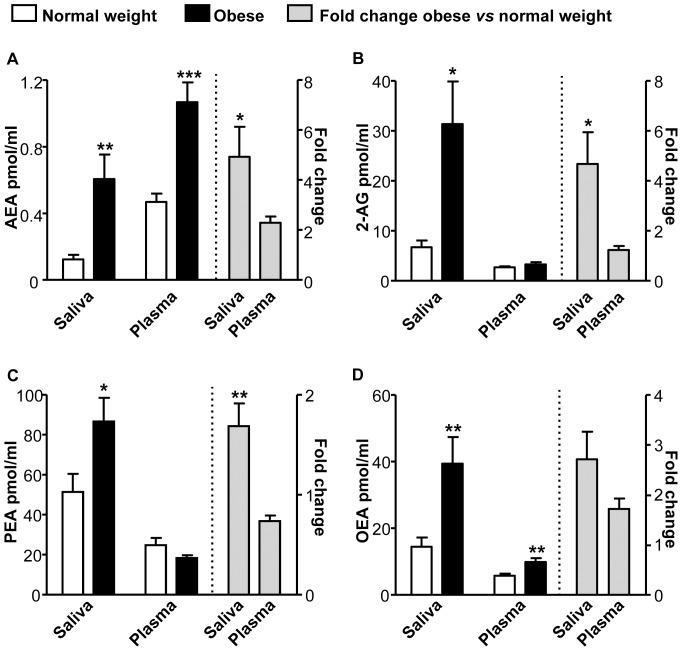
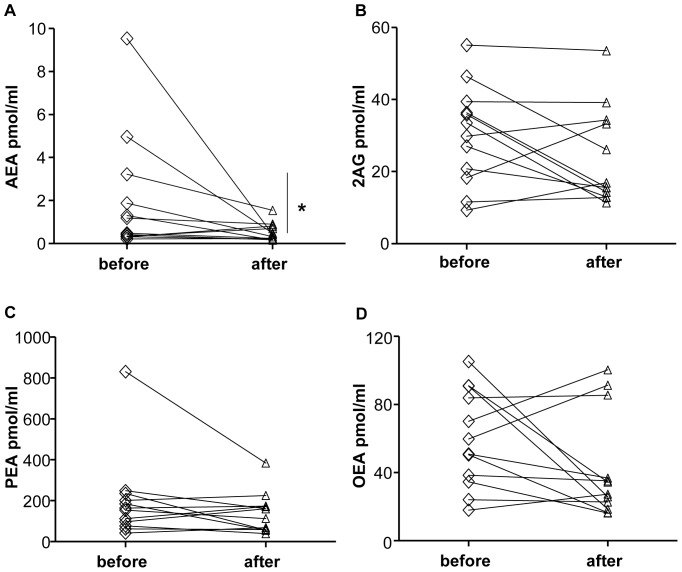
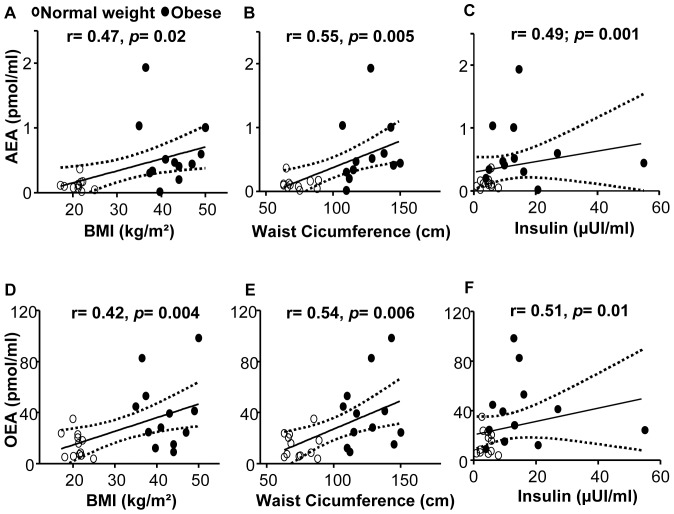
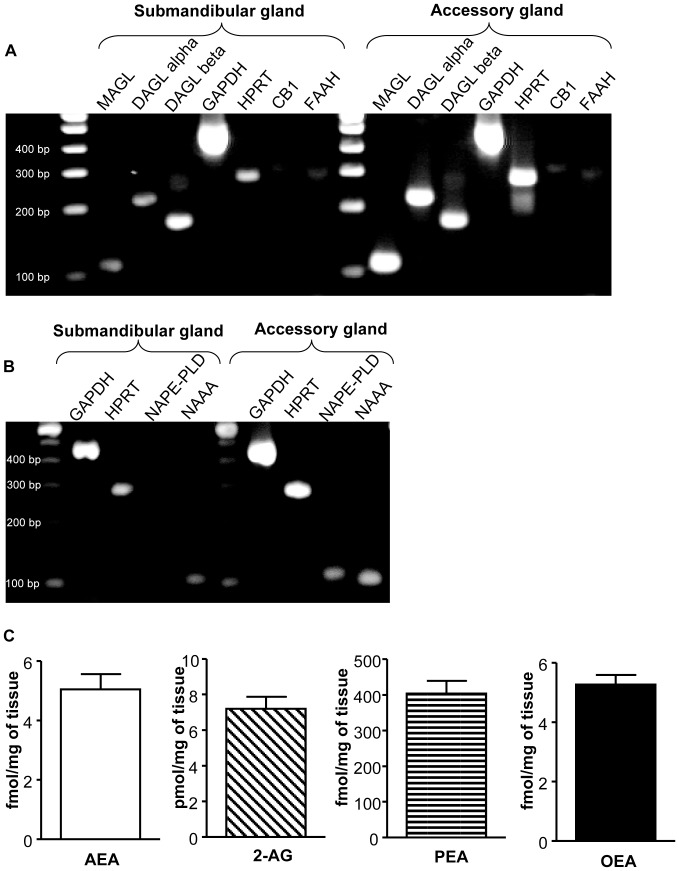
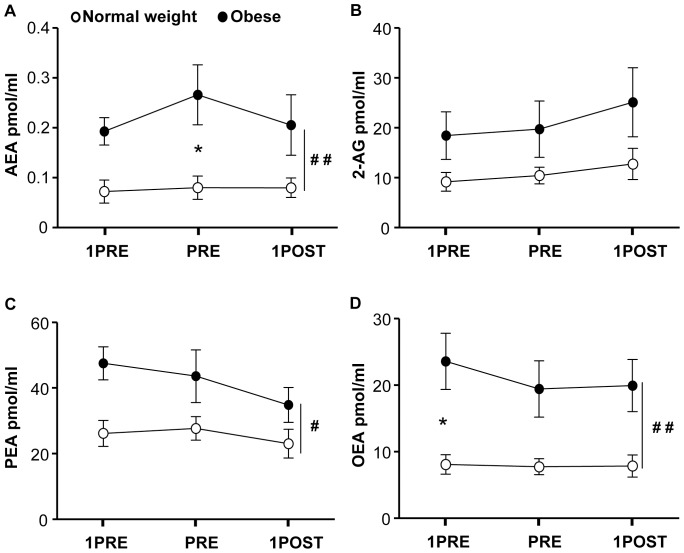
METHODOLOGY/PRINCIPAL FINDINGS: Fasting plasma and salivary endocannabinoids and N-acylethanolamines were measured through liquid mass spectrometry in 12 normal weight and 12 obese, insulin-resistant subjects. Salivary endocannabinoids and N-acylethanolamines were evaluated in the same cohort before and after the consumption of a meal. Changes in salivary endocannabinoids and N-acylethanolamines after body weight loss were investigated in a second group of 12 obese subjects following a 12-weeks lifestyle intervention program. The levels of mRNAs coding for enzymes regulating the metabolism of endocannabinoids, N-acylethanolamines and of cannabinoid type 1 (CB(1)) receptor, alongside endocannabinoids and N-acylethanolamines content, were assessed in human salivary glands. The endocannabinoids 2-arachidonoylglycerol (2-AG), N-arachidonoylethanolamide (anandamide, AEA), and the N-acylethanolamines (oleoylethanolamide, OEA and palmitoylethanolamide, PEA) were quantifiable in saliva and their levels were significantly higher in obese than in normal weight subjects. Fasting salivary AEA and OEA directly correlated with BMI, waist circumference and fasting insulin. Salivary endocannabinoids and N-acylethanolamines did not change in response to a meal. CB(1) receptors, ligands and enzymes were expressed in the salivary glands. Finally, a body weight loss of 5.3% obtained after a 12-weeks lifestyle program significantly decreased salivary AEA levels.
CONCLUSIONS/SIGNIFICANCE: Endocannabinoids and N-acylethanolamines are quantifiable in saliva and their levels correlate with obesity but not with feeding status. Body weight loss significantly decreases salivary AEA, which might represent a useful biomarker in obesity.
内源性大麻素系统的发现及其在能量平衡调节中的作用极大地促进了我们对导致肥胖和 2 型糖尿病的生理病理机制的理解。通过测量血液内源性大麻素,我们获得了关于该系统在人类中的作用的新知识。在这里,我们研究了唾液中的内源性大麻素和相关的 N-酰基乙醇胺,并验证了它们与体重状况的变化以及对膳食或体重减轻的反应。
方法/主要发现:通过液相质谱法测量了 12 名正常体重和 12 名肥胖、胰岛素抵抗受试者的空腹血浆和唾液内源性大麻素和 N-酰基乙醇胺。在同一队列中,在进食前后评估了唾液内源性大麻素和 N-酰基乙醇胺。在一项为期 12 周的生活方式干预计划后,对另一组 12 名肥胖受试者的体重减轻后唾液内源性大麻素和 N-酰基乙醇胺的变化进行了研究。评估了调节内源性大麻素、N-酰基乙醇胺和大麻素 1 型(CB1)受体代谢的酶的编码 mRNAs 的水平,以及人类唾液腺中的内源性大麻素和 N-酰基乙醇胺含量。唾液中可定量检测到内源性大麻素 2-花生四烯酸甘油(2-AG)、N-花生四烯酸乙醇胺(大麻素,AEA)和 N-酰基乙醇胺(油酰乙醇胺,OEA 和棕榈酰乙醇胺,PEA),其水平在肥胖者中明显高于正常体重者。空腹唾液 AEA 和 OEA 与 BMI、腰围和空腹胰岛素直接相关。膳食后唾液内源性大麻素和 N-酰基乙醇胺没有变化。CB1 受体、配体和酶在唾液腺中表达。最后,在生活方式计划 12 周后体重减轻 5.3%,显著降低了唾液 AEA 水平。
结论/意义:内源性大麻素和 N-酰基乙醇胺可在唾液中定量检测,其水平与肥胖相关,但与喂养状态无关。体重减轻显著降低唾液 AEA,这可能是肥胖的有用生物标志物。