Department of Agricultural Sciences, University of Naples Federico II, Parco Gussone Ed. 84, 80055, Portici, NA), Italy.
Department of Clinical Medicine and Surgery, University of Naples Federico II, 80131, Naples, Italy.
Eur J Nutr. 2021 Oct;60(7):3703-3716. doi: 10.1007/s00394-021-02538-8. Epub 2021 Mar 24.
To investigate whether a Mediterranean diet (MD) affected the plasma concentrations of endocannabinoids (ECs), N-acylethanolamines (NAEs) and their specific ratios in subjects with lifestyle risk factors for metabolic diseases. To identify the relationship between circulating levels of these compounds and gut microbiome, insulin resistance and systemic inflammation.
A parallel 8-week randomised controlled trial was performed involving 82 overweight and obese subjects aged (mean ± SEM) 43 ± 1.4 years with a BMI of 31.1 ± 0.5 kg/m, habitual Western diet (CT) and sedentary lifestyle. Subjects were randomised to consume an MD tailored to their habitual energy and macronutrient intake (n = 43) or to maintain their habitual diet (n = 39). Endocannabinoids and endocannabinoid-like molecules, metabolic and inflammatory markers and gut microbiome were monitored over the study period.
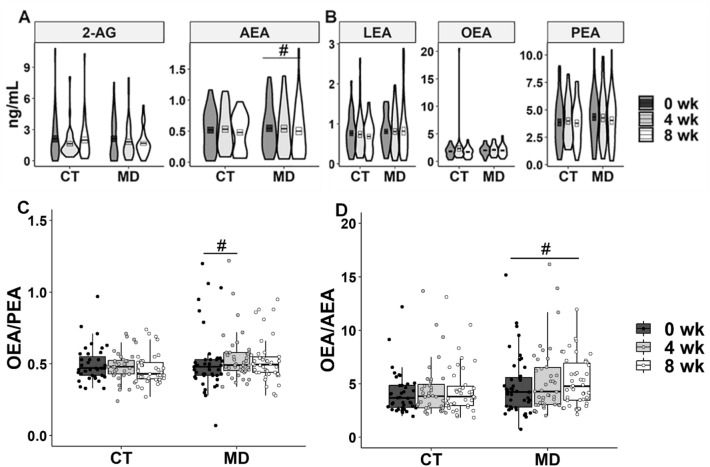
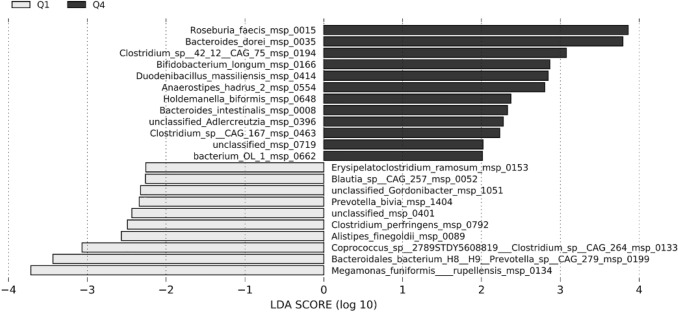
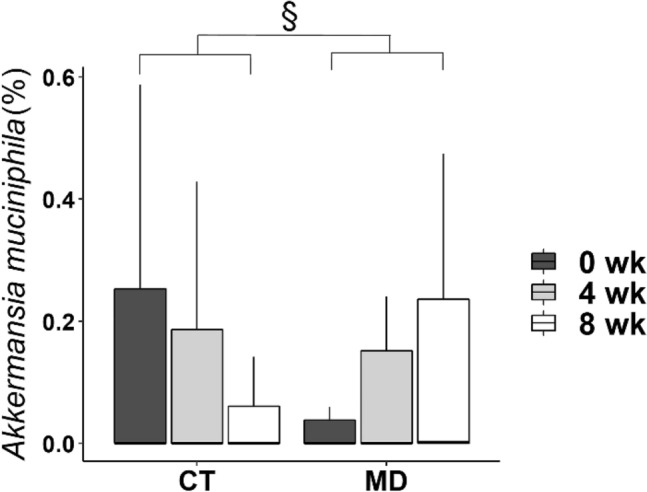
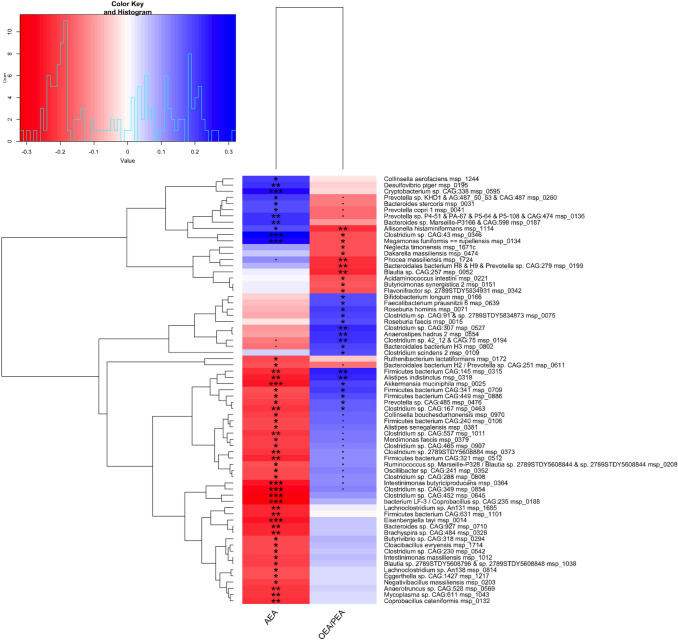
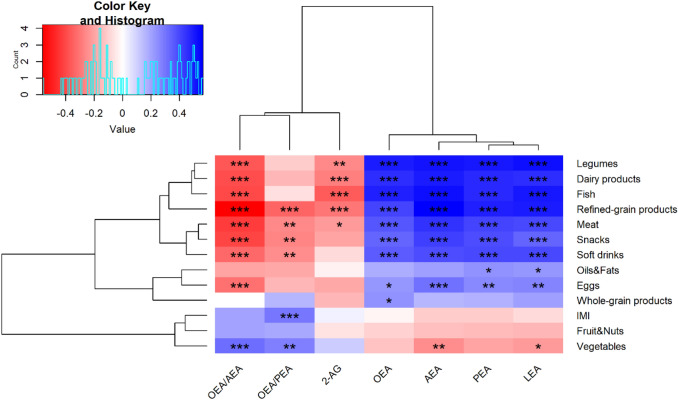
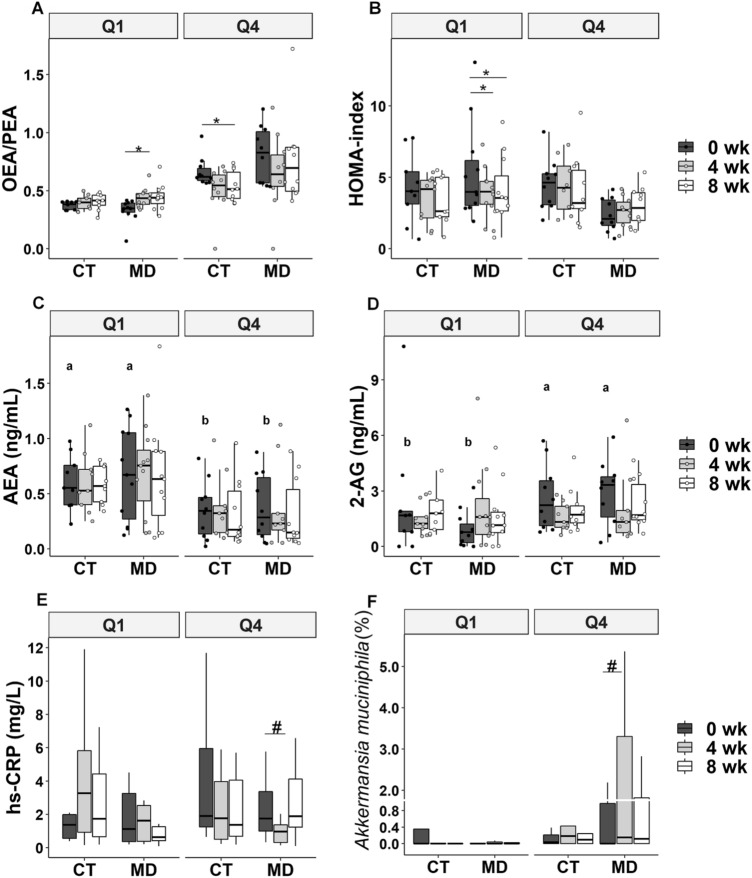
The MD intervention lowered plasma arachidonoylethanolamide (AEA, p = 0.02), increased plasma oleoylethanolamide/palmitoylethanolamide (OEA/PEA, p = 0.009) and OEA/AEA (p = 0.006) and increased faecal Akkermansia muciniphila (p = 0.026) independent of body weight changes. OEA/PEA positively correlated with abundance of key microbial players in diet-gut-health interplay and MD adherence. Following an MD, individuals with low-plasma OEA/PEA at baseline decreased homeostatic model assessment of insulin resistance index (p = 0.01), while individuals with high-plasma OEA/PEA decreased serum high-sensitive C-reactive protein (p = 0.02).
We demonstrated that a switch from a CT to an isocaloric MD affects the endocannabinoid system and increases A. muciniphila abundance in the gut independently of body weight changes. Endocannabinoid tone and microbiome functionality at baseline drives an individualised response to an MD in ameliorating insulin sensitivity and inflammation. Clinical Trial Registry number and website NCT03071718; www.clinicaltrials.gov.
研究地中海饮食(MD)是否会影响患有代谢性疾病生活方式危险因素的个体的内源性大麻素(ECs)、N-酰基乙醇胺(NAEs)及其特定比例的血浆浓度。确定这些化合物的循环水平与肠道微生物组、胰岛素抵抗和全身炎症之间的关系。
进行了一项平行的 8 周随机对照试验,涉及 82 名超重和肥胖受试者(平均年龄 ± SEM)43 ± 1.4 岁,BMI 为 31.1 ± 0.5 kg/m,习惯性西方饮食(CT)和久坐的生活方式。受试者被随机分配到根据他们的习惯性能量和宏量营养素摄入来食用 MD(n = 43)或保持他们的习惯性饮食(n = 39)。在研究期间监测内源性大麻素和内源性大麻素样分子、代谢和炎症标志物以及肠道微生物组。
MD 干预降低了血浆花生四烯酸乙醇酰胺(AEA,p = 0.02),增加了血浆油酰乙醇酰胺/棕榈酰乙醇酰胺(OEA/PEA,p = 0.009)和 OEA/AEA(p = 0.006),增加了粪便阿克曼氏菌粘液菌(p = 0.026),与体重变化无关。OEA/PEA 与饮食-肠道-健康相互作用和 MD 依从性的关键微生物参与者的丰度呈正相关。遵循 MD 后,基线时血浆 OEA/PEA 水平较低的个体稳态模型评估的胰岛素抵抗指数(HOMA-IR)降低(p = 0.01),而血浆 OEA/PEA 水平较高的个体血清高敏 C 反应蛋白(hs-CRP)降低(p = 0.02)。
我们证明,从 CT 切换到等热量 MD 会影响内源性大麻素系统,并增加肠道中的阿克曼氏菌粘液菌的丰度,而与体重变化无关。基线时的内源性大麻素张力和微生物组功能驱动个体对 MD 的反应,以改善胰岛素敏感性和炎症。临床试验注册号和网站 NCT03071718;www.clinicaltrials.gov。