Department of Agricultural, Food and Nutritional Science, University of Alberta, Edmonton, AB, T6G 2P5, Canada.
BMC Genomics. 2012 Aug 3;13:370. doi: 10.1186/1471-2164-13-370.
The domestic pig is an important livestock species and there is strong interest in the factors that affect the development of viable embryos and offspring in this species. A limited understanding of the molecular mechanisms involved in early embryonic development has inhibited our ability to fully elucidate these factors. Next generation deep sequencing and microarray technologies are powerful tools for delineation of molecular pathways involved in the developing embryo.
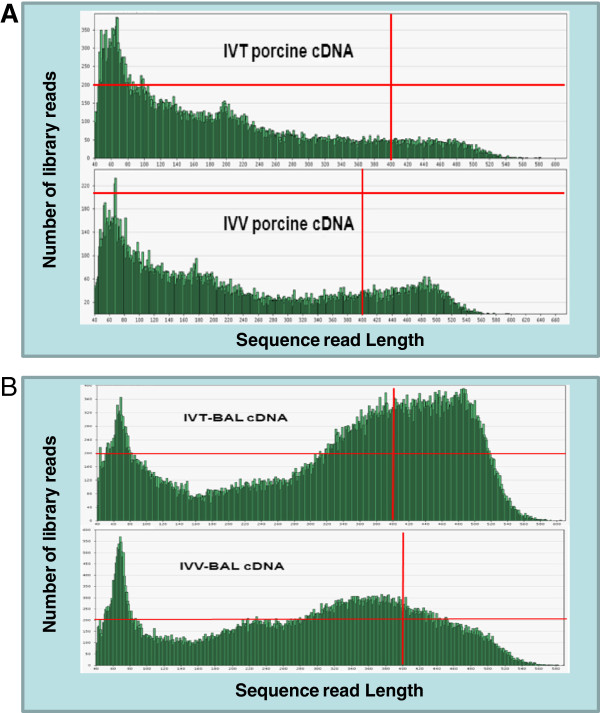
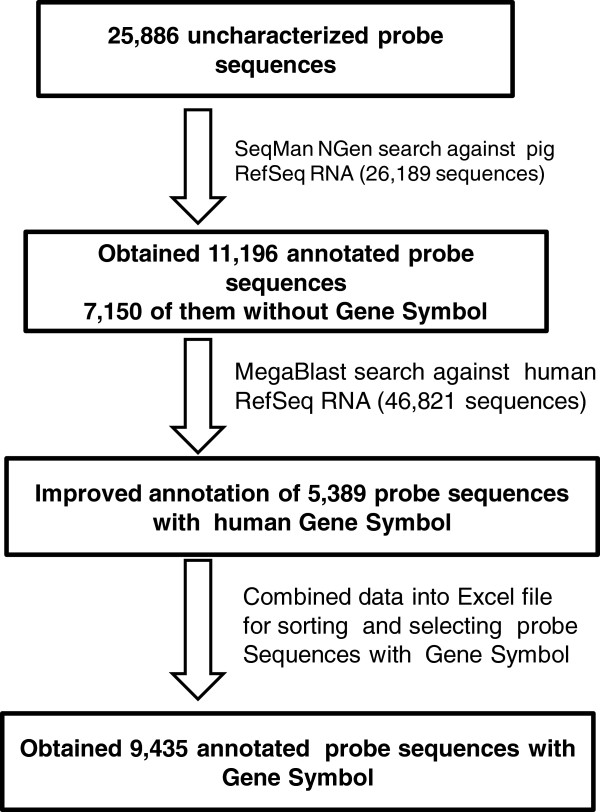
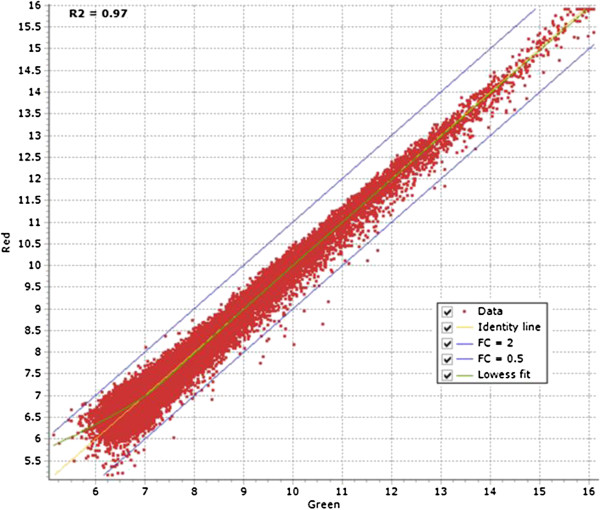
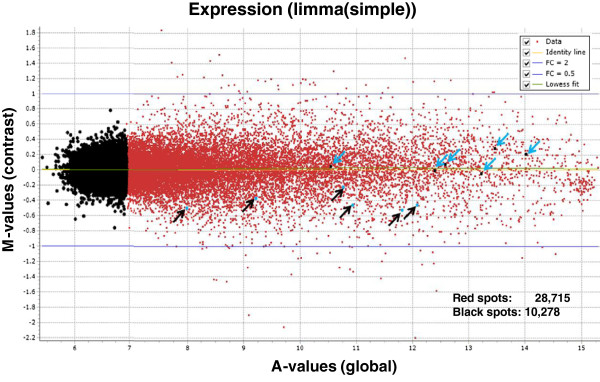
Here we present the development of a porcine-embryo-specific microarray platform created from a large expressed sequence tag (EST) analysis generated by Roche/454 next-generation sequencing of cDNAs constructed from critical stages of in vivo or in vitro porcine preimplantation embryos. Two cDNA libraries constructed from in vitro and in vivo produced preimplantation porcine embryos were normalized and sequenced using 454 Titanium pyrosequencing technology. Over one million high-quality EST sequences were obtained and used to develop the EMbryogene Porcine Version 1 (EMPV1) microarray composed of 43,795 probes. Based on an initial probe sequence annotation, the EMPV1 features 17,409 protein-coding, 473 pseudogenes, 46 retrotransposed, 2,359 non-coding RNA, 4,121 splice variants in 2,862 genes and a total of 12,324 Novel Transcript Regions (NTR). After re-annotation, the total unique genes increased from 11,961 to 16,281 and 1.9% of them belonged to a large olfactory receptor (OR) gene family. Quality control on the EMPV1 was performed and revealed an even distribution of ten clusters of spiked-in control spots and array to array (dye-swap) correlation was 0.97.
Using next-generation deep sequencing we have produced a large EST dataset to allow for the selection of probe sequences for the development of the EMPV1 microarray platform. The quality of this embryo-specific array was confirmed with a high-level of reproducibility using current Agilent microarray technology. With more than an estimated 20,000 unique genes represented on the EMPV1, this platform will provide the foundation for future research into the in vivo and in vitro factors that affect the viability of porcine embryos, as well as the effects of these factors on the live offspring that result from these embryos.
家猪是一种重要的家畜物种,人们对影响其胚胎和后代活力的因素有着浓厚的兴趣。由于对胚胎早期发育所涉及的分子机制了解有限,我们还不能完全阐明这些因素。新一代深度测序和微阵列技术是阐明胚胎发育相关分子途径的有力工具。
我们开发了一种猪胚胎特异性微阵列平台,该平台是基于罗氏/454 高通量测序对体内和体外猪原核胚胎的关键阶段构建的 cDNA 进行大规模表达序列标签(EST)分析而创建的。我们对体外和体内构建的两个猪原核胚胎 cDNA 文库进行了归一化处理,并使用 454 焦磷酸测序技术进行了测序。获得了超过 100 万个高质量的 EST 序列,并用于开发由 43795 个探针组成的 EMbryogene Porcine Version 1(EMPV1)微阵列。基于初始探针序列注释,EMPV1 具有 17409 个蛋白质编码基因、473 个假基因、46 个反转录转座子、2359 个非编码 RNA、2862 个基因中的 4121 个剪接变体和总共 12324 个新转录区域(NTR)。重新注释后,独特基因总数从 11961 个增加到 16281 个,其中 1.9%属于大型嗅觉受体(OR)基因家族。对 EMPV1 进行了质量控制,结果显示 10 个掺入对照点簇均匀分布,并且阵列之间(染料交换)的相关性为 0.97。
我们使用新一代深度测序产生了一个大型 EST 数据集,以便选择探针序列来开发 EMPV1 微阵列平台。使用当前的安捷伦微阵列技术,通过高度的重现性验证了这种胚胎特异性微阵列的质量。EMPV1 上大约有 20000 个独特的基因,该平台将为研究体内和体外影响猪胚胎活力的因素以及这些因素对这些胚胎产生的活后代的影响提供基础。