Ronco Claudio, Rosner Mitchell H
Crit Care. 2012 Aug 3;16(4):144. doi: 10.1186/cc11426.
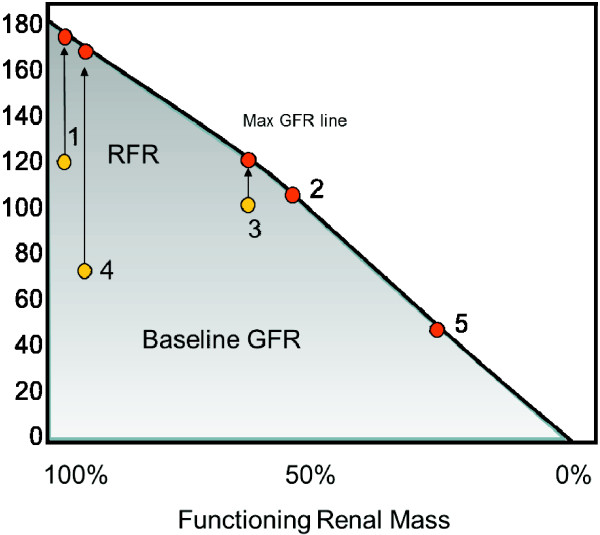
Acute kidney injury (AKI) occurring in patients admitted to the ICU may result in impaired renal function on long-term follow-up after ICU discharge. The damage induced by subclinical or manifest episodes of AKI may, in fact, produce an irreversible loss of a variable amount of renal mass with deleterious effects on overall renal function. This may be the case even though baseline glomerular filtration rate appears to return to normal but renal reserve is impaired. This may have an important effect on long-term outcomes, including progression to chronic kidney disease. Acute kidney insults should not be considered as isolated episodes but rather a sequence of progressive events that can lead to progressive deterioration of kidney tissue and eventual declines in renal function.
入住重症监护病房(ICU)的患者发生急性肾损伤(AKI),可能在ICU出院后的长期随访中导致肾功能受损。事实上,亚临床或明显的AKI发作所造成的损害,可能会导致不同程度的肾实质发生不可逆损失,对整体肾功能产生有害影响。即便基线肾小球滤过率似乎恢复正常,但肾储备功能受损时,情况仍可能如此。这可能对包括进展为慢性肾脏病在内的长期预后产生重要影响。急性肾损伤不应被视为孤立事件,而应看作是一系列渐进性事件,可导致肾组织逐渐恶化并最终致使肾功能下降。