Institute of Pharmaceutical Science, King's College London, 150 Stamford Street, London SE1 9NH, United Kingdom.
J Biol Chem. 2012 Oct 5;287(41):34120-33. doi: 10.1074/jbc.M112.359067. Epub 2012 Aug 6.
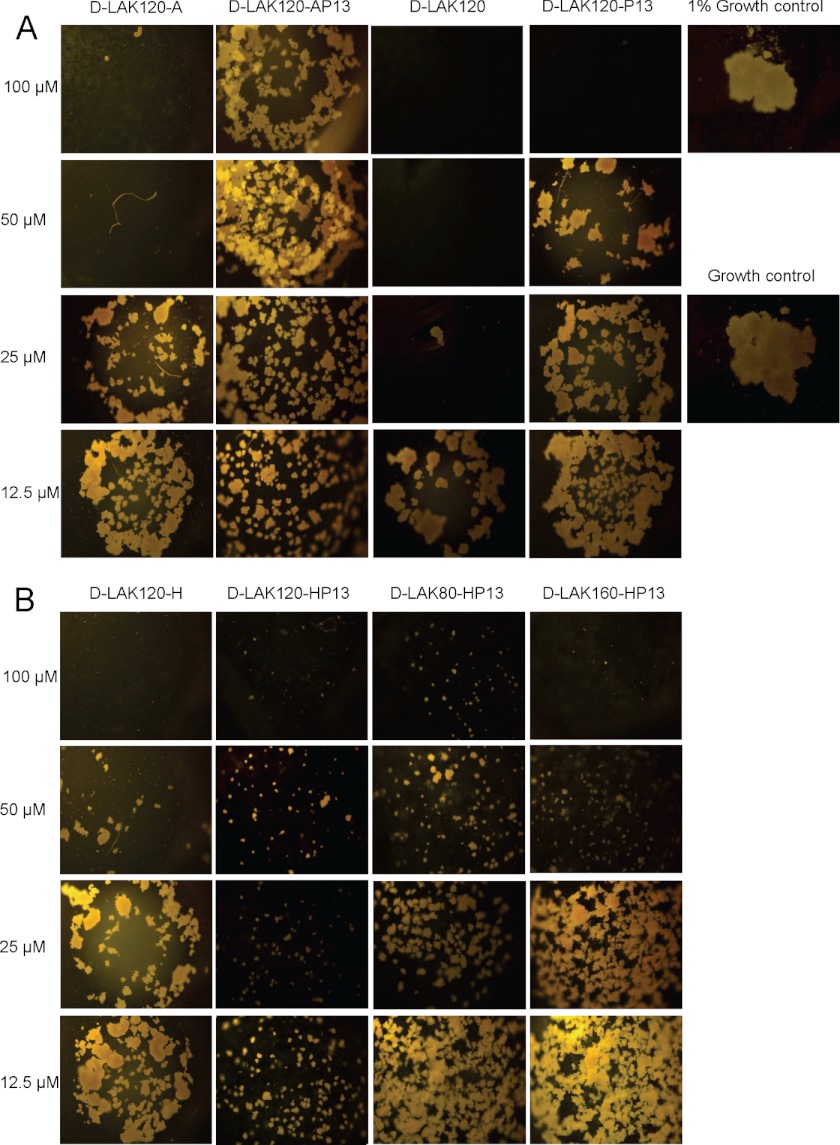
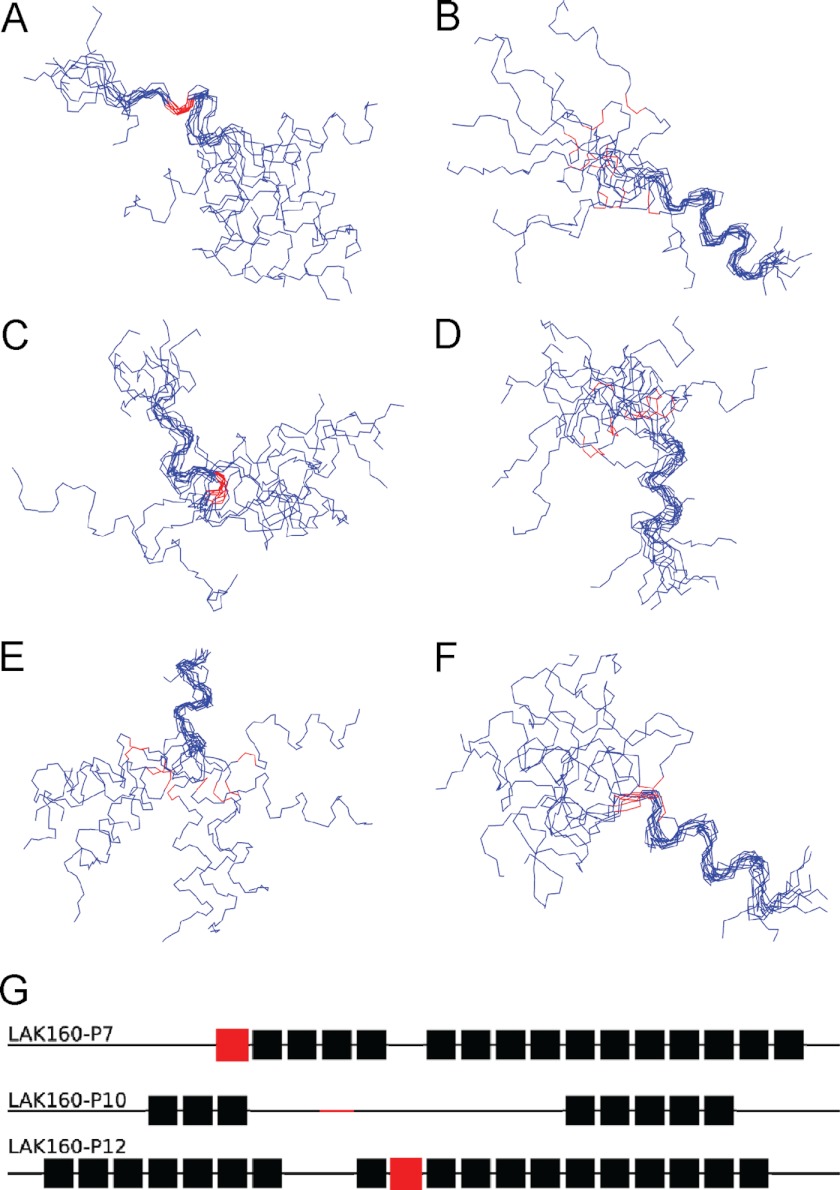
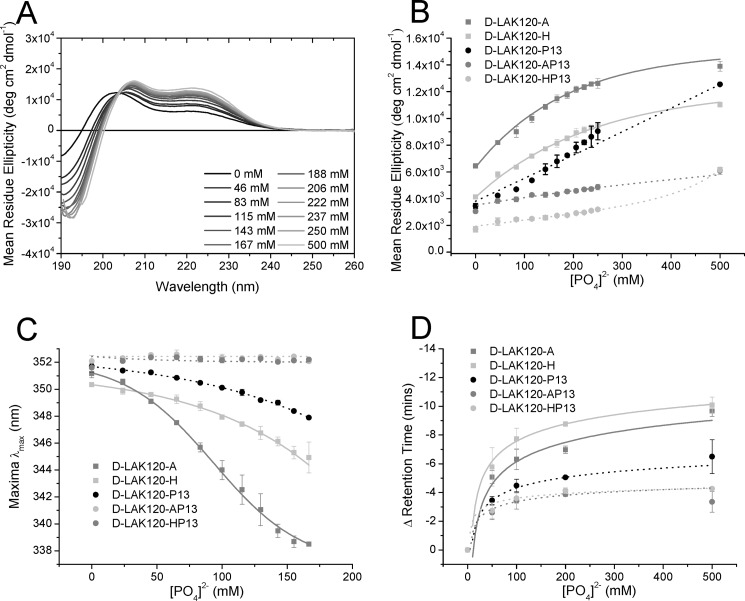
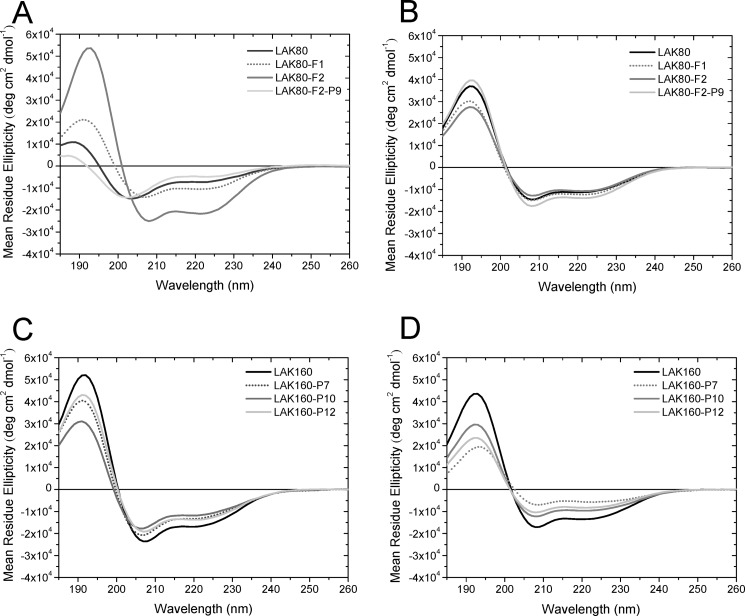
We used a combination of fluorescence, circular dichroism (CD), and NMR spectroscopies in conjunction with size exclusion chromatography to help rationalize the relative antibacterial, antiplasmodial, and cytotoxic activities of a series of proline-free and proline-containing model antimicrobial peptides (AMPs) in terms of their structural properties. When compared with proline-free analogs, proline-containing peptides had greater activity against Gram-negative bacteria, two mammalian cancer cell lines, and intraerythrocytic Plasmodium falciparum, which they were capable of killing without causing hemolysis. In contrast, incorporation of proline did not have a consistent effect on peptide activity against Mycobacterium tuberculosis. In membrane-mimicking environments, structures with high α-helix content were adopted by both proline-free and proline-containing peptides. In solution, AMPs generally adopted disordered structures unless their sequences comprised more hydrophobic amino acids or until coordinating phosphate ions were added. Proline-containing peptides resisted ordering induced by either method. The roles of the angle subtended by positively charged amino acids and the positioning of the proline residues were also investigated. Careful positioning of proline residues in AMP sequences is required to enable the peptide to resist ordering and maintain optimal antibacterial activity, whereas varying the angle subtended by positively charged amino acids can attenuate hemolytic potential albeit with a modest reduction in potency. Maintaining conformational flexibility improves AMP potency and selectivity toward bacterial, plasmodial, and cancerous cells while enabling the targeting of intracellular pathogens.
我们结合使用荧光、圆二色性(CD)和 NMR 光谱学以及排阻色谱法,帮助根据结构特性,合理推断一系列不含脯氨酸和含脯氨酸的模型抗菌肽(AMP)的相对抗菌、抗疟原虫和细胞毒性活性。与不含脯氨酸的类似物相比,含脯氨酸的肽对革兰氏阴性菌、两种哺乳动物癌细胞系和红细胞内疟原虫(恶性疟原虫)具有更高的活性,它们能够在不引起溶血的情况下杀死这些细菌。相比之下,脯氨酸的掺入对肽对结核分枝杆菌的活性没有一致的影响。在模拟膜的环境中,不含脯氨酸和含脯氨酸的肽都采用了具有高α-螺旋含量的结构。在溶液中,AMP 通常采用无规构象,除非其序列包含更多疏水性氨基酸,或者添加配位磷酸根离子。脯氨酸的掺入阻止了这两种方法引起的有序化。还研究了带正电荷氨基酸所成角度和脯氨酸残基定位的作用。需要在 AMP 序列中仔细定位脯氨酸残基,以确保肽能够抵抗有序化并保持最佳的抗菌活性,而改变带正电荷氨基酸所成角度可以降低溶血潜力,尽管效力略有降低。保持构象灵活性可提高 AMP 对细菌、疟原虫和癌细胞的效力和选择性,同时能够靶向细胞内病原体。