School of Physics, University College Dublin, Dublin, Ireland.
Prion. 2012 Sep-Oct;6(4):339-45. doi: 10.4161/pri.21022. Epub 2012 Aug 9.
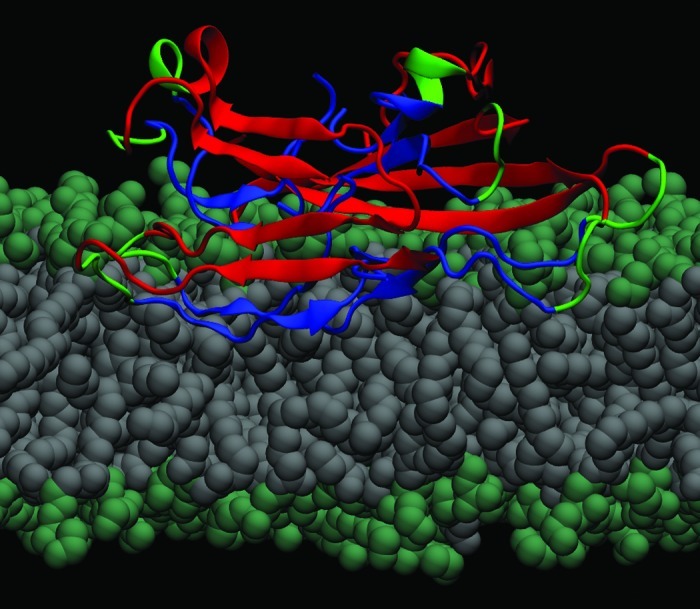
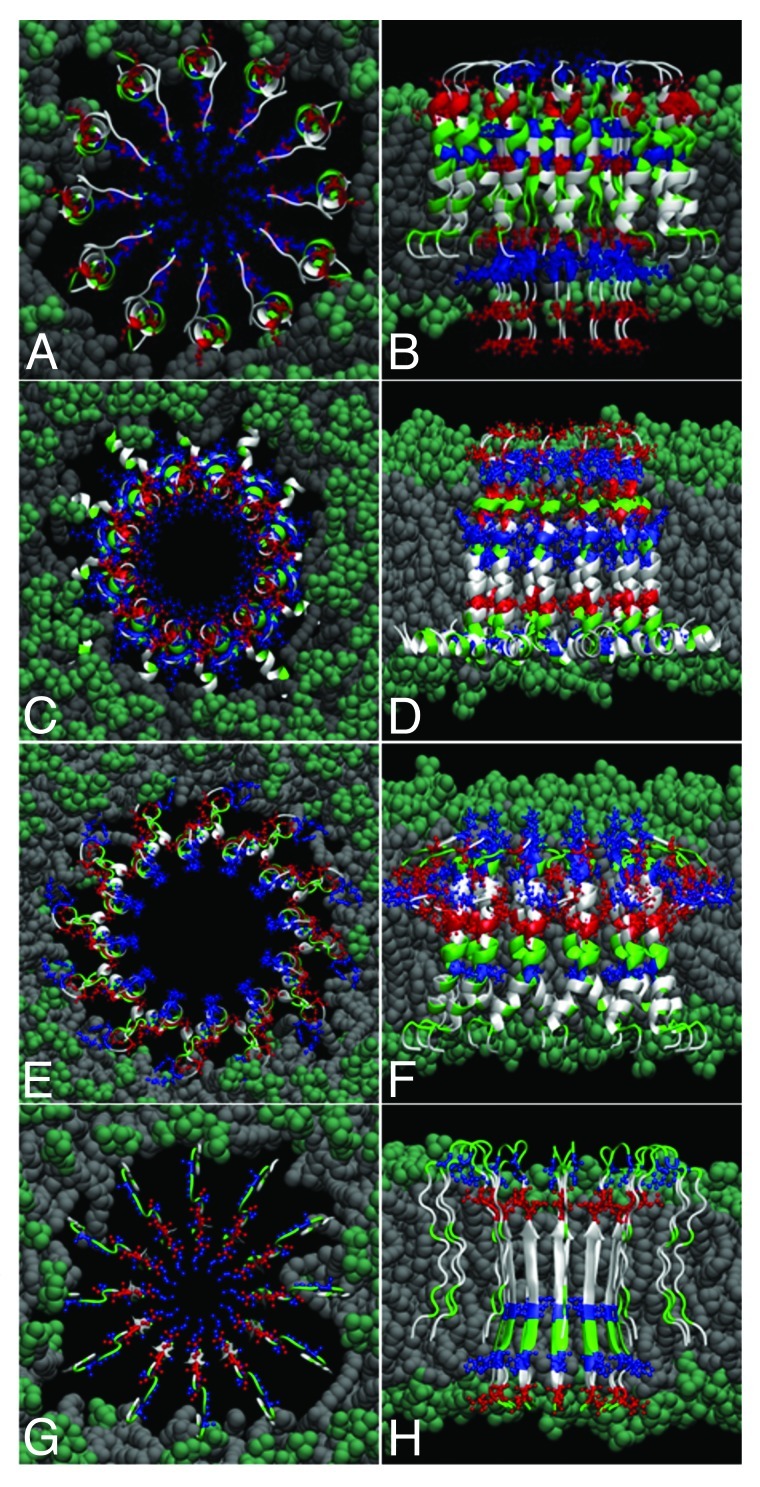
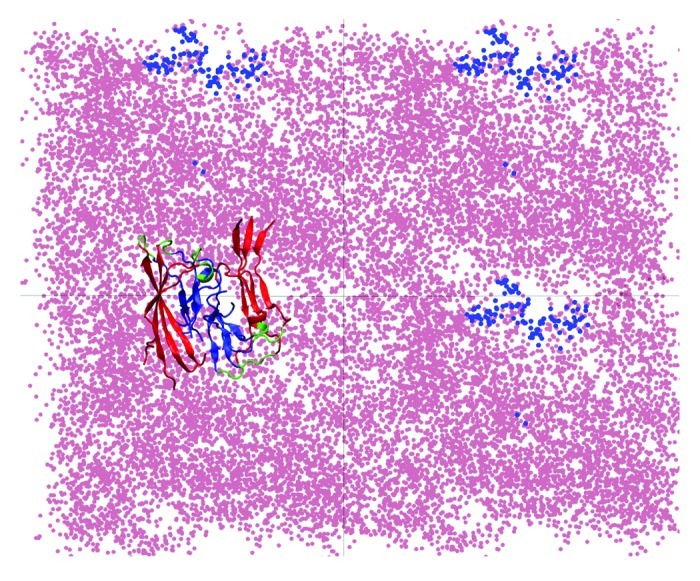
Fibrillar aggregates of misfolded amyloid proteins are involved in a variety of diseases such as Alzheimer disease (AD), type 2 diabetes, Parkinson, Huntington and prion-related diseases. In the case of AD amyloid β (Aβ) peptides, the toxicity of amyloid oligomers and larger fibrillar aggregates is related to perturbing the biological function of the adjacent cellular membrane. We used atomistic molecular dynamics (MD) simulations of Aβ 9-40 fibrillar oligomers modeled as protofilament segments, including lipid bilayers and explicit water molecules, to probe the first steps in the mechanism of Aβ-membrane interactions. Our study identified the electrostatic interaction between charged peptide residues and the lipid headgroups as the principal driving force that can modulate the further penetration of the C-termini of amyloid fibrils or fibrillar oligomers into the hydrophobic region of lipid membranes. These findings advance our understanding of the detailed molecular mechanisms and the effects related to Aβ-membrane interactions, and suggest a polymorphic structural character of amyloid ion channels embedded in lipid bilayers. While inter-peptide hydrogen bonds leading to the formation of β-strands may still play a stabilizing role in amyloid channel structures, these may also present a significant helical content in peptide regions (e.g., termini) that are subject to direct interactions with lipids rather than with neighboring Aβ peptides.
纤维状聚集的错误折叠的淀粉样蛋白与多种疾病有关,如阿尔茨海默病(AD)、2 型糖尿病、帕金森病、亨廷顿病和朊病毒相关疾病。在 AD 淀粉样β(Aβ)肽的情况下,淀粉样寡聚体和更大纤维状聚集物的毒性与扰乱相邻细胞膜的生物学功能有关。我们使用 Aβ 9-40 纤维状寡聚物的原子分子动力学(MD)模拟,这些寡聚物模拟为原纤维片段,包括脂双层和显式水分子,以探测 Aβ-膜相互作用机制中的第一步。我们的研究确定了带电荷的肽残基与脂质头部之间的静电相互作用是主要驱动力,它可以调节淀粉样纤维或纤维状寡聚物的 C 末端进一步穿透脂质膜的疏水区。这些发现增进了我们对 Aβ-膜相互作用相关的详细分子机制和影响的理解,并表明嵌入脂双层中的淀粉样离子通道具有多态结构特征。虽然导致β-折叠形成的肽间氢键可能仍然在淀粉样通道结构中发挥稳定作用,但这些氢键也可能在肽区域(例如末端)中呈现出显著的螺旋含量,这些区域直接与脂质相互作用,而不是与相邻的 Aβ 肽相互作用。