Hospital das Clínicas da Faculdade de Medicina da Universidade de São Paulo, São Paulo/SP, Brazil.
Clinics (Sao Paulo). 2012 Jul;67(7):705-10. doi: 10.6061/clinics/2012(07)02.
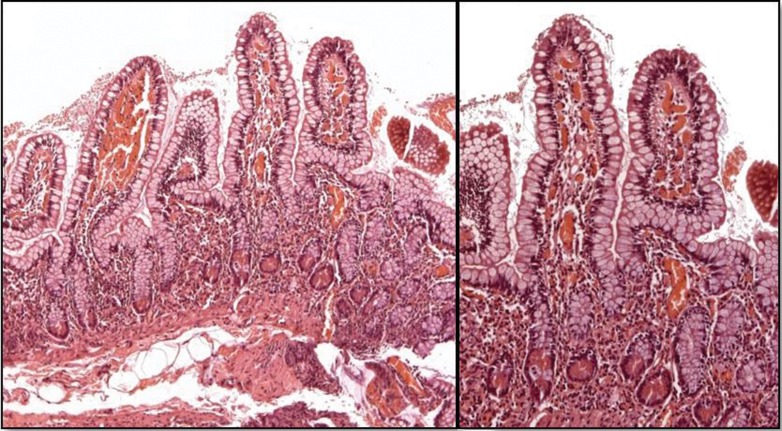
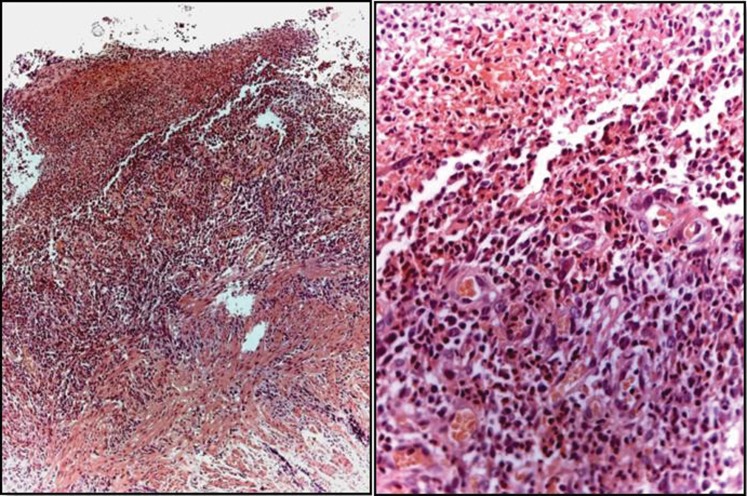
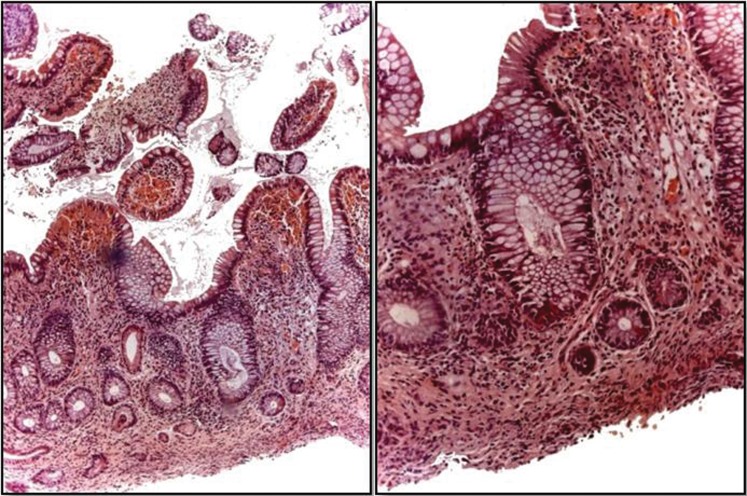
Many changes in mucosal morphology are observed following ileal pouch construction, including colonic metaplasia and dysplasia. Additionally, one rare but potential complication is the development of adenocarcinoma of the reservoir. The aim of this study was to evaluate the most frequently observed histopathological changes in ileal pouches and to correlate these changes with potential risk factors for complications.
A total of 41 patients were enrolled in the study and divided into the following three groups: a non-pouchitis group (group 1) (n = 20; 8 males; mean age: 47.5 years) demonstrating optimal outcome; a pouchitis without antibiotics group (group 2) (n = 14; 4 males; mean age: 47 years), containing individuals with pouchitis who did not receive treatment with antibiotics; and a pouchitis plus antibiotics group (group 3) (n = 7; 3 males; mean age: 41 years), containing those patients with pouchitis who were administered antibiotics. Ileal pouch endoscopy was performed, and tissue biopsy samples were collected for histopathological analysis.
Colonic metaplasia was found in 15 (36.6%) of the 41 patients evaluated; of these, five (25%) were from group 1, eight (57.1%) were from group 2, and two (28.6%) were from group 3. However, no correlation was established between the presence of metaplasia and pouchitis (p = 0.17). and no differences in mucosal atrophy or the degree of chronic or acute inflammation were observed between groups 1, 2, and 3 (p>0.45). Moreover, no dysplasia or neoplastic changes were detected. However, the degree of mucosal atrophy correlated well with the time of postoperative follow-up (p = 0.05).
The degree of mucosal atrophy, the presence of colonic metaplasia, and the degree of acute or chronic inflammation do not appear to constitute risk factors for the development of pouchitis. Moreover, we observed that longer postoperative follow-up times were associated with greater degrees of mucosal atrophy.
回肠造口术后可观察到黏膜形态学的多种变化,包括结肠化生和异型增生。此外,一个罕见但潜在的并发症是贮袋腺癌的发生。本研究旨在评估回肠贮袋中最常见的组织病理学变化,并将这些变化与并发症的潜在危险因素相关联。
共纳入 41 例患者,分为以下三组:非 pouchitis 组(组 1)(n = 20;8 例男性;平均年龄:47.5 岁),表现为最佳结果;无抗生素 pouchitis 组(组 2)(n = 14;4 例男性;平均年龄:47 岁),包含未接受抗生素治疗的 pouchitis 患者;和 pouchitis+抗生素组(组 3)(n = 7;3 例男性;平均年龄:41 岁),包含接受抗生素治疗的 pouchitis 患者。行回肠贮袋内镜检查,并采集组织活检标本进行组织病理学分析。
在评估的 41 例患者中,有 15 例(36.6%)发现结肠化生;其中,组 1 中有 5 例(25%),组 2 中有 8 例(57.1%),组 3 中有 2 例(28.6%)。然而,化生的存在与 pouchitis 之间无相关性(p = 0.17),且在组 1、组 2 和组 3 之间,黏膜萎缩、慢性或急性炎症的程度无差异(p>0.45)。此外,未发现异型增生或肿瘤性变化。然而,黏膜萎缩的程度与术后随访时间密切相关(p = 0.05)。
黏膜萎缩的程度、结肠化生的存在以及急性或慢性炎症的程度似乎都不是 pouchitis 发展的危险因素。此外,我们观察到术后随访时间越长,黏膜萎缩的程度越大。