Department of Biology, Stanford University, Stanford, California, United States of America.
PLoS One. 2012;7(8):e41364. doi: 10.1371/journal.pone.0041364. Epub 2012 Aug 10.
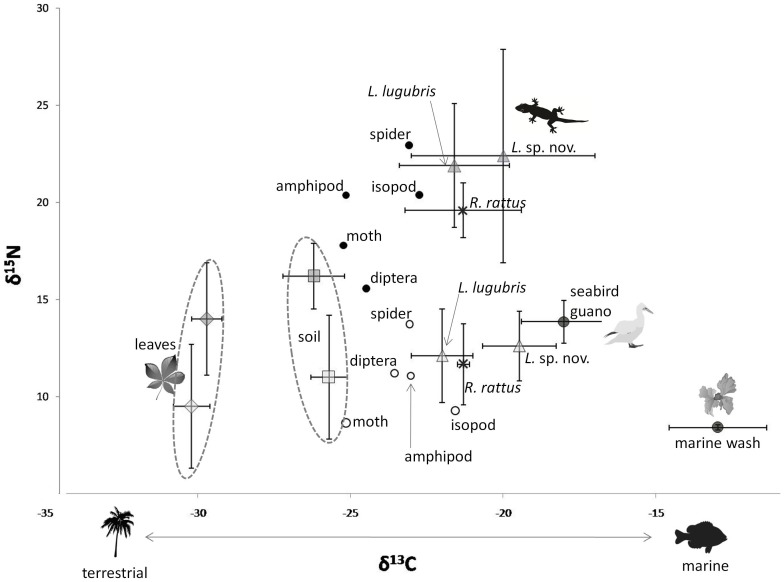
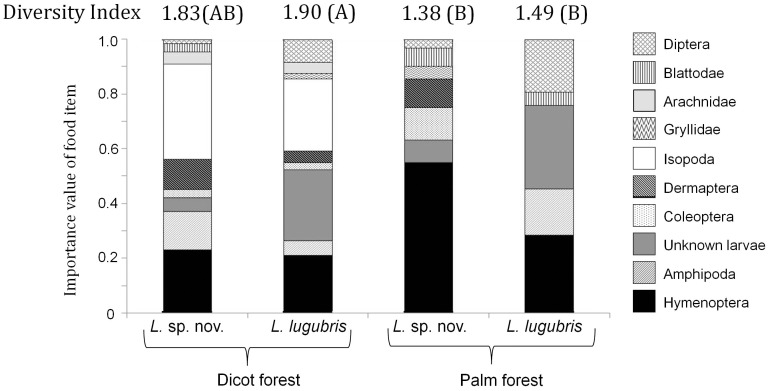
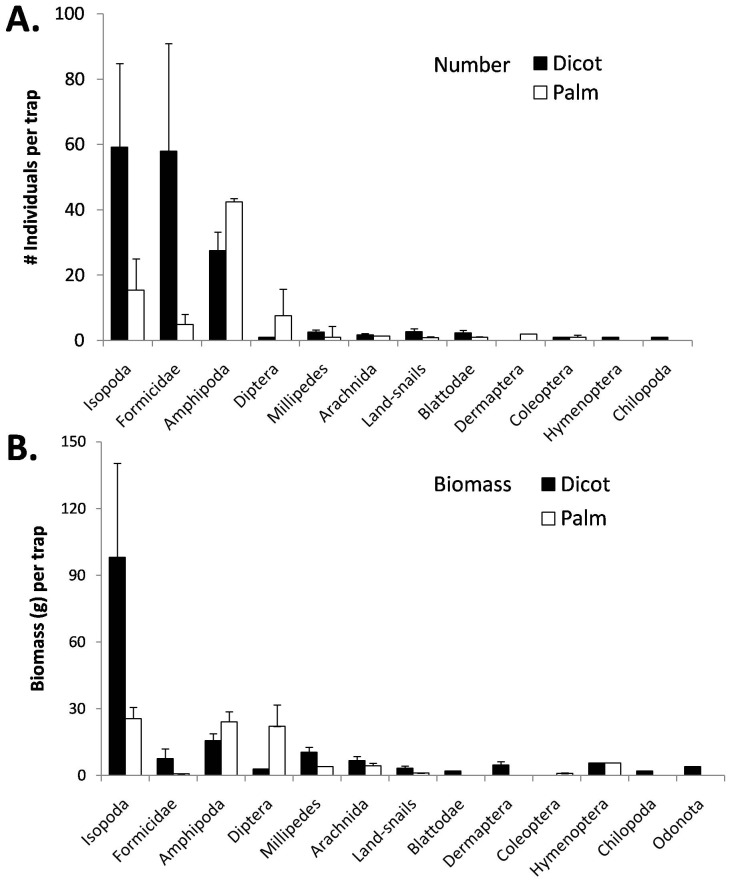
While it is well established that ecosystem subsidies--the addition of energy, nutrients, or materials across ecosystem boundaries--can affect consumer abundance, there is less information available on how subsidy levels may affect consumer diet, body condition, trophic position, and resource partitioning among consumer species. There is also little information on whether changes in vegetation structure commonly associated with spatial variation in subsidies may play an important role in driving consumer responses to subsidies. To address these knowledge gaps, we studied changes in abundance, diet, trophic position, size, and body condition of two congeneric gecko species (Lepidodactylus spp.) that coexist in palm dominated and native (hereafter dicot dominated) forests across the Central Pacific. These forests differ strongly both in the amount of marine subsidies that they receive from seabird guano and carcasses, and in the physical structure of the habitat. Contrary to other studies, we found that subsidy level had no impact on the abundance of either gecko species; it also did not have any apparent effects on resource partitioning between species. However, it did affect body size, dietary composition, and trophic position of both species. Geckos in subsidized, dicot forests were larger, had higher body condition and more diverse diets, and occupied a much higher trophic position than geckos found in palm dominated, low subsidy level forests. Both direct variation in subsidy levels and associated changes in habitat structure appear to play a role in driving these responses. These results suggest that variation in subsidy levels may drive important behavioral responses in predators, even when their numerical response is limited. Strong changes in trophic position of consumers also suggest that subsidies may drive increasingly complex food webs, with longer overall food chain length.
虽然已经确定生态系统补贴——跨越生态系统边界添加能量、养分或物质——可以影响消费者的丰度,但关于补贴水平如何影响消费者的饮食、身体状况、营养级和消费者物种之间的资源分配的信息较少。关于与补贴空间变化相关的植被结构变化是否可能在推动消费者对补贴的反应方面发挥重要作用的信息也很少。为了解决这些知识空白,我们研究了两种同种壁虎( Lepidodactylus spp. )的丰度、饮食、营养级、大小和身体状况的变化,这两种壁虎在中太平洋的棕榈主导和原生(以下简称双子叶主导)森林中共同存在。这些森林在它们从海鸟粪便和尸体中获得的海洋补贴数量以及栖息地的物理结构方面差异很大。与其他研究不同,我们发现补贴水平对这两种壁虎的丰度都没有影响;它也没有对物种之间的资源分配产生明显影响。然而,它确实影响了这两个物种的体型、饮食组成和营养级。在补贴的双子叶森林中,壁虎体型较大,身体状况较好,饮食更丰富,营养级也更高,而在棕榈主导、补贴水平较低的森林中,壁虎体型较小,身体状况较差,饮食较单一,营养级也较低。补贴水平的直接变化和相关的栖息地结构变化似乎都在推动这些反应。这些结果表明,即使在数量反应受到限制的情况下,补贴水平的变化也可能导致捕食者做出重要的行为反应。消费者营养级的强烈变化也表明,补贴可能会推动越来越复杂的食物网,从而使食物链的整体长度更长。