Department of Biomedical Engineering, Columbia University, NY 10032, USA.
Biomaterials. 2012 Nov;33(33):8329-42. doi: 10.1016/j.biomaterials.2012.08.013. Epub 2012 Aug 16.
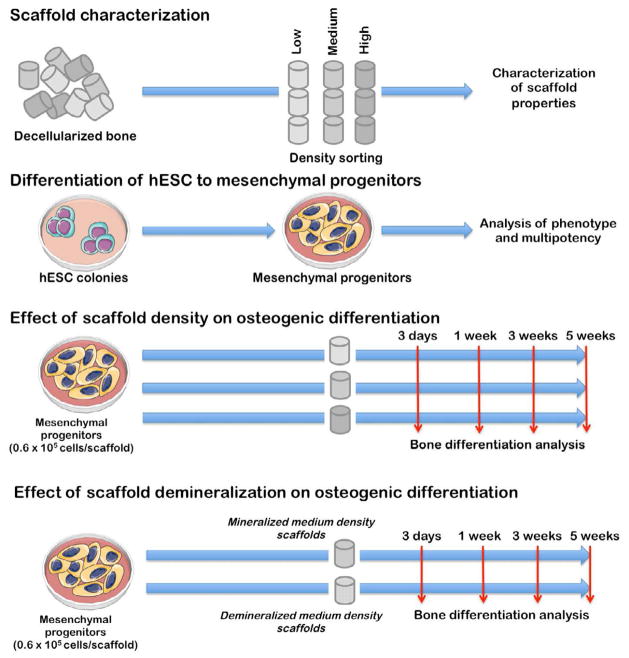
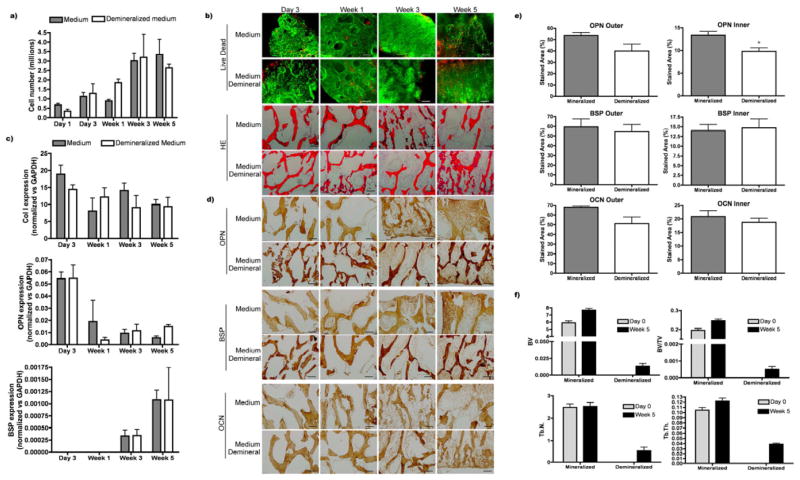
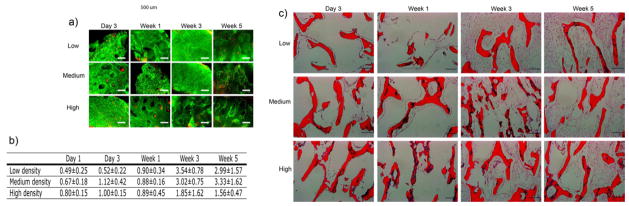
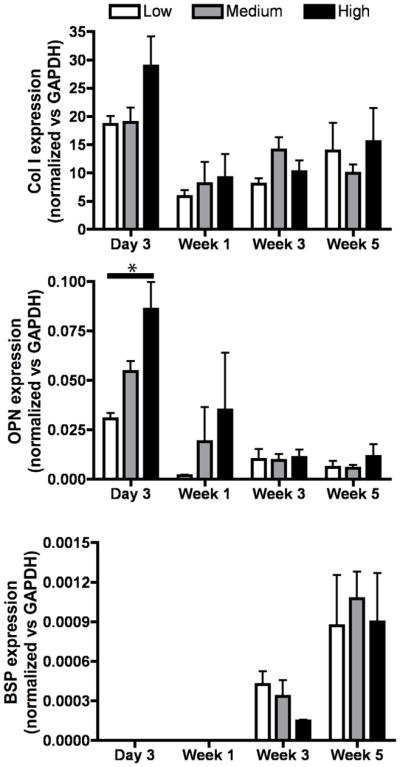
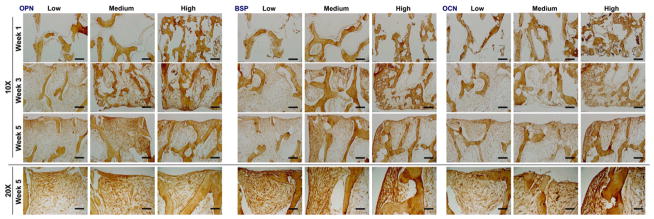
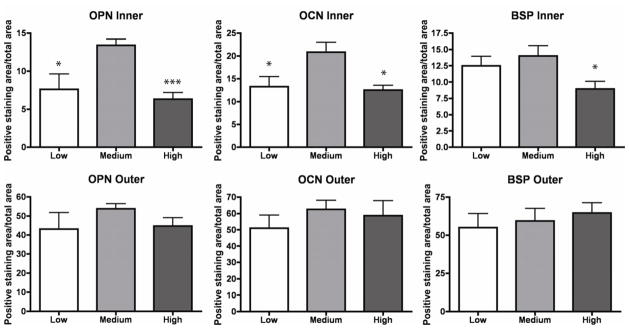
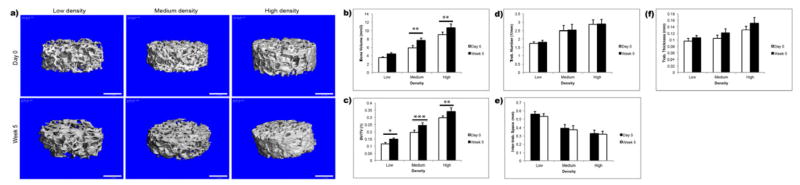
Decellularized bone has been widely used as a scaffold for bone formation, due to its similarity to the native bone matrix and excellent osteoinductive and biomechanical properties. We have previously shown that human mesenchymal and embryonic stem cells form functional bone matrix on such scaffolds, without the use of growth factors. In this study, we focused on differences in bone matrix that exist even among identical harvesting sites, and the effects of the matrix architecture and mineral content on bone formation by human embryonic stem cells (hESC). Mesenchymal progenitors derived from hESCs were cultured for 5 weeks in decellularized bone scaffolds with three different densities: low (0.281 ± 0.018 mg/mm(3)), medium (0.434 ± 0.015 mg/mm(3)) and high (0.618 ± 0.027 mg/mm(3)). The medium-density group yielded highest densities of cells and newly assembled bone matrix, presumably due to the best balance between the transport of nutrients and metabolites to and from the cells, space for cell infiltration, surface for cell attachment and the mechanical strength of the scaffolds, all of which depend on the scaffold density. Bone mineral was beneficial for the higher expression of bone markers in cultured cells and more robust accumulation of the new bone matrix.
脱细胞骨因其与天然骨基质相似且具有良好的成骨诱导性和生物力学性能,已被广泛用作骨形成的支架。我们之前已经表明,人类间充质和胚胎干细胞可以在不使用生长因子的情况下,在这些支架上形成功能性骨基质。在这项研究中,我们专注于即使在相同的采集部位之间也存在的骨基质差异,以及基质结构和矿物质含量对人胚胎干细胞(hESC)成骨的影响。从 hESC 中分离出来的间充质祖细胞在三种不同密度的脱细胞骨支架中培养了 5 周:低(0.281 ± 0.018 mg/mm3)、中(0.434 ± 0.015 mg/mm3)和高(0.618 ± 0.027 mg/mm3)。中密度组产生了最高密度的细胞和新组装的骨基质,这可能是由于细胞内外营养物质和代谢物的运输、细胞浸润的空间、细胞附着的表面以及支架的机械强度之间的最佳平衡,所有这些都取决于支架密度。骨矿物质有利于培养细胞中骨标志物的更高表达和新骨基质的更稳健积累。