Graduate School of Pharmaceutical Sciences, Kyushu University, Fukuoka, Japan.
PLoS One. 2012;7(7):e40322. doi: 10.1371/journal.pone.0040322. Epub 2012 Jul 20.
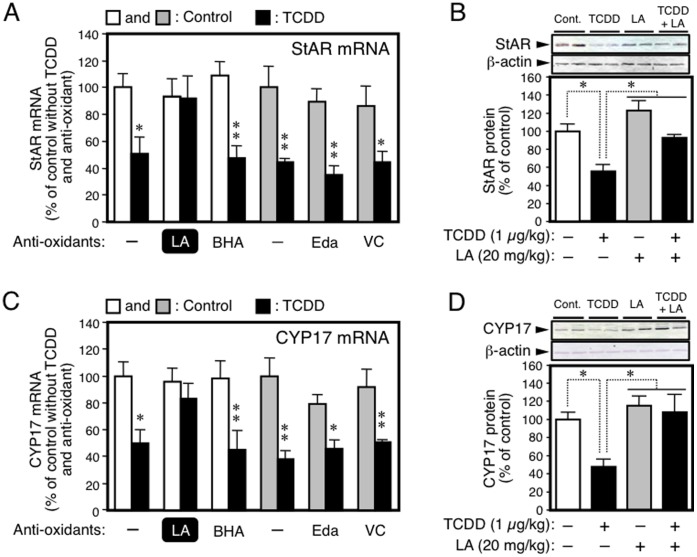
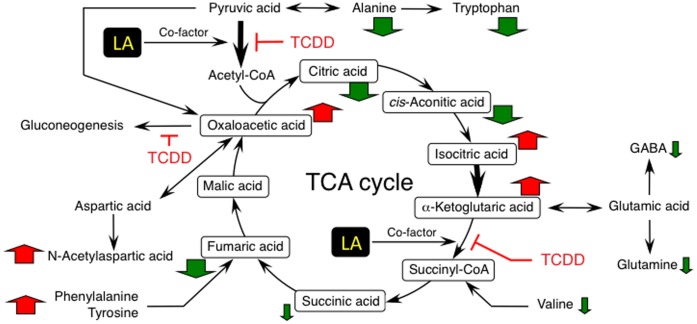
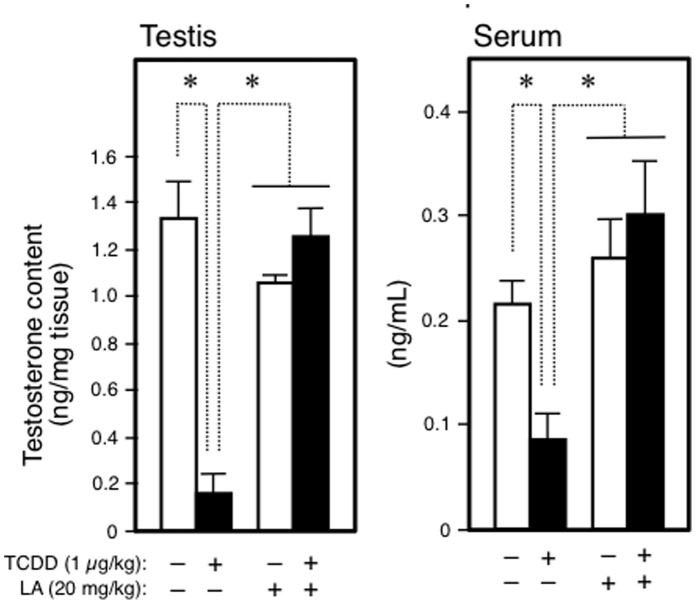
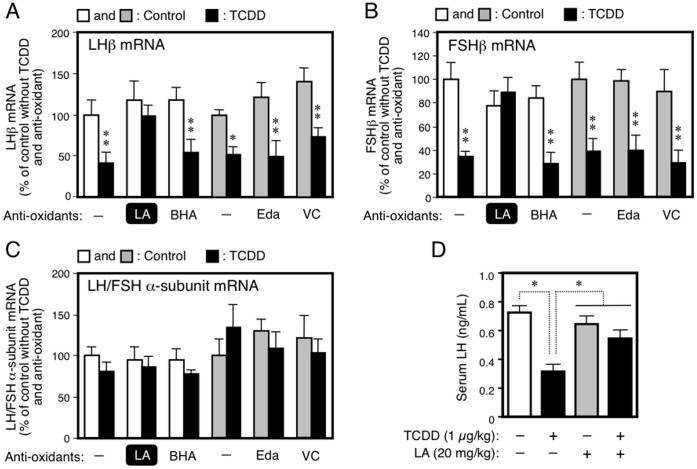
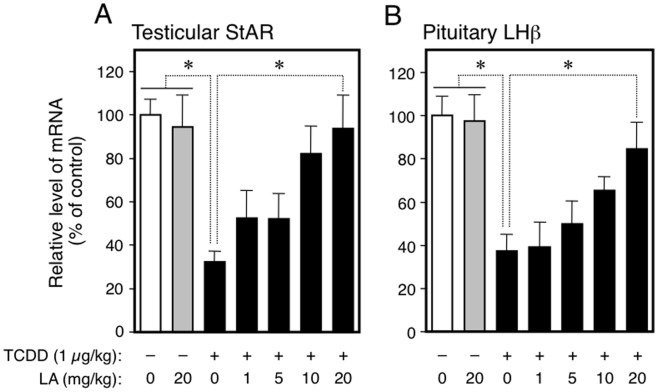
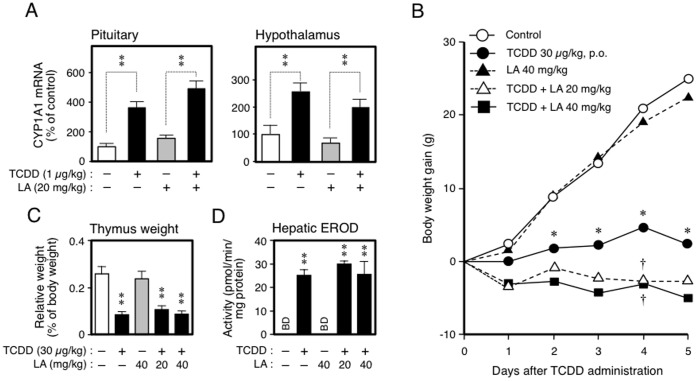
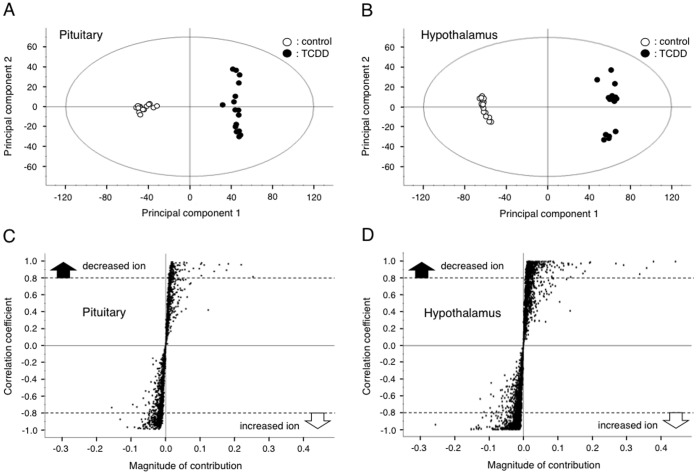
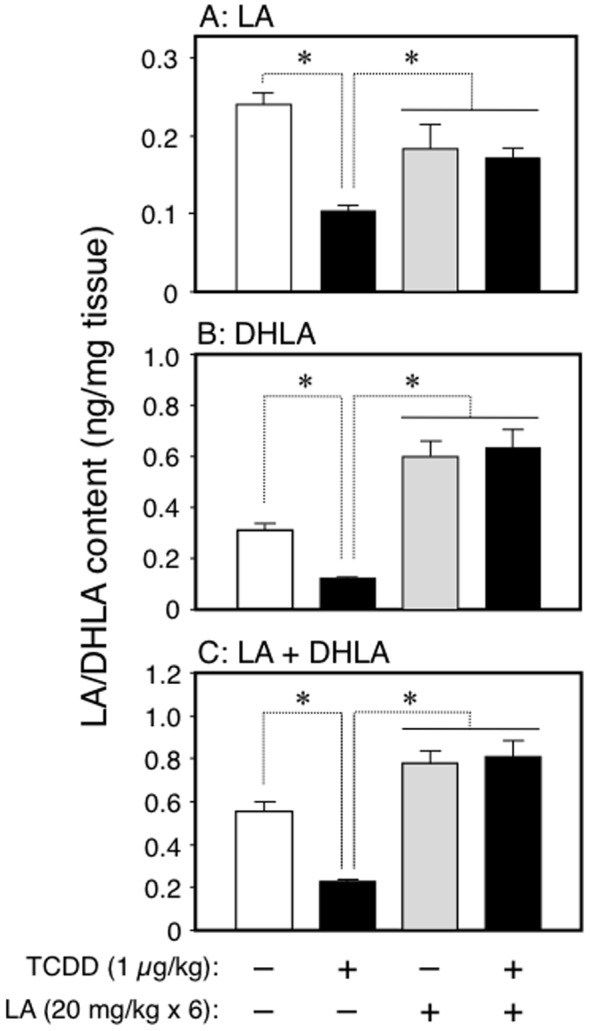
2,3,7,8-Tetrachlorodibenzo-p-dioxin (TCDD), an endocrine disruptor, causes reproductive and developmental toxic effects in pups following maternal exposure in a number of animal models. Our previous studies have demonstrated that TCDD imprints sexual immaturity by suppressing the expression of fetal pituitary gonadotropins, the regulators of gonadal steroidogenesis. In the present study, we discovered that all TCDD-produced damage to fetal production of pituitary gonadotropins as well as testicular steroidogenesis can be repaired by co-treating pregnant rats with α-lipoic acid (LA), an obligate co-factor for intermediary metabolism including energy production. While LA also acts as an anti-oxidant, other anti-oxidants; i.e., ascorbic acid, butylated hydroxyanisole and edaravone, failed to exhibit any beneficial effects. Neither wasting syndrome nor CYP1A1 induction in the fetal brain caused through the activation of aryl hydrocarbon receptor (AhR) could be attenuated by LA. These lines of evidence suggest that oxidative stress makes only a minor contribution to the TCDD-induced disorder of fetal steroidogenesis, and LA has a restorative effect by targeting on mechanism(s) other than AhR activation. Following a metabolomic analysis, it was found that TCDD caused a more marked change in the hypothalamus, a pituitary regulator, than in the pituitary itself. Although the components of the tricarboxylic acid cycle and the ATP content of the fetal hypothalamus were significantly changed by TCDD, all these changes were again rectified by exogenous LA. We also provided evidence that the fetal hypothalamic content of endogenous LA is significantly reduced following maternal exposure to TCDD. Thus, the data obtained strongly suggest that TCDD reduces the expression of fetal pituitary gonadotropins to imprint sexual immaturity or disturb development by suppressing the level of LA, one of the key players serving energy production.
2,3,7,8-四氯二苯并对二恶英(TCDD)是一种内分泌干扰物,在许多动物模型中,母体暴露于 TCDD 会导致幼仔产生生殖和发育毒性作用。我们之前的研究表明,TCDD 通过抑制胎儿垂体促性腺激素的表达来印记性不成熟,而这些激素是性腺甾体生成的调节剂。在本研究中,我们发现 TCDD 对胎儿垂体促性腺激素产生以及睾丸甾体生成的所有损害都可以通过用α-硫辛酸(LA)共同处理怀孕大鼠来修复,LA 是包括能量产生在内的中间代谢的必需辅因子。虽然 LA 也具有抗氧化作用,但其他抗氧化剂,如抗坏血酸、丁基羟基茴香醚和依达拉奉,都没有表现出任何有益的效果。LA 也不能减轻胎儿大脑中由于芳基烃受体(AhR)激活而引起的消瘦综合征或 CYP1A1 诱导。这些证据表明,氧化应激对 TCDD 诱导的胎儿甾体生成障碍的贡献较小,而 LA 通过针对 AhR 激活以外的机制具有恢复作用。在代谢组学分析之后,发现 TCDD 对作为垂体调节剂的下丘脑造成的变化比对垂体本身更为明显。尽管 TCDD 显著改变了胎儿下丘脑的三羧酸循环成分和 ATP 含量,但所有这些变化都再次被外源性 LA 纠正。我们还提供了证据表明,母体暴露于 TCDD 后,胎儿下丘脑内源性 LA 的含量明显降低。因此,获得的数据强烈表明,TCDD 通过降低 LA 的水平来抑制胎儿垂体促性腺激素的表达,从而导致性不成熟或干扰发育,LA 是参与能量产生的关键物质之一。