Fuhrman Jed A
Department of Biological Sciences, University of Southern California Los Angeles CA 90089 USA.
F1000 Biol Rep. 2012;4:15. doi: 10.3410/B4-15. Epub 2012 Aug 1.
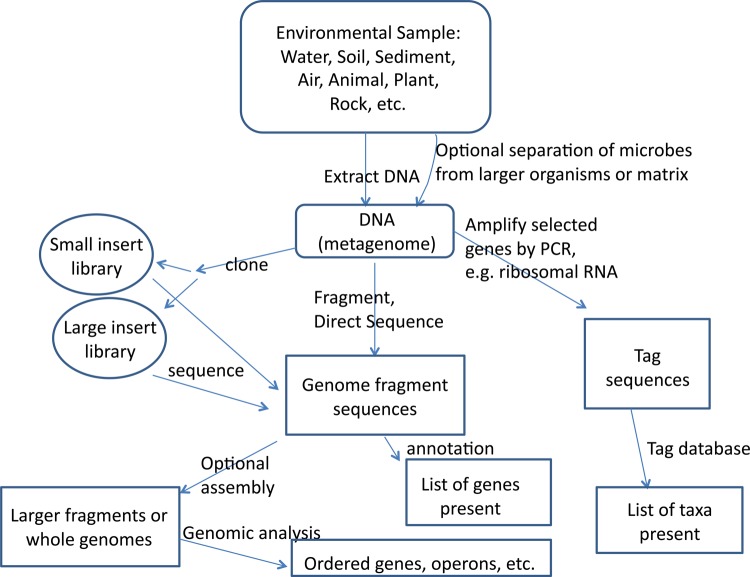
Microbes dominate most global biogeochemical cycles, and microbial metagenomics (studying the collective microbial genomes) provides invaluable new insights into microbial systems, independent of cultivation. Metagenomic approaches targeting specific genes, e.g. small subunit (ssu) ribosomal RNA (rRNA), can be used to investigate microbial community organization by efficiently showing which taxa of organisms are present, while shotgun approaches show all genes and can indicate what functions the organisms are capable of. But collecting and organizing comprehensive shotgun data is extremely challenging and costly, and, in theory, predicting functionalities from microbial identities alone would save immense effort. However, we don't yet know to what extent such predictions are applicable.
微生物主导着大多数全球生物地球化学循环,而微生物宏基因组学(研究微生物基因组集合)为微生物系统提供了宝贵的新见解,且无需培养。针对特定基因的宏基因组学方法,例如小亚基(ssu)核糖体RNA(rRNA),可通过有效显示存在哪些生物分类群来研究微生物群落组织,而鸟枪法可显示所有基因,并能表明这些生物具有何种功能。但是收集和整理全面的鸟枪法数据极具挑战性且成本高昂,从理论上讲,仅根据微生物身份预测功能将节省大量精力。然而,我们尚不清楚这种预测在多大程度上适用。