Karmanos Cancer Institute, Wayne State University, Detroit, Michigan, United States of America.
PLoS One. 2012;7(8):e41214. doi: 10.1371/journal.pone.0041214. Epub 2012 Aug 17.
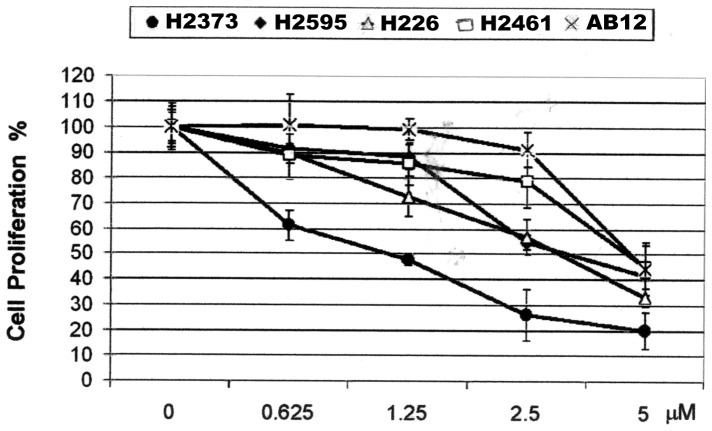
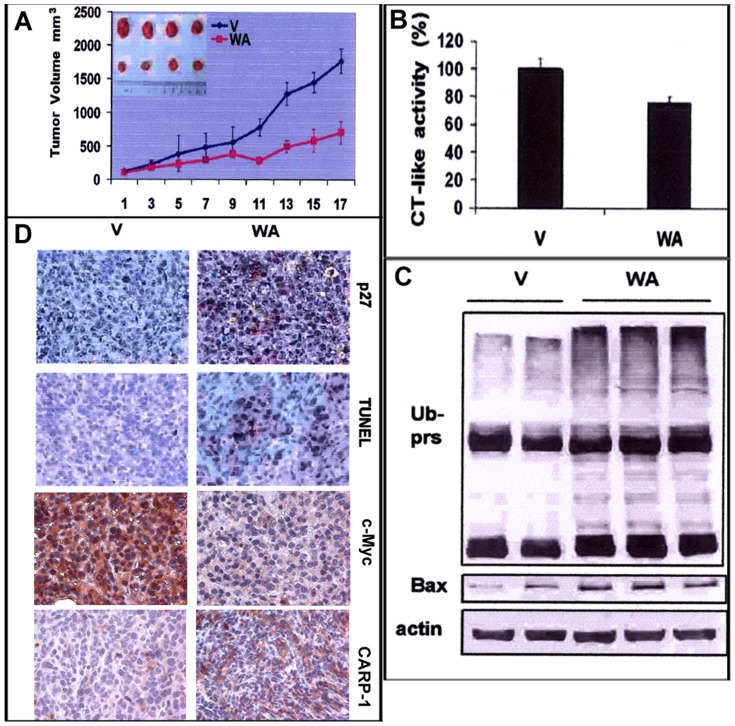
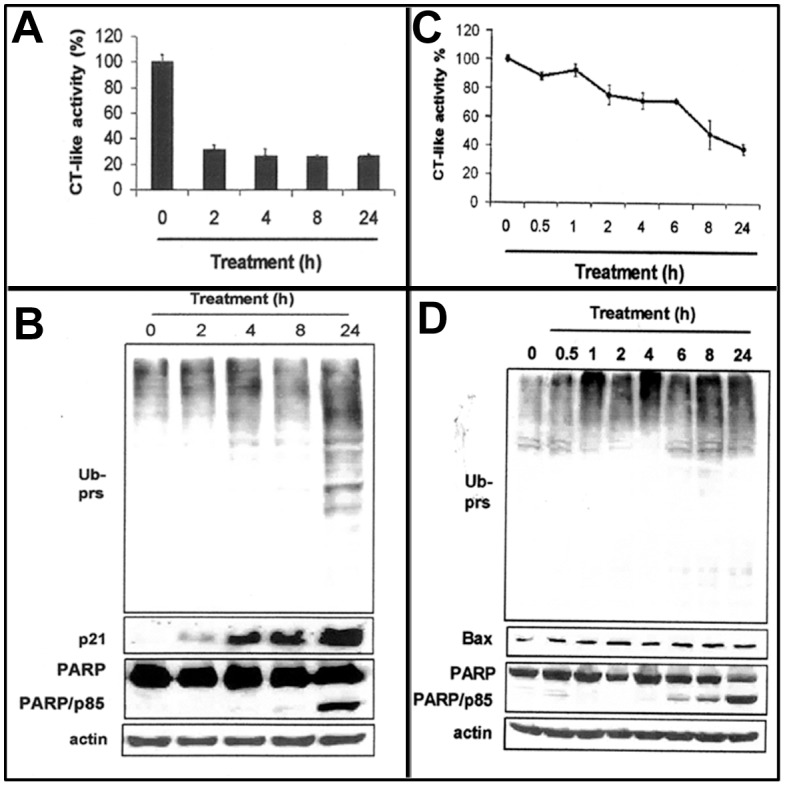
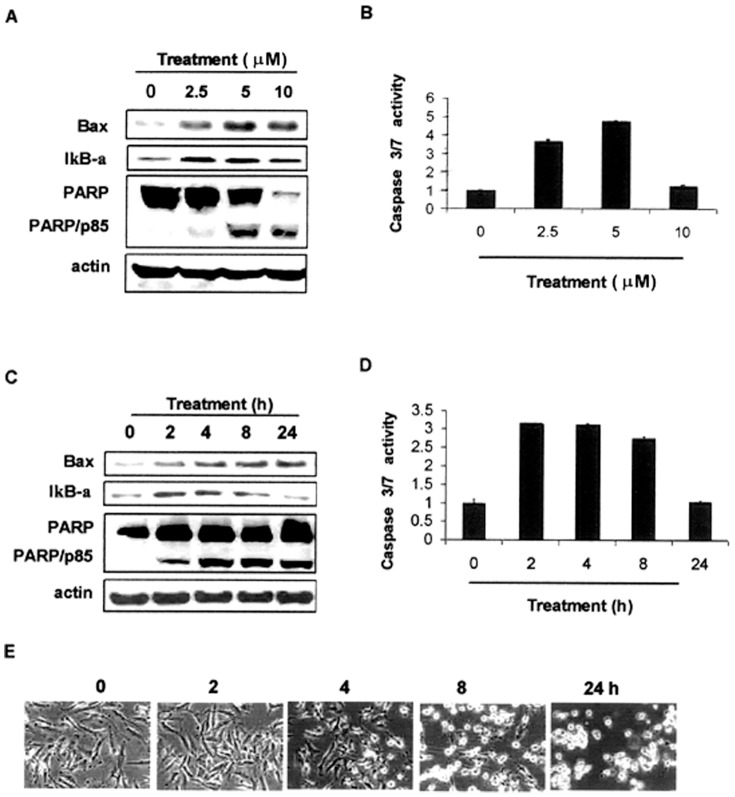
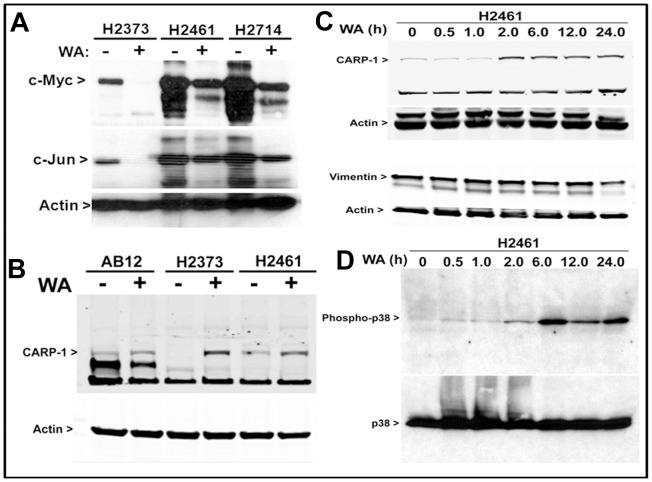
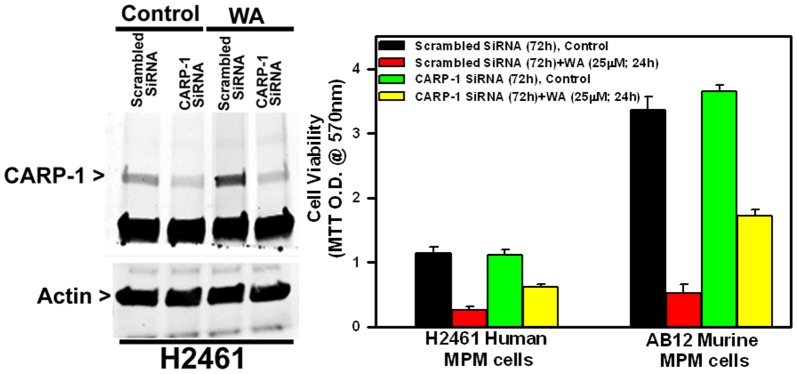
The medicinal plant Withania somnifera has been used for over centuries in Indian Ayurvedic Medicine to treat a wide spectrum of disorders. Withaferin A (WA), a bioactive compound that is isolated from this plant, has anti-inflammatory, immuno-modulatory, anti-angiogenic, and anti-cancer properties. Here we investigated malignant pleural mesothelioma (MPM) suppressive effects of WA and the molecular mechanisms involved. WA inhibited growth of the murine as well as patient-derived MPM cells in part by decreasing the chymotryptic activity of the proteasome that resulted in increased levels of ubiquitinated proteins and pro-apoptotic proteasome target proteins (p21, Bax, IκBα). WA suppression of MPM growth also involved elevated apoptosis as evidenced by activation of pro-apoptotic p38 stress activated protein kinase (SAPK) and caspase-3, elevated levels of pro-apoptotic Bax protein and cleavage of poly-(ADP-ribose)-polymerase (PARP). Our studies including gene-array based analyses further revealed that WA suppressed a number of cell growth and metastasis-promoting genes including c-myc. WA treatments also stimulated expression of the cell cycle and apoptosis regulatory protein (CARP)-1/CCAR1, a novel transducer of cell growth signaling. Knock-down of CARP-1, on the other hand, interfered with MPM growth inhibitory effects of WA. Intra-peritoneal administration of 5 mg/kg WA daily inhibited growth of murine MPM cell-derived tumors in vivo in part by inhibiting proteasome activity and stimulating apoptosis. Together our in vitro and in vivo studies suggest that WA suppresses MPM growth by targeting multiple pathways that include blockage of proteasome activity and stimulation of apoptosis, and thus holds promise as an anti-MPM agent.
药用植物睡茄(Withania somnifera)在印度阿育吠陀医学中已经使用了几个世纪,用于治疗广泛的疾病。从这种植物中分离出的生物活性化合物 Withaferin A(WA)具有抗炎、免疫调节、抗血管生成和抗癌特性。在这里,我们研究了 WA 对恶性胸膜间皮瘤(MPM)的抑制作用及其涉及的分子机制。WA 通过降低蛋白酶体的糜蛋白酶活性部分抑制了鼠源和患者来源的 MPM 细胞的生长,导致泛素化蛋白和促凋亡蛋白酶体靶蛋白(p21、Bax、IκBα)水平升高。WA 对 MPM 生长的抑制还涉及凋亡的增加,这表现在促凋亡 p38 应激激活蛋白激酶(SAPK)和 caspase-3 的激活、促凋亡 Bax 蛋白水平升高以及多聚(ADP-核糖)-多聚酶(PARP)的裂解。我们的研究包括基于基因阵列的分析进一步表明,WA 抑制了许多细胞生长和促进转移的基因,包括 c-myc。WA 处理还刺激了细胞周期和凋亡调节蛋白(CARP)-1/CCAR1 的表达,CARP-1/CCAR1 是一种新的细胞生长信号转导物。另一方面,CARP-1 的敲低干扰了 WA 对 MPM 生长的抑制作用。每天腹腔内给予 5mg/kg 的 WA 可抑制体内鼠源 MPM 细胞衍生肿瘤的生长,部分原因是抑制蛋白酶体活性和刺激凋亡。我们的体内外研究表明,WA 通过靶向包括阻断蛋白酶体活性和刺激凋亡在内的多种途径来抑制 MPM 生长,因此有望成为一种抗 MPM 药物。