National Human Genome Research Institute, Bethesda, MD 20892, USA.
Sci Transl Med. 2012 Aug 22;4(148):148ra116. doi: 10.1126/scitranslmed.3004129.
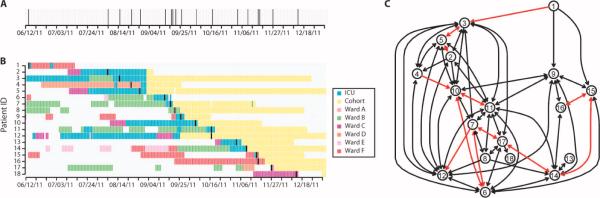
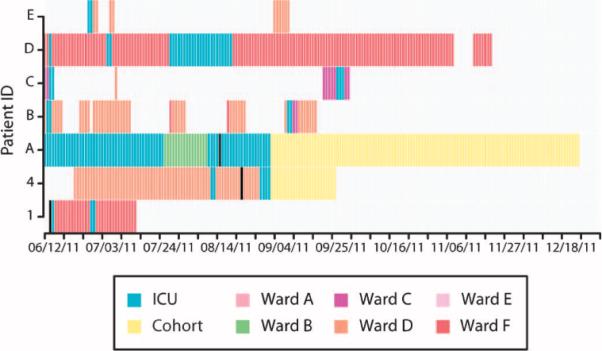
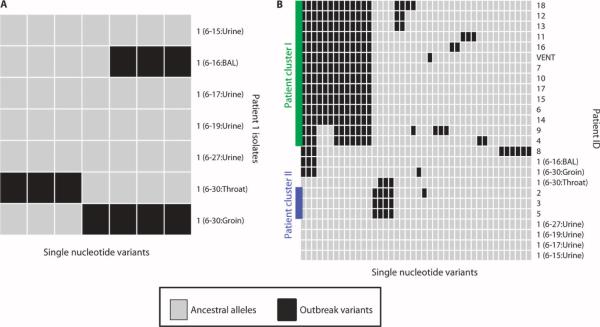
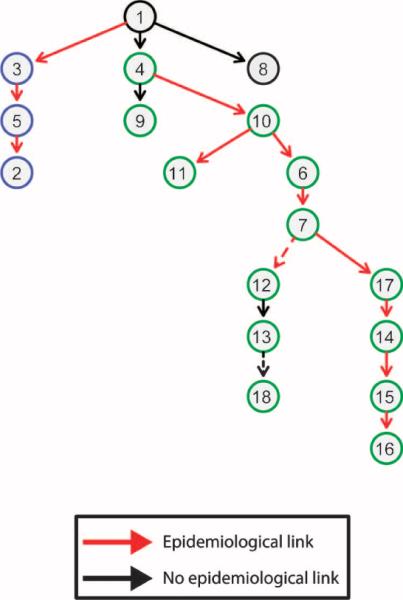
The Gram-negative bacteria Klebsiella pneumoniae is a major cause of nosocomial infections, primarily among immunocompromised patients. The emergence of strains resistant to carbapenems has left few treatment options, making infection containment critical. In 2011, the U.S. National Institutes of Health Clinical Center experienced an outbreak of carbapenem-resistant K. pneumoniae that affected 18 patients, 11 of whom died. Whole-genome sequencing was performed on K. pneumoniae isolates to gain insight into why the outbreak progressed despite early implementation of infection control procedures. Integrated genomic and epidemiological analysis traced the outbreak to three independent transmissions from a single patient who was discharged 3 weeks before the next case became clinically apparent. Additional genomic comparisons provided evidence for unexpected transmission routes, with subsequent mining of epidemiological data pointing to possible explanations for these transmissions. Our analysis demonstrates that integration of genomic and epidemiological data can yield actionable insights and facilitate the control of nosocomial transmission.
革兰氏阴性细菌肺炎克雷伯菌是医院感染的主要原因,主要发生在免疫功能低下的患者中。对碳青霉烯类药物耐药的菌株的出现使得治疗选择有限,因此感染控制至关重要。2011 年,美国国立卫生研究院临床中心发生了一起碳青霉烯类耐药肺炎克雷伯菌的暴发,影响了 18 名患者,其中 11 人死亡。对肺炎克雷伯菌分离株进行全基因组测序,以深入了解为什么尽管早期实施了感染控制程序,但疫情仍在继续发展。综合基因组和流行病学分析将疫情追溯到来自一名患者的三个独立传播,该患者在随后的病例出现临床症状前 3 周出院。进一步的基因组比较提供了意想不到的传播途径的证据,随后对流行病学数据的挖掘为这些传播提供了可能的解释。我们的分析表明,基因组和流行病学数据的整合可以产生可操作的见解,并有助于控制医院内的传播。