Institute of Systematic Botany and Zürich-Basel Plant Science Center, University of Zürich, Zürich, Switzerland.
PLoS Genet. 2012;8(8):e1002889. doi: 10.1371/journal.pgen.1002889. Epub 2012 Aug 16.
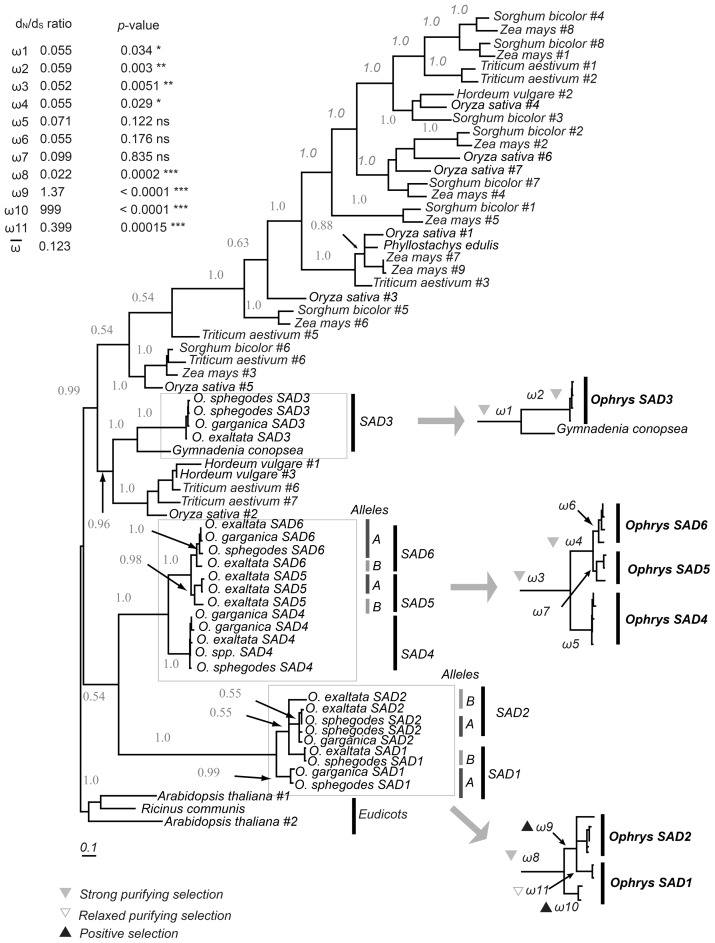
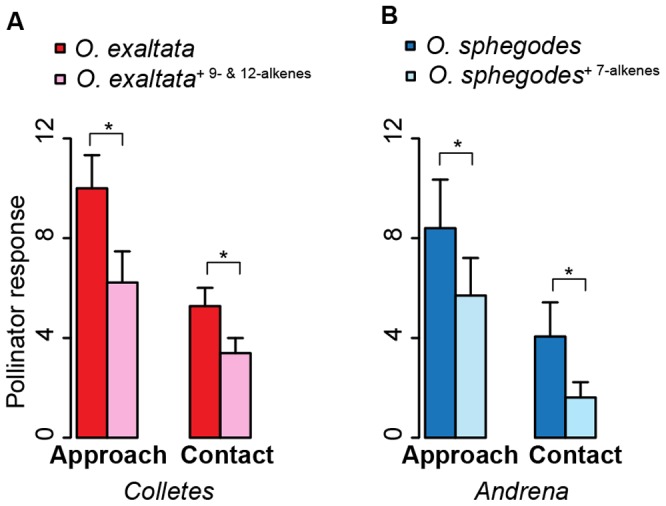
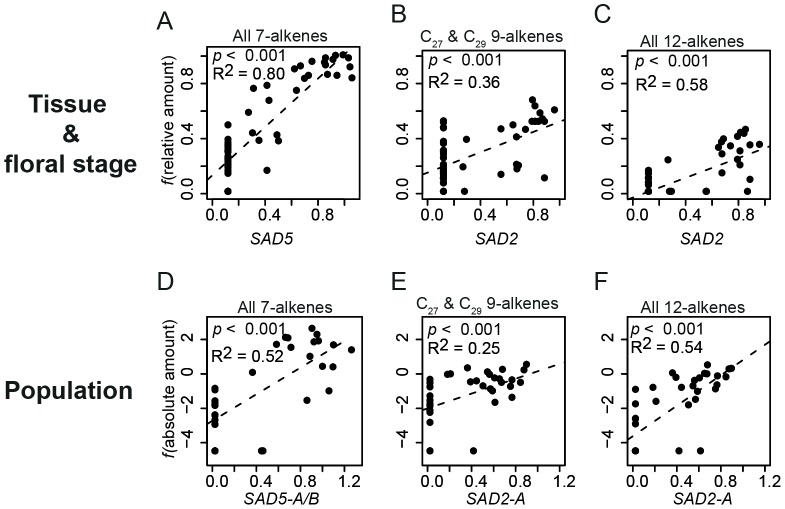
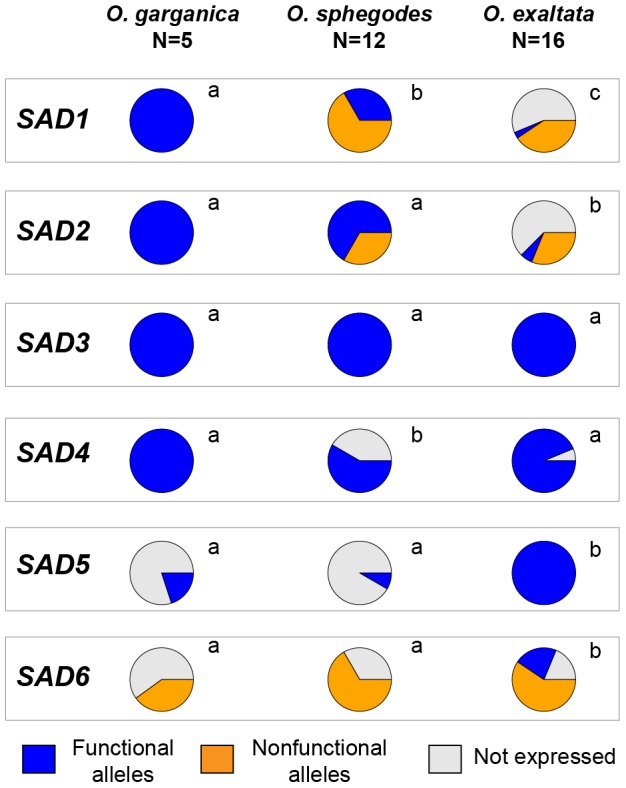
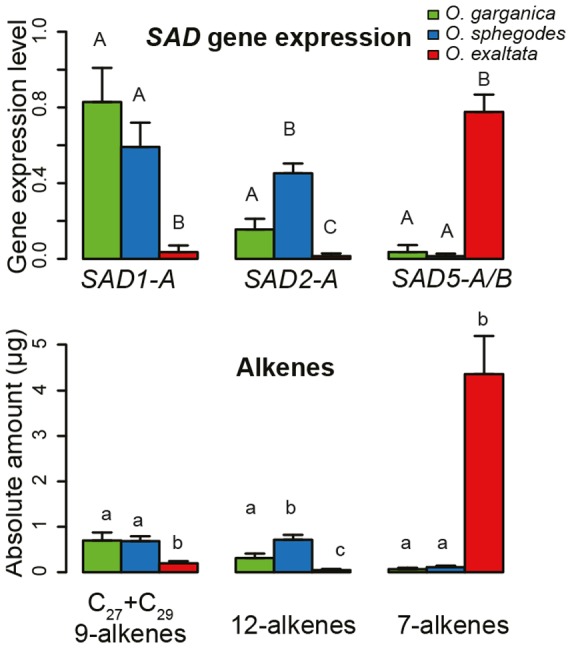
In plants, pollinator adaptation is considered to be a major driving force for floral diversification and speciation. However, the genetic basis of pollinator adaptation is poorly understood. The orchid genus Ophrys mimics its pollinators' mating signals and is pollinated by male insects during mating attempts. In many species of this genus, chemical mimicry of the pollinators' pheromones, especially of alkenes with different double-bond positions, plays a key role for specific pollinator attraction. Thus, different alkenes produced in different species are probably a consequence of pollinator adaptation. In this study, we identify genes that are likely involved in alkene biosynthesis, encoding stearoyl-acyl carrier protein (ACP) desaturases (SAD), in three closely related Ophrys species, O. garganica, O. sphegodes, and O. exaltata. Combining floral odor and gene expression analyses, two SAD homologs (SAD1/2) showed significant association with the production of (Z)-9- and (Z)-12-alkenes that were abundant in O. garganica and O. sphegodes, supporting previous biochemical data. In contrast, two other newly identified homologs (SAD5/6) were significantly associated with (Z)-7-alkenes that were highly abundant only in O. exaltata. Both molecular evolutionary analyses and pollinator preference tests suggest that the alkenes associated with SAD1/2 and SAD5/6 are under pollinator-mediated divergent selection among species. The expression patterns of these genes in F₁ hybrids indicate that species-specific expression differences in SAD1/2 are likely due to cis-regulation, while changes in SAD5/6 are likely due to trans-regulation. Taken together, we report a genetic mechanism for pollinator-mediated divergent selection that drives adaptive changes in floral alkene biosynthesis involved in reproductive isolation among Ophrys species.
在植物中,传粉者适应被认为是花朵多样化和物种形成的主要驱动力。然而,传粉者适应的遗传基础还知之甚少。兰花属 Ophrys 模拟其传粉者的交配信号,并在交配尝试时被雄性昆虫授粉。在这个属的许多物种中,对传粉者信息素的化学模拟,特别是不同双键位置的烯烃,在特定传粉者吸引中起着关键作用。因此,不同物种中产生的不同烯烃可能是传粉者适应的结果。在这项研究中,我们鉴定了三个密切相关的 Ophrys 物种(O. garganica、O. sphegodes 和 O. exaltata)中可能参与烯烃生物合成的基因,这些基因编码硬脂酰-酰基载体蛋白(ACP)去饱和酶(SAD)。结合花香和基因表达分析,两个 SAD 同源物(SAD1/2)与在 O. garganica 和 O. sphegodes 中丰富的(Z)-9-和(Z)-12-烯烃的产生显著相关,这支持了先前的生化数据。相比之下,另外两个新鉴定的同源物(SAD5/6)与仅在 O. exaltata 中高度丰富的(Z)-7-烯烃显著相关。分子进化分析和传粉者偏好测试均表明,与 SAD1/2 和 SAD5/6 相关的烯烃受到物种间传粉者介导的分歧选择。这些基因在 F₁ 杂种中的表达模式表明,SAD1/2 中的种特异性表达差异可能是由于顺式调控,而 SAD5/6 的变化可能是由于反式调控。综上所述,我们报告了一种遗传机制,即传粉者介导的分歧选择驱动了 Ophrys 物种间生殖隔离中参与花朵烯烃生物合成的适应性变化。