1. College of Optoelectronic Engineering, Key Laboratory of Optoelectronics Devices and Systems of Ministry of Education/Guangdong Province, Shenzhen University, Shenzhen 518060, P. R. China.
Theranostics. 2012;2(7):734-45. doi: 10.7150/thno.4290. Epub 2012 Aug 1.
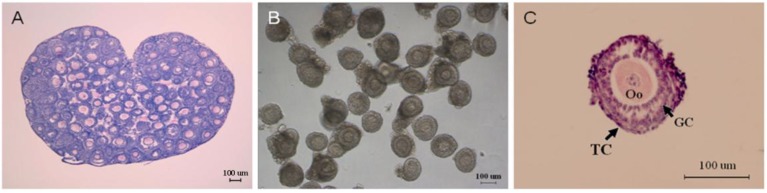
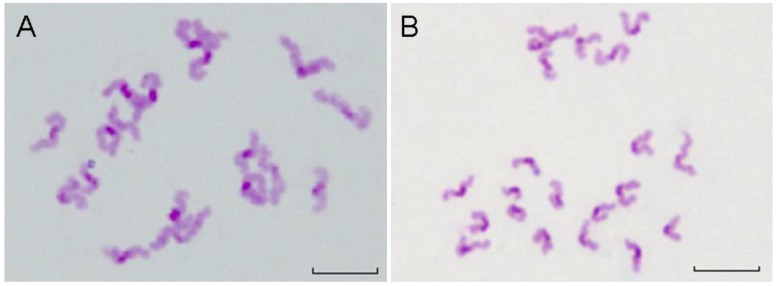
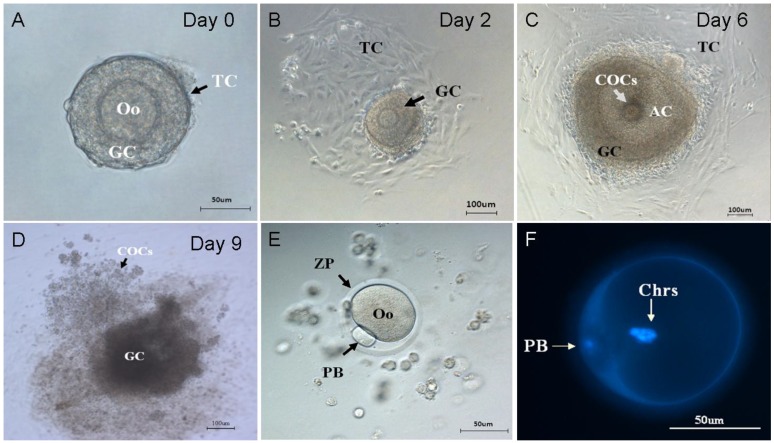
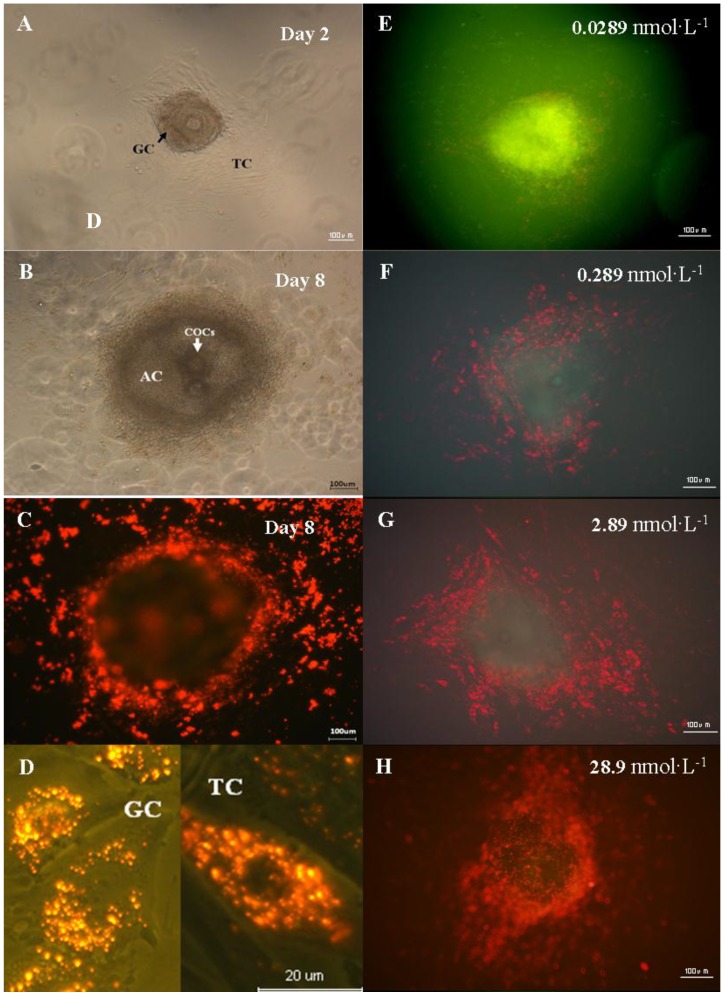
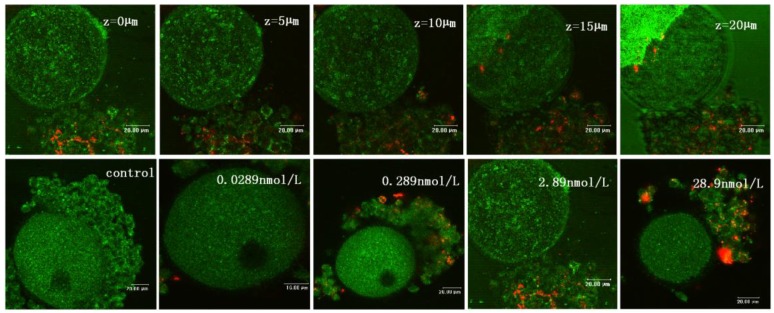
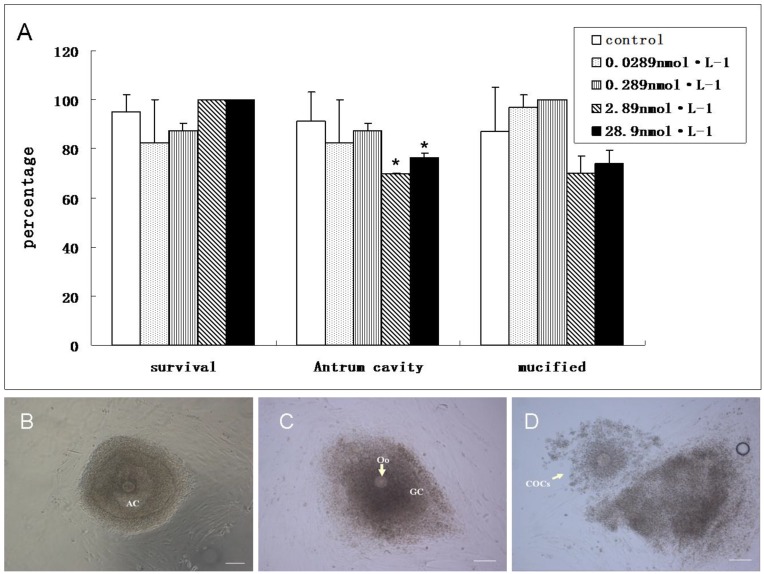
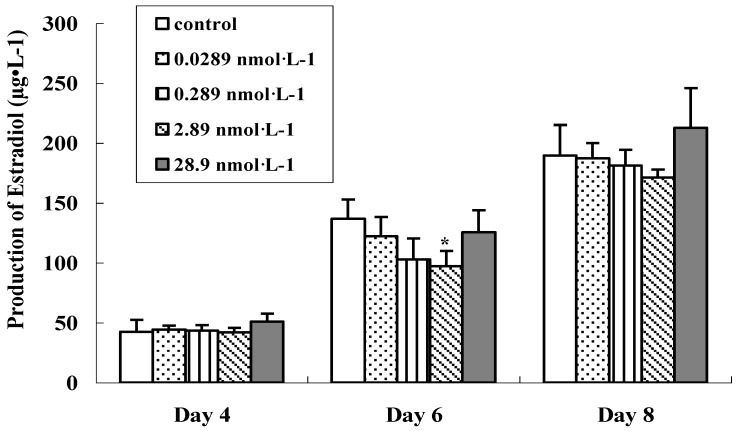
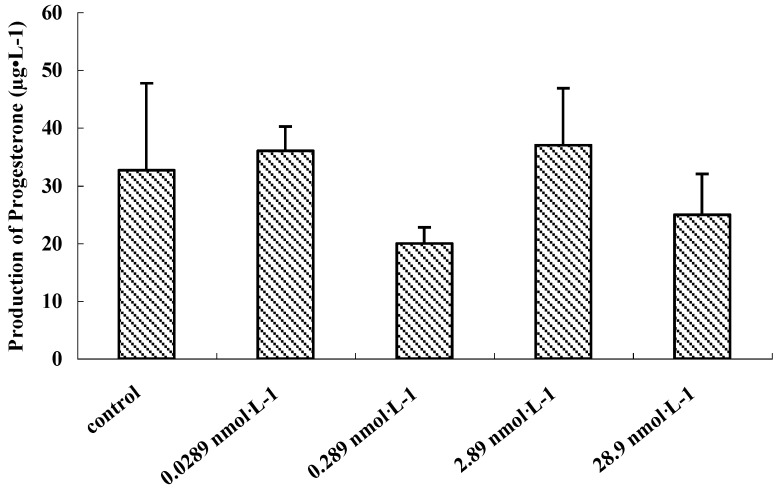
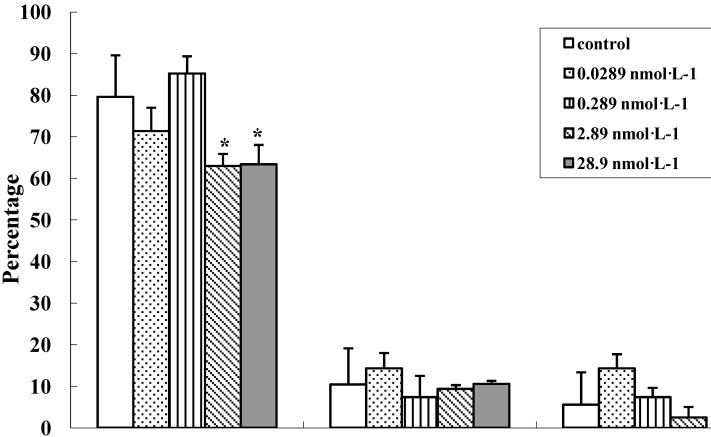
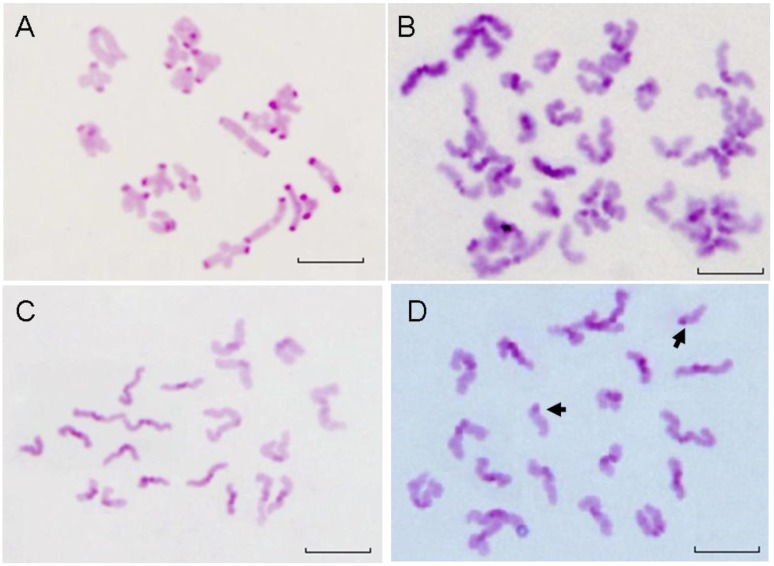
The toxicity of QD has been extensively studied over the past decade. However, the potential toxicity of QDs impedes its use for clinical research. In this work, we established a preantral follicle in vitro culture system to investigate the effects of QD-Transferrin (QDs-Tf) bioconjugates on follicle development and oocyte maturation. The preantral follicles were cultured and exposed to CdTe/ZnTe QDs-Tf bioconjugates with various concentrations and the reproductive toxicity was assessed at different time points post-treatment. The invasion of QDs-Tf for oocytes was verified by laser scanning confocal microscope. Steroid production was evaluated by immunoassay. C-band Giemsa staining was performed to observe the chromosome abnormality of oocytes. The results showed that the QDs-Tf bioconjugates could permeate into granulosa cells and theca cells, but not into oocyte. There are no obvious changes of oocyte diameter, the mucification of cumulus-oocyte-complexes and the occurrence of aneulpoidy as compared with the control group. However, delay in the antrum formation and decrease in the ratio of oocytes with first polar body were observed in QDs-Tf-treated groups. The matured oocytes with first polar body decreased significantly by ~16% (from 79.6±10 % to 63±2.9 %) when the concentration of QDs-Tf bioconjugates exceeded 2.89 nmol·L(-1) (P < 0.05). Our results implied that the CdTe/ZnTe QDs-Tf bioconjugates were reproductive toxic for follicle development, and thus also revealed that this in vitro culture system of preantral follicle is a highly sensitive tool for study on the reproductive toxicity of nanoparticles.
过去十年中,人们对 QD 的毒性进行了广泛的研究。然而,QD 的潜在毒性阻碍了其在临床研究中的应用。在这项工作中,我们建立了一个原始卵泡体外培养系统,以研究 QD-转铁蛋白(QDs-Tf)结合物对卵泡发育和卵母细胞成熟的影响。将原始卵泡进行培养并暴露于不同浓度的 CdTe/ZnTe QDs-Tf 结合物中,在处理后不同时间点评估其生殖毒性。通过激光扫描共聚焦显微镜验证 QDs-Tf 对卵母细胞的侵袭。通过免疫测定评估类固醇的产生。通过 C 带吉姆萨染色观察卵母细胞的染色体异常。结果表明,QD-Tf 结合物可以渗透到颗粒细胞和膜细胞中,但不能渗透到卵母细胞中。与对照组相比,卵母细胞直径、卵丘-卵母细胞复合体的粘液化和非整倍体的发生没有明显变化。然而,在 QDs-Tf 处理组中观察到腔形成延迟和具有第一极体的卵母细胞比例降低。当 QDs-Tf 结合物的浓度超过 2.89 nmol·L(-1)时,具有第一极体的成熟卵母细胞显著减少约 16%(从 79.6±10%降至 63±2.9%)(P<0.05)。我们的结果表明,CdTe/ZnTe QDs-Tf 结合物对卵泡发育具有生殖毒性,这也表明原始卵泡的体外培养系统是研究纳米颗粒生殖毒性的一种高度敏感工具。