Department of Biotechnology, Delft University of Technology, Delft, The Netherlands.
PLoS One. 2012;7(8):e40287. doi: 10.1371/journal.pone.0040287. Epub 2012 Aug 14.
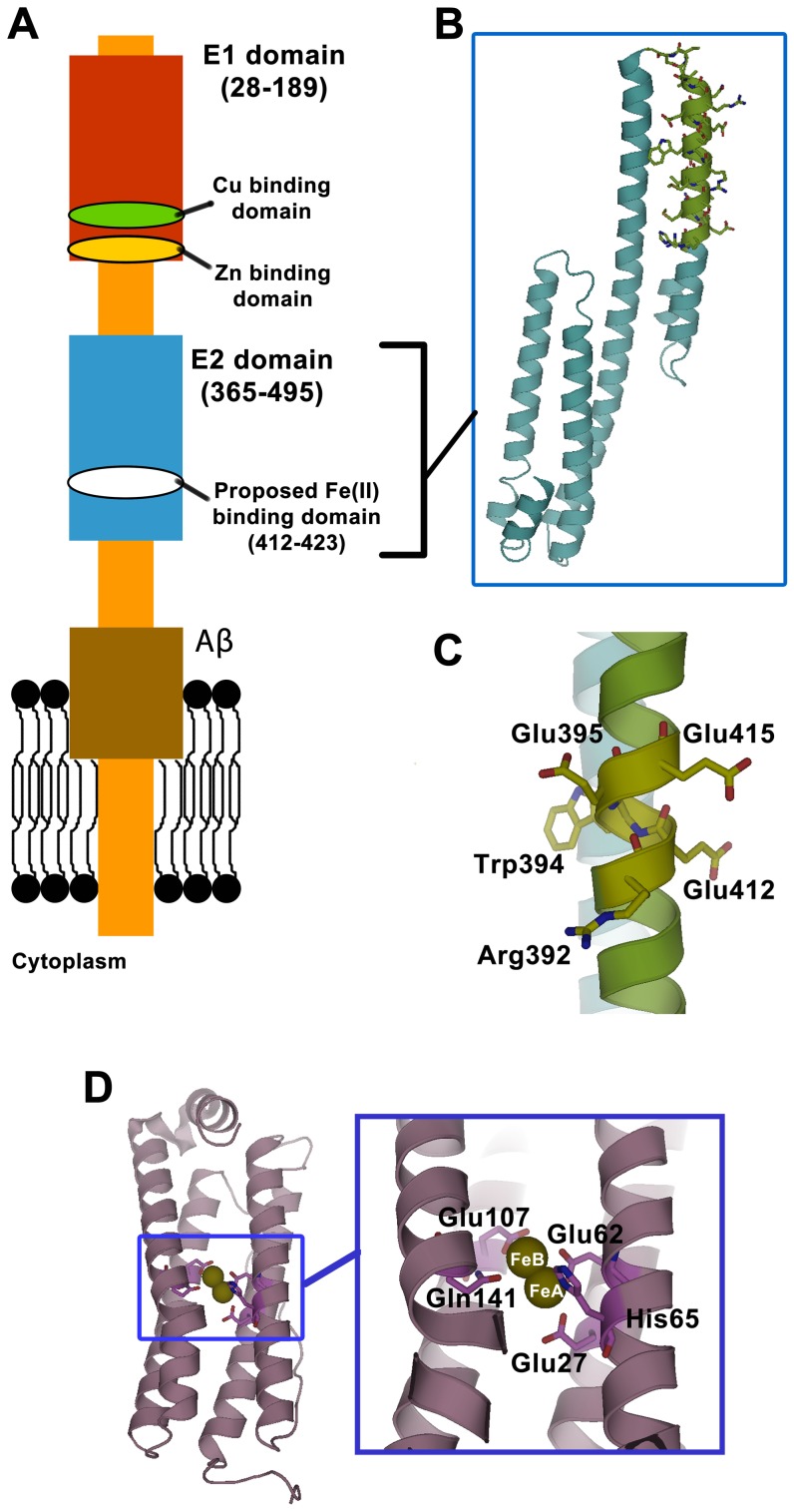
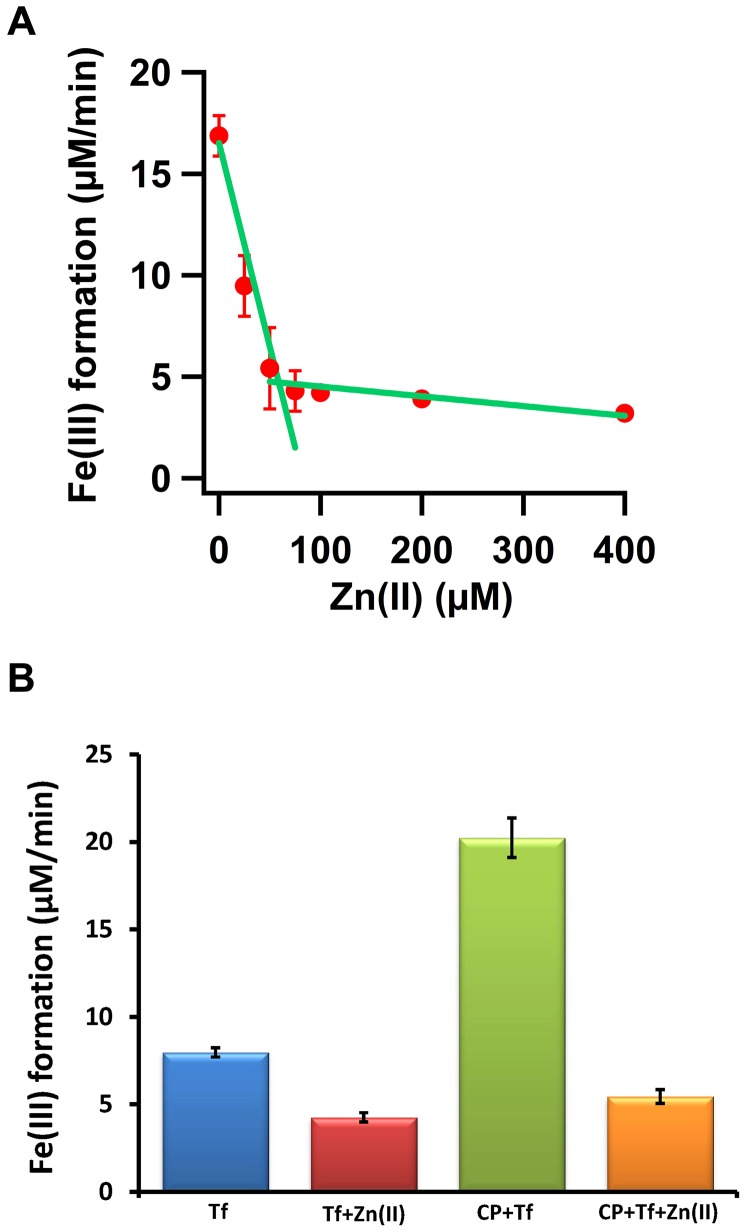
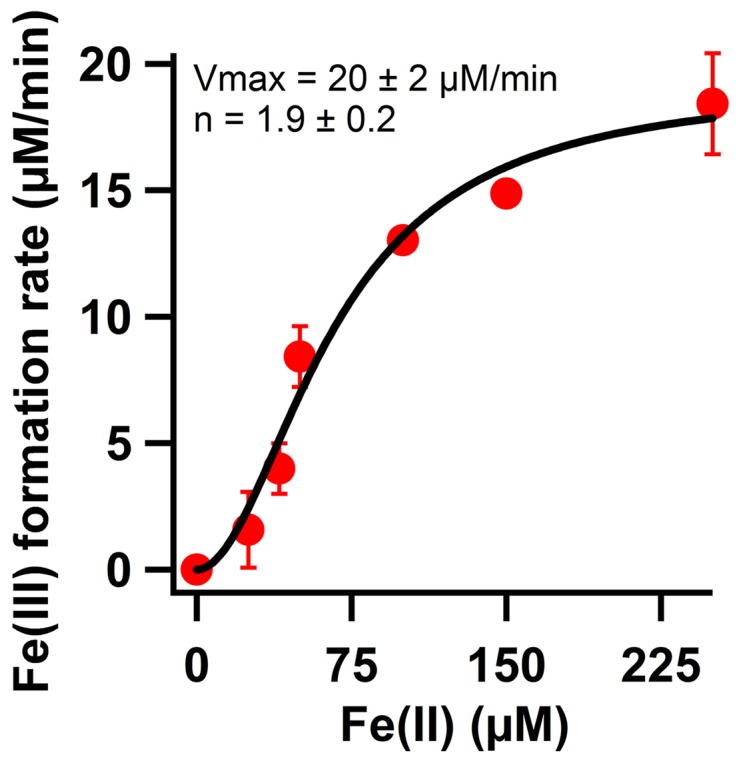
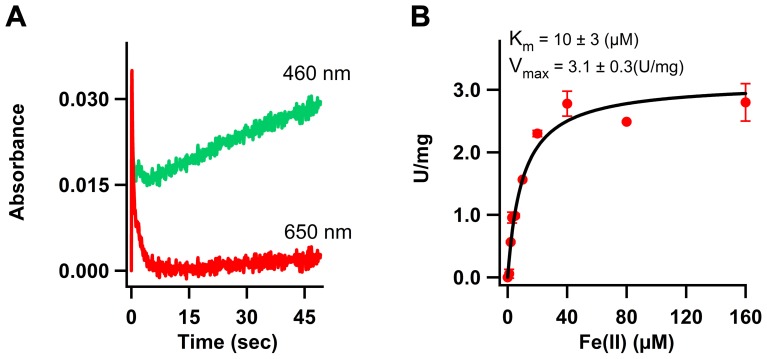
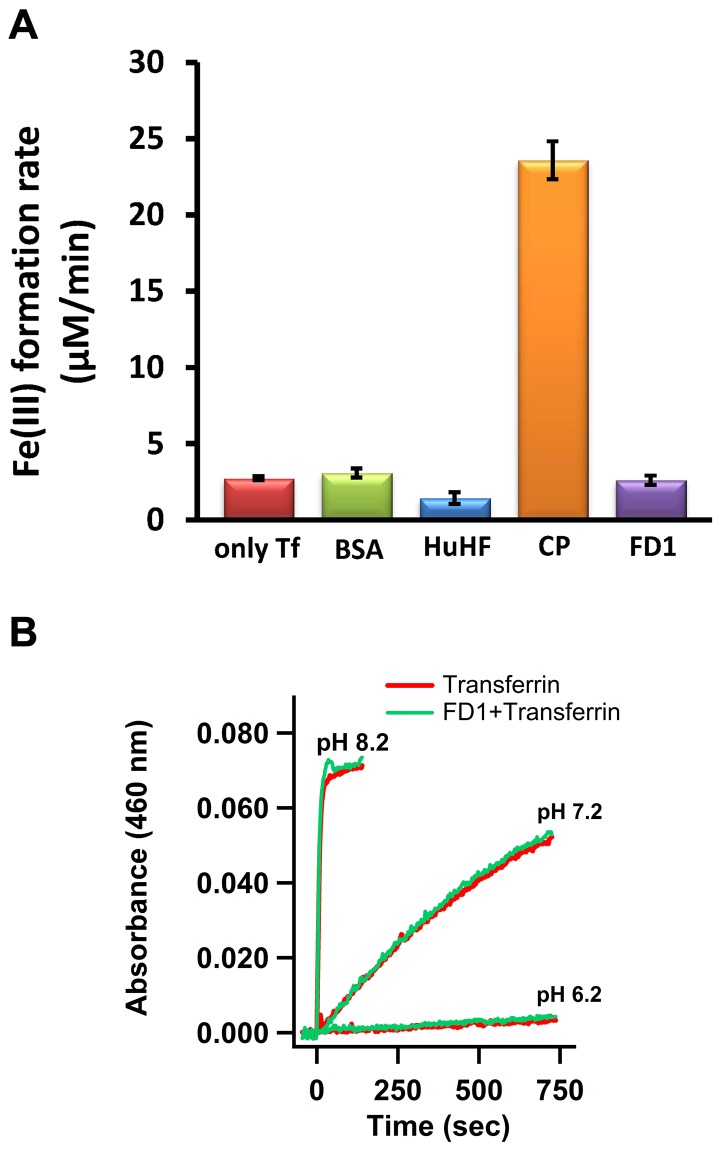
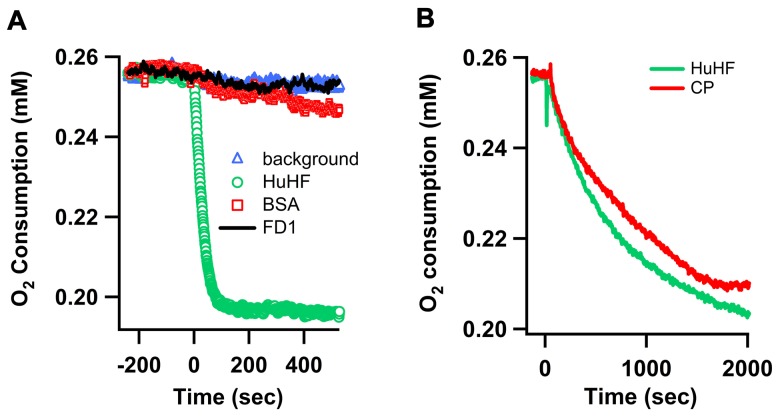
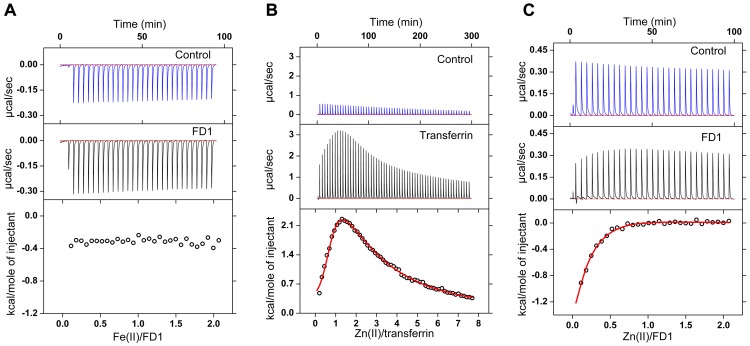
The β-amyloid precursor protein (APP), which is a key player in Alzheimer's disease, was recently reported to possess an Fe(II) binding site within its E2 domain which exhibits ferroxidase activity [Duce et al. 2010, Cell 142: 857]. The putative ligands of this site were compared to those in the ferroxidase site of ferritin. The activity was indirectly measured using transferrin, which scavenges the Fe(III) product of the reaction. A 22-residue synthetic peptide, named FD1, with the putative ferroxidase site of APP, and the E2 domain of APP were each reported to exhibit 40% of the ferroxidase activity of APP and of ceruloplasmin. It was also claimed that the ferroxidase activity of APP is inhibited by Zn(II) just as in ferritin. We measured the ferroxidase activity indirectly (i) by the incorporation of the Fe(III) product of the ferroxidase reaction into transferrin and directly (ii) by monitoring consumption of the substrate molecular oxygen. The results with the FD1 peptide were compared to the established ferroxidase activities of human H-chain ferritin and of ceruloplasmin. For FD1 we observed no activity above the background of non-enzymatic Fe(II) oxidation by molecular oxygen. Zn(II) binds to transferrin and diminishes its Fe(III) incorporation capacity and rate but it does not specifically bind to a putative ferroxidase site of FD1. Based on these results, and on comparison of the putative ligands of the ferroxidase site of APP with those of ferritin, we conclude that the previously reported results for ferroxidase activity of FD1 and - by implication - of APP should be re-evaluated.
β-淀粉样前体蛋白(APP)是阿尔茨海默病的关键蛋白,最近有报道称其 E2 结构域内存在一个 Fe(II)结合位点,该位点具有亚铁氧化酶活性[Duce 等人,2010,Cell 142: 857]。该位点的假定配体与铁蛋白亚铁氧化酶位点的配体进行了比较。该活性通过转铁蛋白间接测量,转铁蛋白可清除反应的 Fe(III)产物。一种名为 FD1 的 22 个残基合成肽,具有 APP 的假定亚铁氧化酶位点和 APP 的 E2 结构域,据报道分别表现出 APP 和铜蓝蛋白 40%的亚铁氧化酶活性。还声称 APP 的亚铁氧化酶活性像铁蛋白一样被 Zn(II)抑制。我们通过(i)将亚铁氧化酶反应的 Fe(III)产物掺入转铁蛋白中,以及(ii)直接监测底物分子氧的消耗来间接和直接测量亚铁氧化酶活性。FD1 肽的结果与人类 H 链铁蛋白和铜蓝蛋白的已建立的亚铁氧化酶活性进行了比较。对于 FD1,我们没有观察到分子氧非酶促 Fe(II)氧化以上的活性。Zn(II)与转铁蛋白结合并降低其 Fe(III)结合能力和速率,但它不会特异性结合 FD1 的假定亚铁氧化酶位点。基于这些结果,以及对 APP 亚铁氧化酶位点的假定配体与铁蛋白的比较,我们得出结论,以前报道的 FD1 和 - 暗示 - APP 的亚铁氧化酶活性的结果应该重新评估。