Department of Orthopaedics and Traumatology, University of Rome 'Tor Vergata' School of Medicine, Viale Oxford 81, Rome, Italy.
BMC Med. 2012 Aug 23;10:95. doi: 10.1186/1741-7015-10-95.
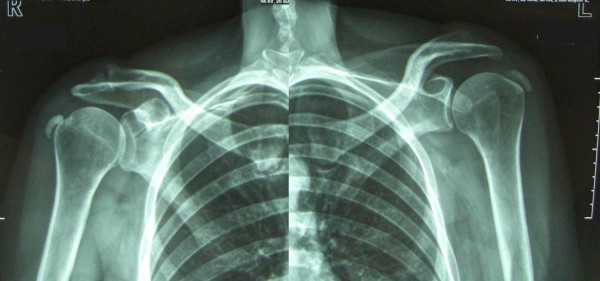
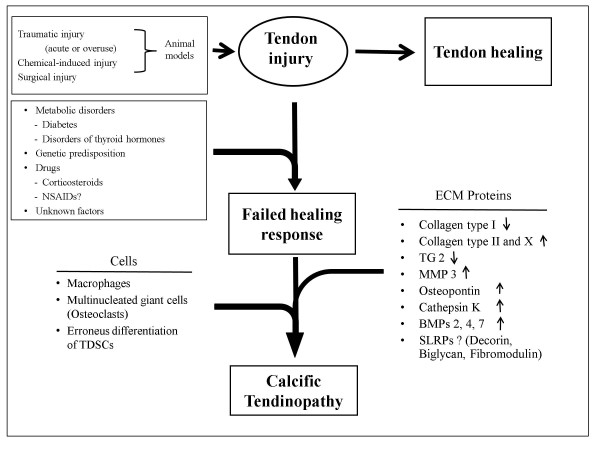
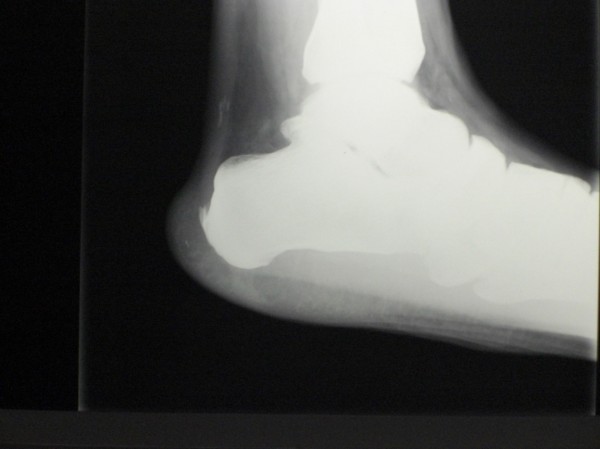
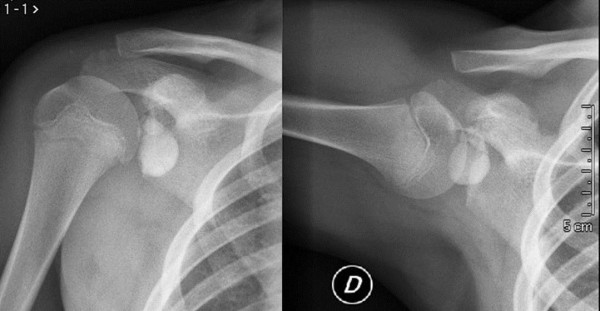
In calcific tendinopathy (CT), calcium deposits in the substance of the tendon, with chronic activity-related pain, tenderness, localized edema and various degrees of decreased range of motion. CT is particularly common in the rotator cuff, and supraspinatus, Achilles and patellar tendons. The presence of calcific deposits may worsen the clinical manifestations of tendinopathy with an increase in rupture rate, slower recovery times and a higher frequency of post-operative complications. The aetiopathogenesis of CT is still controversial, but seems to be the result of an active cell-mediated process and a localized attempt of the tendon to compensate the original decreased stiffness. Tendon healing includes many sequential processes, and disturbances at different stages of healing may lead to different combinations of histopathological changes, diverting the normal healing processes to an abnormal pathway. In this review, we discuss the theories of pathogenesis behind CT. Better understanding of the pathogenesis is essential for development of effective treatment modalities and for improvement of clinical outcomes.
在钙化性肌腱病(CT)中,钙沉积在肌腱的实质内,伴有慢性与活动相关的疼痛、压痛、局部水肿和不同程度的运动范围减小。CT 特别常见于肩袖和冈上肌腱、跟腱和髌腱。钙化沉积物的存在可能会使肌腱病的临床表现恶化,增加破裂率、恢复时间延长和术后并发症的发生率更高。CT 的病因发病机制仍存在争议,但似乎是活跃的细胞介导过程和肌腱对原始刚度降低的局部代偿尝试的结果。肌腱愈合包括许多连续的过程,愈合不同阶段的干扰可能导致组织病理学变化的不同组合,将正常愈合过程转向异常途径。在这篇综述中,我们讨论了 CT 背后的发病机制理论。更好地了解发病机制对于开发有效的治疗方法和改善临床结果至关重要。