Institute of Cognitive Neuroscience, University College London, 17 Queen Square, London WC1N 3AR, UK.
Neuroimage. 2013 Jan 1;64(6):68-74. doi: 10.1016/j.neuroimage.2012.07.064. Epub 2012 Aug 16.
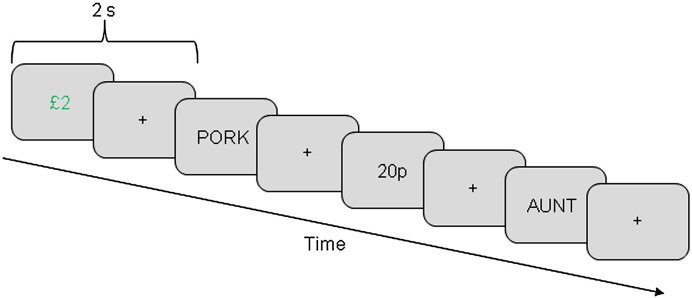
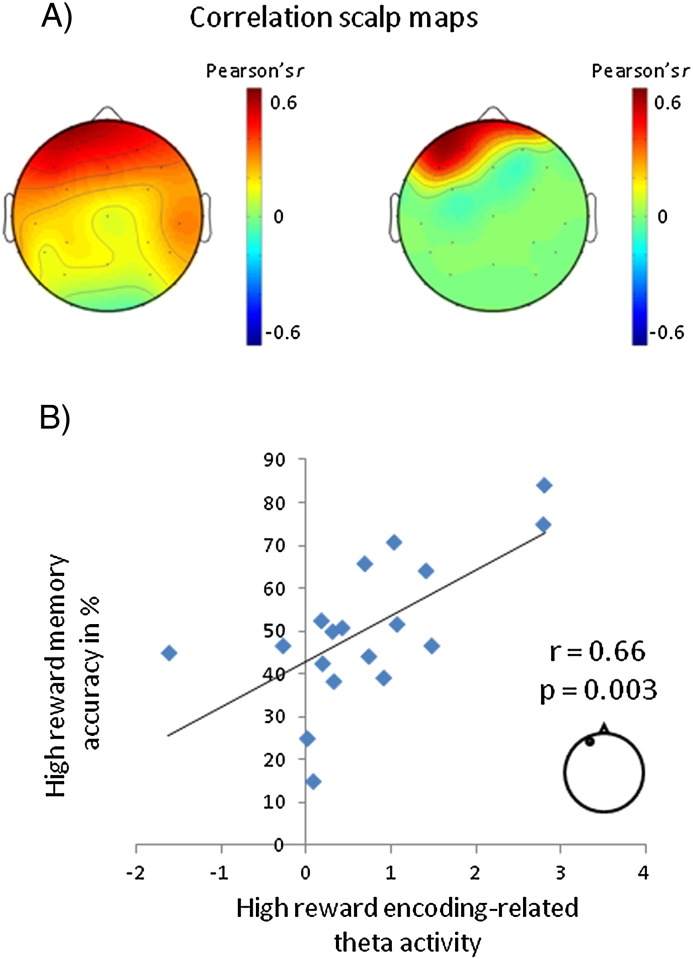
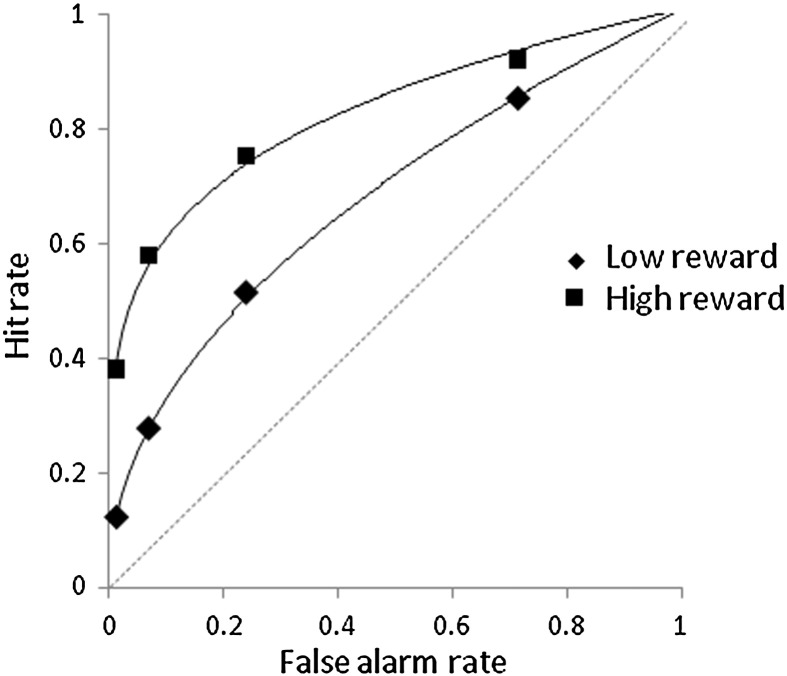
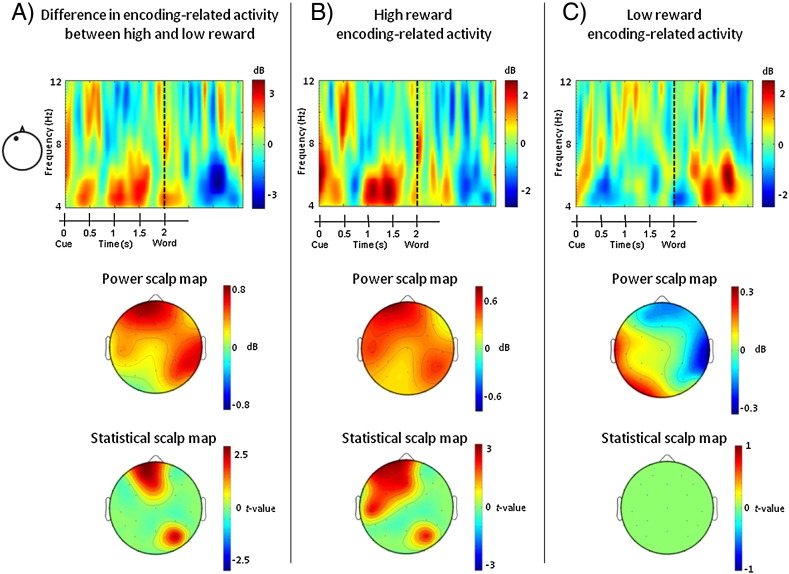
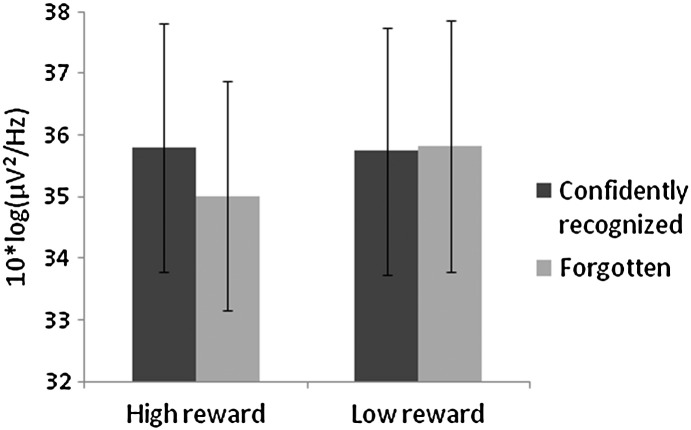
Oscillatory brain activity in the theta frequency range (4-8 Hz) before the onset of an event has been shown to affect the likelihood of successfully encoding the event into memory. Recent work has also indicated that frontal theta activity might be modulated by reward, but it is not clear how reward expectancy, anticipatory theta activity, and memory formation might be related. Here, we used scalp electroencephalography (EEG) to assess the relationship between these factors. EEG was recorded from healthy adults while they memorized a series of words. Each word was preceded by a cue that indicated whether a high or low monetary reward would be earned if the word was successfully remembered in a later recognition test. Frontal theta power between the presentation of the reward cue and the onset of a word was predictive of later memory for the word, but only in the high reward condition. No theta differences were observed before word onset following low reward cues. The magnitude of prestimulus encoding-related theta activity in the high reward condition was correlated with the number of high reward words that were later confidently recognized. These findings provide strong evidence for a link between reward expectancy, theta activity, and memory encoding. Theta activity before event onset seems to be especially important for the encoding of motivationally significant stimuli. One possibility is that dopaminergic activity during reward anticipation mediates frontal theta activity related to memory.
在事件发生前,θ 频段(4-8 Hz)的脑振荡活动已被证明会影响成功将事件编码为记忆的可能性。最近的研究还表明,额叶θ 活动可能受到奖励的调节,但尚不清楚奖励预期、预期θ 活动和记忆形成之间的关系。在这里,我们使用头皮脑电图(EEG)来评估这些因素之间的关系。当健康成年人记住一系列单词时,记录了他们的 EEG。每个单词前面都有一个提示,表明如果在稍后的识别测试中成功记住该单词,将获得高或低的货币奖励。在奖励提示呈现和单词出现之间的额叶θ 功率可预测单词的后期记忆,但仅在高奖励条件下。在低奖励提示后,在单词出现之前没有观察到θ 差异。在高奖励条件下,与刺激相关的预刺激编码θ 活动的幅度与随后被自信识别的高奖励单词的数量相关。这些发现为奖励预期、θ 活动和记忆编码之间的联系提供了有力的证据。在事件发生之前的θ 活动对于编码有动机意义的刺激尤为重要。一种可能性是,在奖励预期期间多巴胺能活动介导与记忆相关的额叶θ 活动。