Edris Badreddin, Fletcher Jonathan A, West Robert B, van de Rijn Matt, Beck Andrew H
Department of Pathology, Stanford University Medical Center, Stanford, CA 93205, USA.
Sarcoma. 2012;2012:805614. doi: 10.1155/2012/805614. Epub 2012 Aug 5.
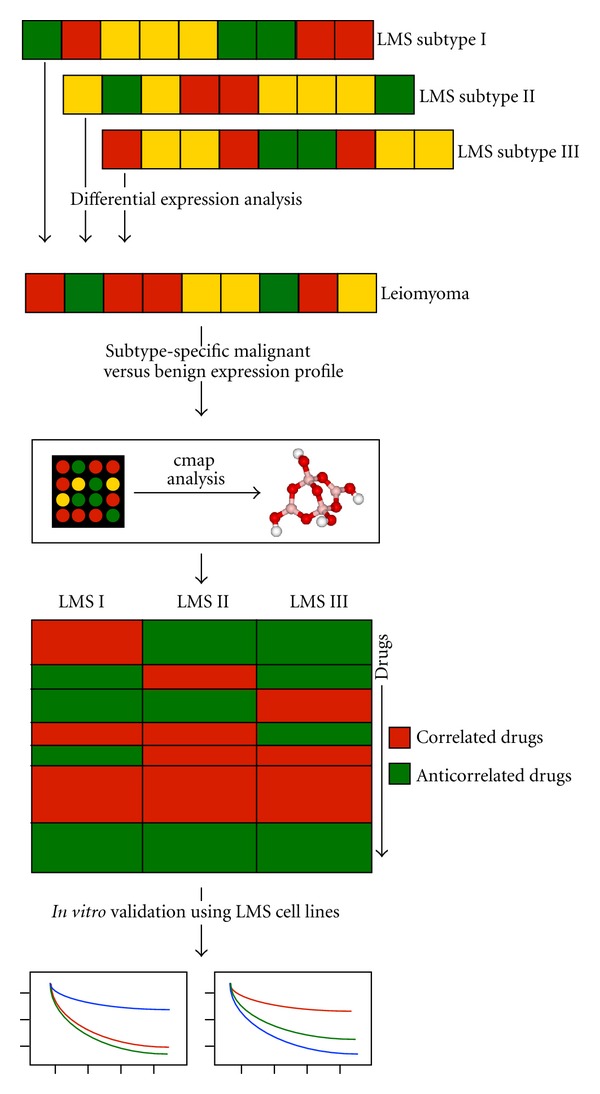
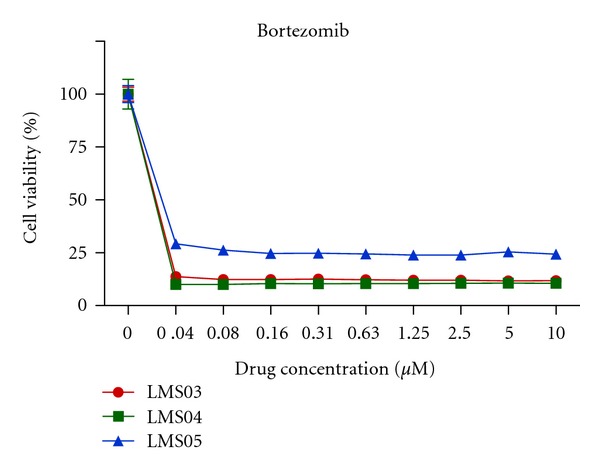
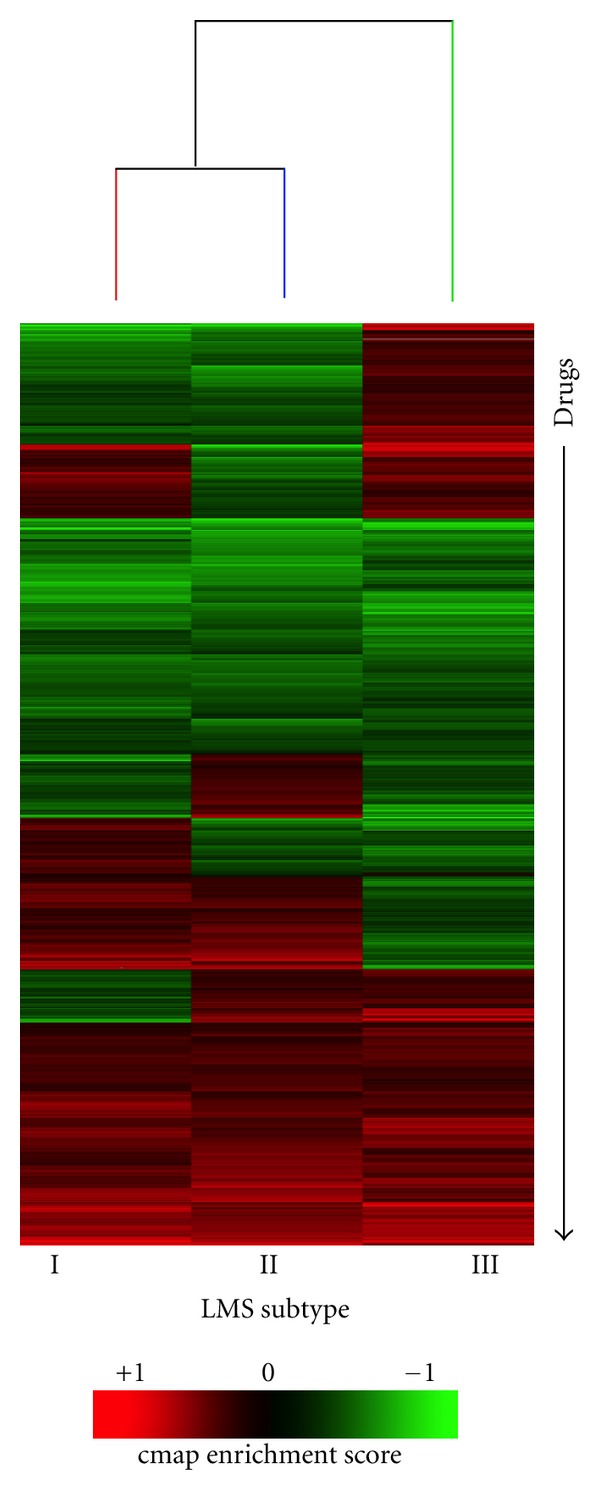
Leiomyosarcoma (LMS) is a malignant, soft-tissue tumor for which few effective therapies exist. Previously, we showed that there are three molecular subtypes of LMS. Here, we analyzed genes differentially expressed in each of the three LMS subtypes as compared to benign leiomyomas and then used the Connectivity Map (cmap) to calculate enrichment scores for the 1309 cmap drugs in order to identify candidate molecules with the potential to induce a benign, leiomyoma-like phenotype in LMS cells. 11 drugs were selected and tested for their ability to inhibit the growth of three human LMS cell lines. We identified two drugs with in vitro efficacy against LMS, one of which had a strongly negative enrichment score (Cantharidin) and the other of which had a strongly positive enrichment score (MG-132). Given MG-132's strong inhibitory effect on LMS cell viability, we hypothesized that LMS cells may be sensitive to treatment with other proteasome inhibitors and demonstrated that bortezomib, a clinically-approved proteasome inhibitor not included in the original cmap screen, potently inhibited the viability of the LMS cell lines. These findings suggest that systematically linking LMS subtype-specific expression signatures with drug-associated expression profiles represents a promising approach for the identification of new drugs for LMS.
平滑肌肉瘤(LMS)是一种恶性软组织肿瘤,目前几乎没有有效的治疗方法。此前,我们发现LMS存在三种分子亚型。在此,我们分析了与良性平滑肌瘤相比,三种LMS亚型中差异表达的基因,然后使用连通性图谱(cmap)计算1309种cmap药物的富集分数,以确定有可能在LMS细胞中诱导出良性平滑肌瘤样表型的候选分子。我们选择了11种药物,并测试了它们抑制三种人LMS细胞系生长的能力。我们鉴定出两种对LMS具有体外疗效的药物,其中一种具有强烈的负富集分数(斑蝥素),另一种具有强烈的正富集分数(MG - 132)。鉴于MG - 132对LMS细胞活力有强烈的抑制作用,我们推测LMS细胞可能对其他蛋白酶体抑制剂治疗敏感,并证明硼替佐米(一种未包含在原始cmap筛选中的临床批准的蛋白酶体抑制剂)能有效抑制LMS细胞系的活力。这些发现表明,将LMS亚型特异性表达特征与药物相关表达谱系统地联系起来,是鉴定LMS新药的一种有前景的方法。