Künstlinger Helen, Fassunke Jana, Schildhaus Hans-Ulrich, Brors Benedikt, Heydt Carina, Ihle Michaela Angelika, Mechtersheimer Gunhild, Wardelmann Eva, Büttner Reinhard, Merkelbach-Bruse Sabine
Institute of Pathology, University Hospital Cologne, Cologne, Germany.
Institute of Pathology, University Hospital Göttingen, Göttingen, Germany.
Oncotarget. 2015 Aug 21;6(24):20215-30. doi: 10.18632/oncotarget.4046.
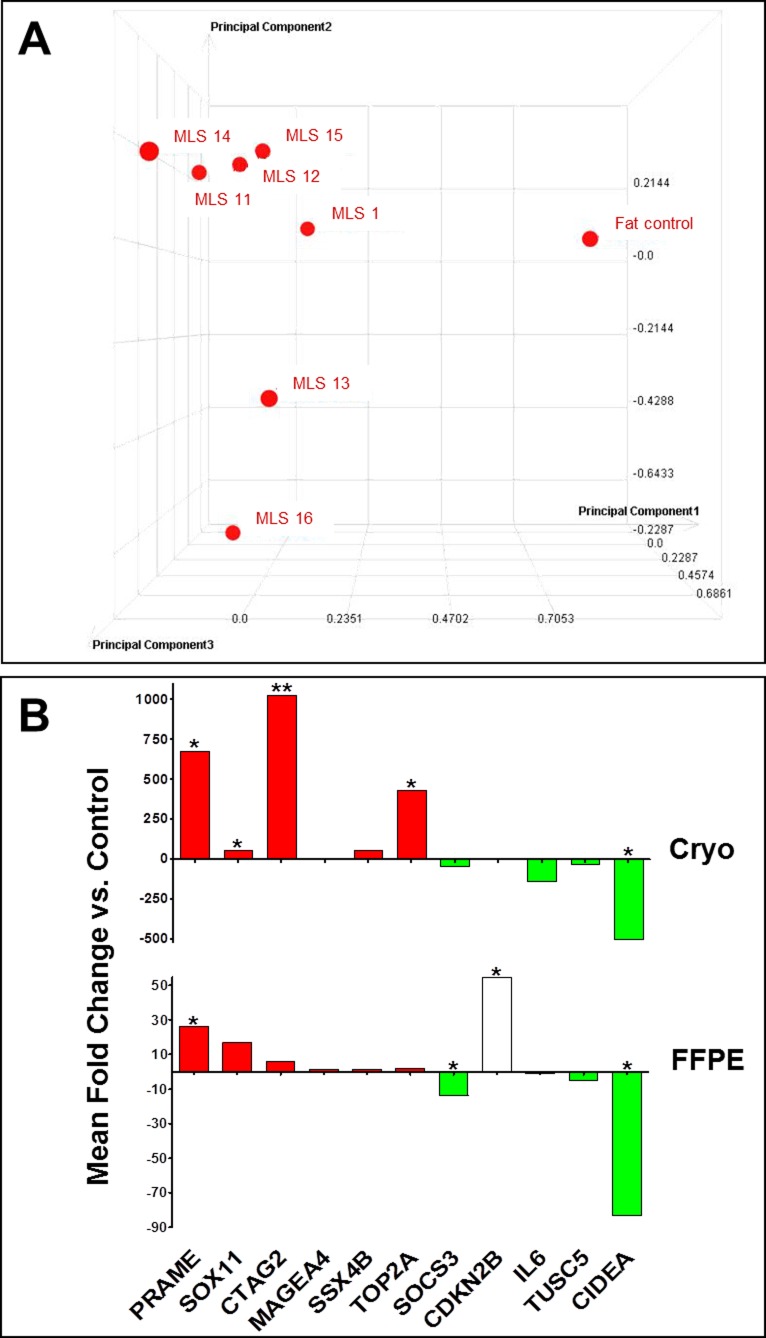
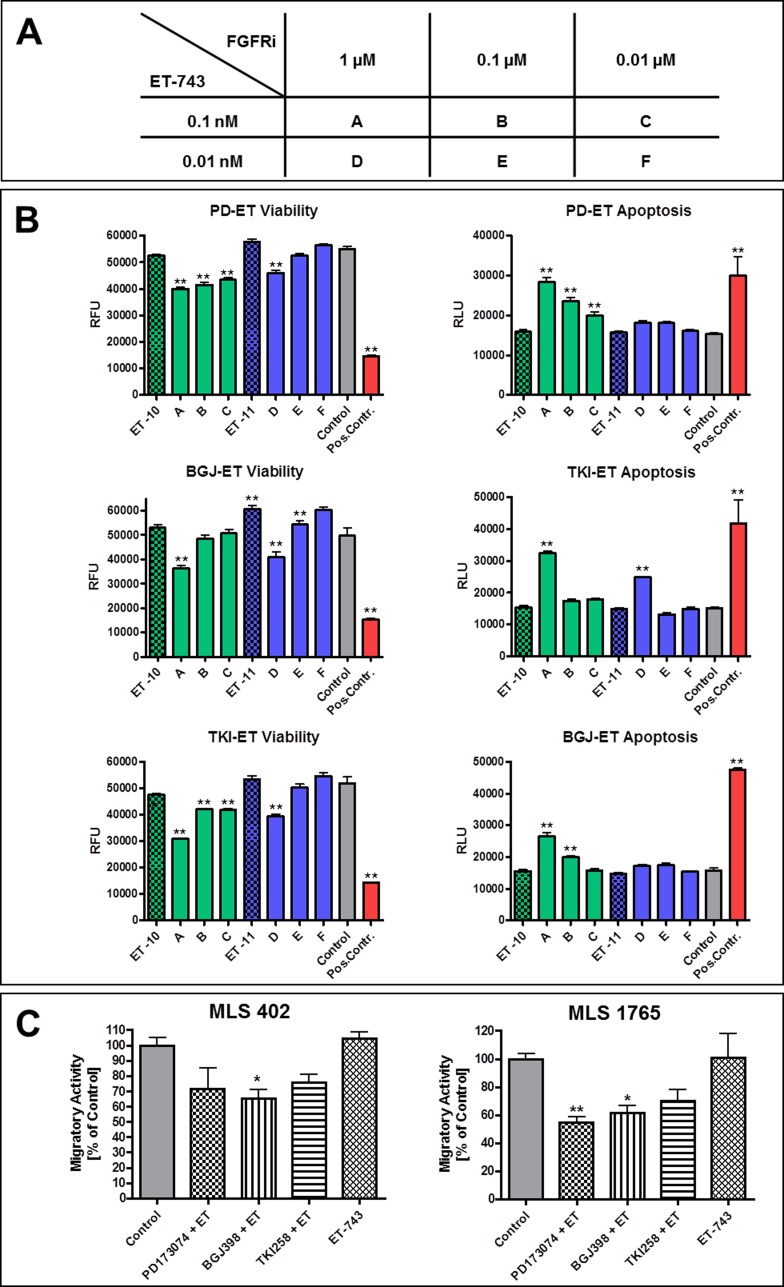
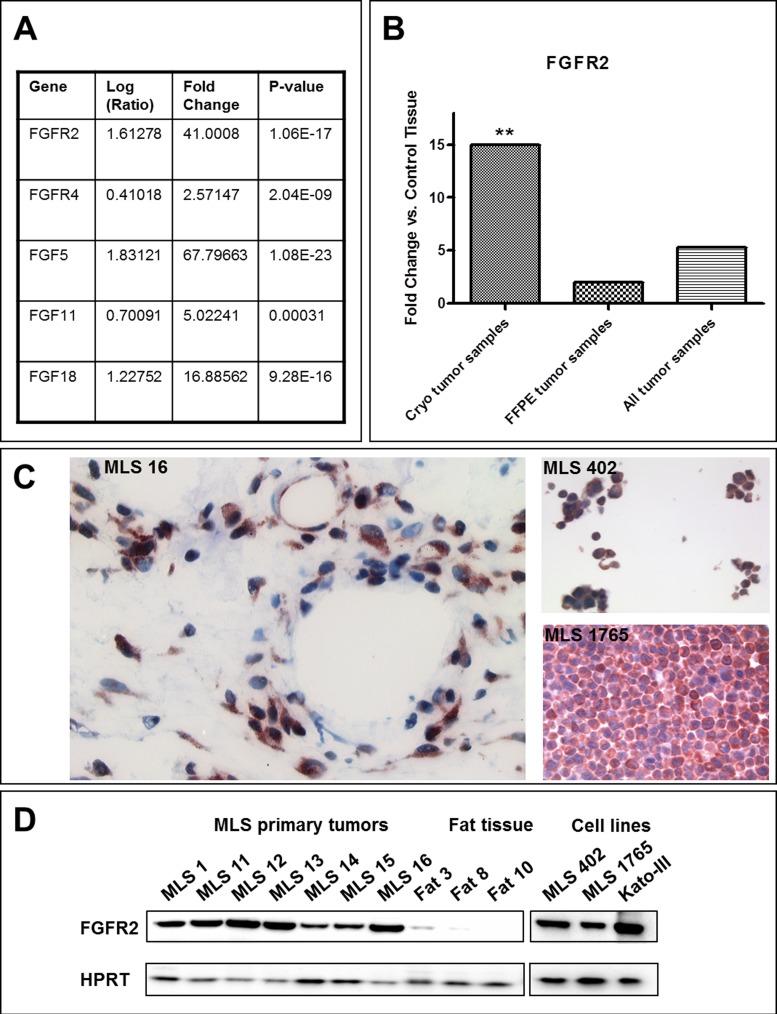
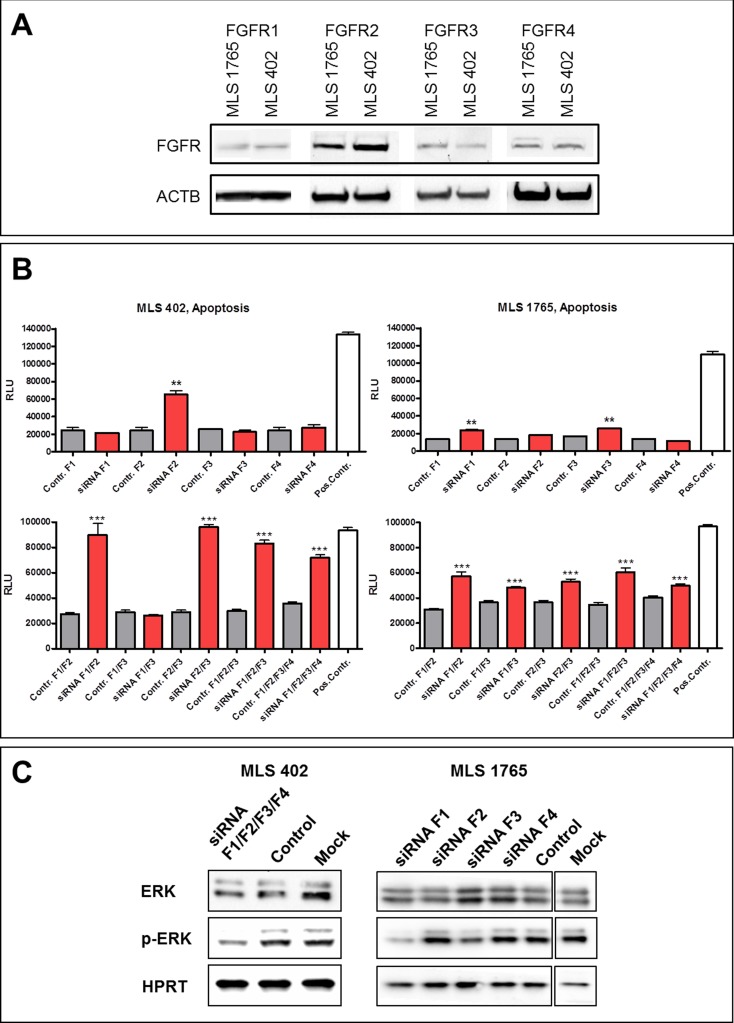
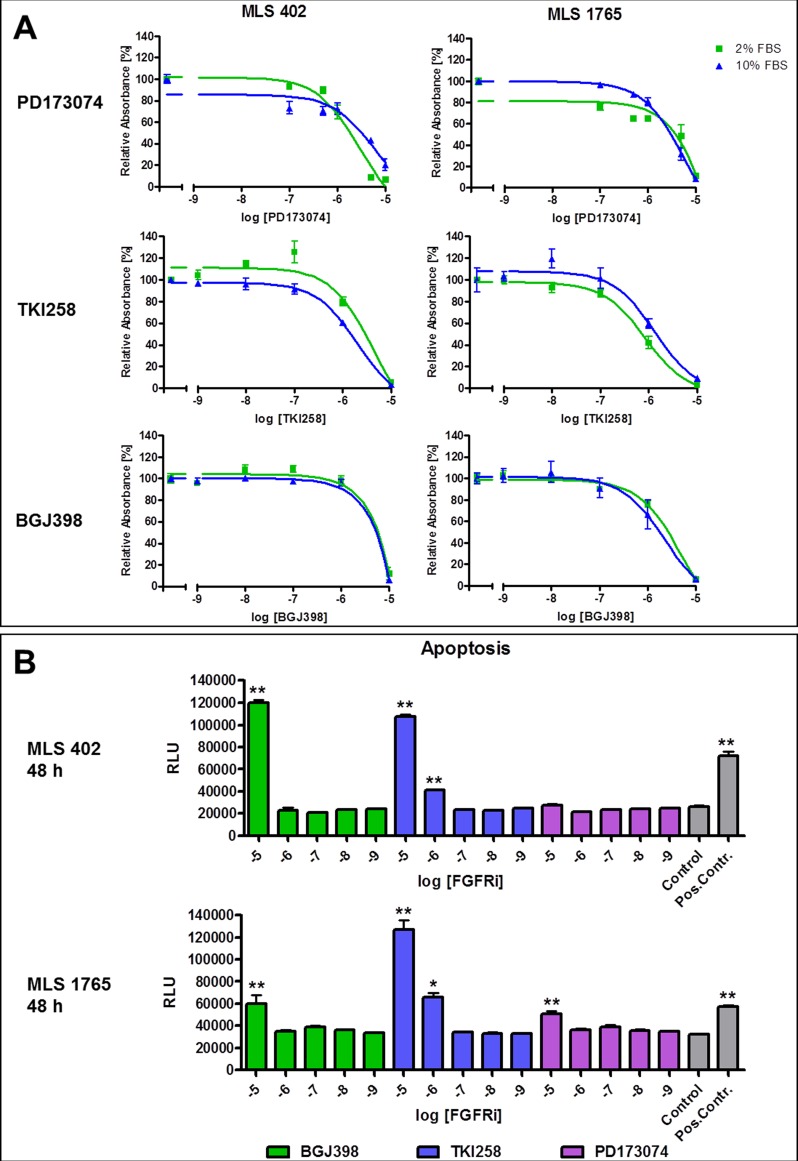
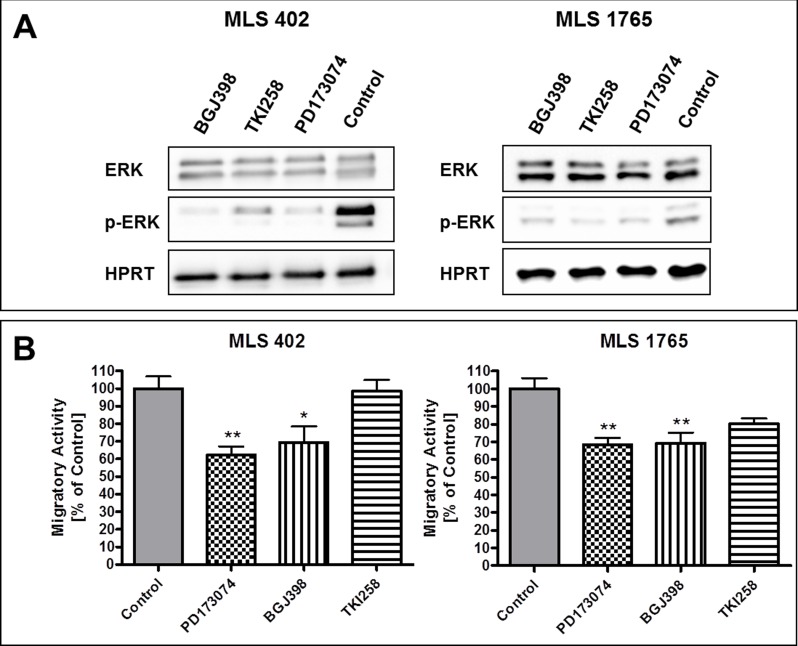
Myxoid liposarcomas account for more than one third of liposarcomas and about 10% of all adult soft tissue sarcomas. The tumors are characterized by specific chromosomal translocations leading to the chimeric oncogenes FUS-DDIT3 or EWS1R-DDIT3. The encoded fusion proteins act as aberrant transcription factors. Therefore, we implemented comparative expression analyses using whole-genome microarrays in tumor and fat tissue samples. We aimed at identifying differentially expressed genes which may serve as diagnostic or prognostic biomarkers or as therapeutic targets. Microarray analyses revealed overexpression of FGFR2 and other members of the FGF/FGFR family. Overexpression of FGFR2 was validated by qPCR, immunohistochemistry and western blot analysis in primary tumor samples. Treatment of the myxoid liposarcoma cell lines MLS 402 and MLS 1765 with the FGFR inhibitors PD173074, TKI258 (dovitinib) and BGJ398 as well as specific siRNAs reduced cell proliferation, induced apoptosis and delayed cell migration. Combination of FGFR inhibitors with trabectedin further increased the effect. Our study demonstrates overexpression of FGFR2 and a functional role of FGFR signaling in myxoid liposarcoma. As FGFR inhibition showed effects on proliferation and cell migration and induced apoptosis in vitro, our data indicate the potential use of FGFR inhibitors as a targeted therapy for these tumors.
黏液样脂肪肉瘤占脂肪肉瘤的三分之一以上,约占所有成人软组织肉瘤的10%。这些肿瘤的特征是特定的染色体易位,导致嵌合致癌基因FUS-DDIT3或EWS1R-DDIT3。编码的融合蛋白作为异常转录因子发挥作用。因此,我们使用全基因组微阵列对肿瘤和脂肪组织样本进行了比较表达分析。我们旨在鉴定可能作为诊断或预后生物标志物或治疗靶点的差异表达基因。微阵列分析显示FGFR2和FGF/FGFR家族的其他成员过表达。通过qPCR、免疫组织化学和蛋白质印迹分析在原发性肿瘤样本中验证了FGFR2的过表达。用FGFR抑制剂PD173074、TKI258(多韦替尼)和BGJ398以及特异性siRNA处理黏液样脂肪肉瘤细胞系MLS 402和MLS 1765可降低细胞增殖、诱导凋亡并延迟细胞迁移。FGFR抑制剂与曲贝替定联合使用可进一步增强效果。我们的研究证明了FGFR2的过表达以及FGFR信号在黏液样脂肪肉瘤中的功能作用。由于FGFR抑制在体外对增殖和细胞迁移有影响并诱导凋亡,我们的数据表明FGFR抑制剂有可能作为这些肿瘤的靶向治疗药物。