UCD School of Biomolecular and Biomedical Sciences, University College Dublin Dublin, Ireland.
Front Cell Infect Microbiol. 2012 Mar 5;2:25. doi: 10.3389/fcimb.2012.00025. eCollection 2012.
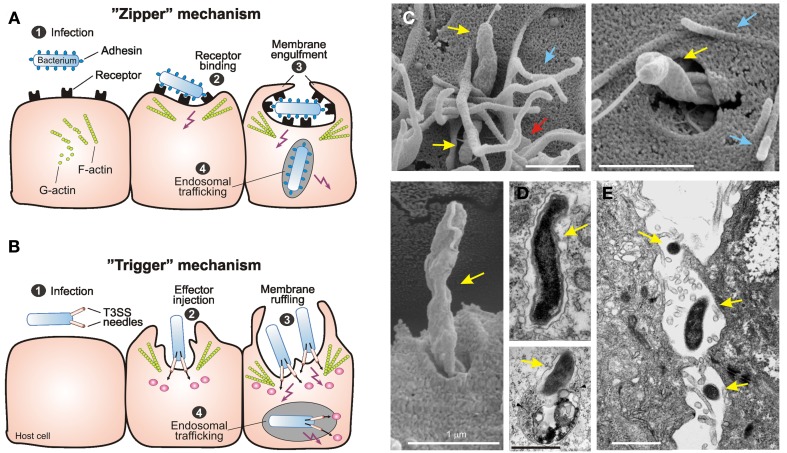
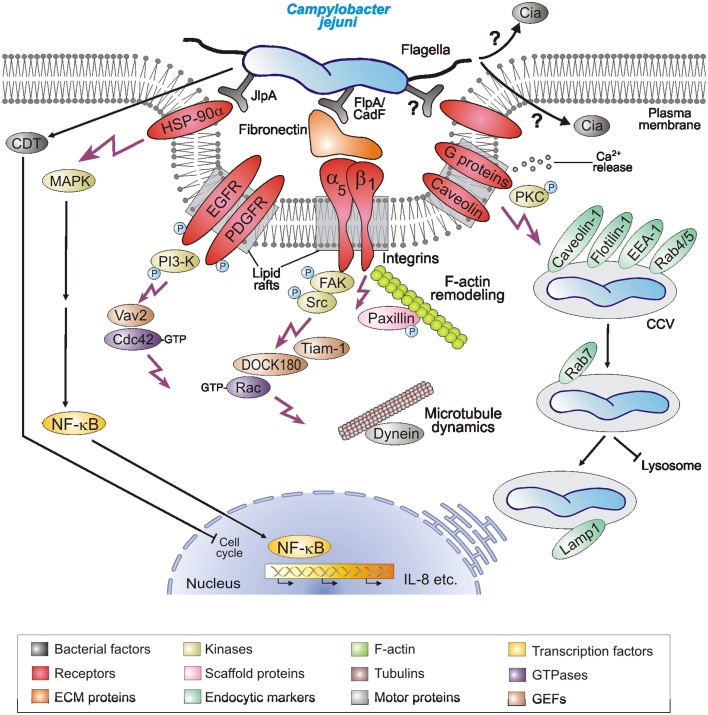
Campylobacter jejuni, a spiral-shaped Gram-negative pathogen, is a highly frequent cause of gastrointestinal foodborne illness in humans worldwide. Clinical outcome of C. jejuni infections ranges from mild to severe diarrheal disease, and some other complications including reactive arthritis and Guillain-Barré syndrome. This review article highlights various C. jejuni pathogenicity factors, host cell determinants, and proposed signaling mechanisms involved in human host cell invasion and their potential role in the development of C. jejuni-mediated disease. A model is presented which outlines the various important interactions of C. jejuni with the intestinal epithelium, and we discuss the pro's and con's for the "zipper" over the "trigger" mechanism of invasion. Future work should clarify the contradictory role of some previously identified factors, and should identify and characterize novel virulence determinants, which are crucial to provide fresh insights into the diversity of strategies employed by this pathogen to cause disease.
空肠弯曲菌,一种螺旋形革兰氏阴性病原体,是全球范围内导致人类胃肠道食源性疾病的高度常见原因。空肠弯曲菌感染的临床结果从轻度腹泻病到严重腹泻病不等,还有一些其他并发症,包括反应性关节炎和格林-巴利综合征。本文综述了空肠弯曲菌的各种致病性因素、宿主细胞决定因素以及参与人类宿主细胞入侵的拟议信号机制,及其在空肠弯曲菌介导疾病发展中的潜在作用。提出了一个模型,概述了空肠弯曲菌与肠上皮的各种重要相互作用,并讨论了“拉链”与“触发”入侵机制的优缺点。未来的工作应该阐明一些先前确定的因素的矛盾作用,并确定和表征新的毒力决定因素,这对于深入了解该病原体引起疾病的多样化策略至关重要。